
- So far this year, five of the seven fatalities forced to carry it also did not at the time of the disaster
- From today until March 17, the DGT develops a special campaign to monitor the use of this device and child restraint systems
- The Operation deployed by the Traffic Sector of the Civil Guard plans to control around 17,000 vehicles
March 11, 2024. Six of the twenty-two people who died in traffic accidents during 2023 in the Region of Murcia forced to wear the safety belt did not use it at the time of the accident, which represents 27% of the total, a percentage that rises to 71% in 2024, since five of the seven fatalities registered to date did not wear it at the time of the accident.
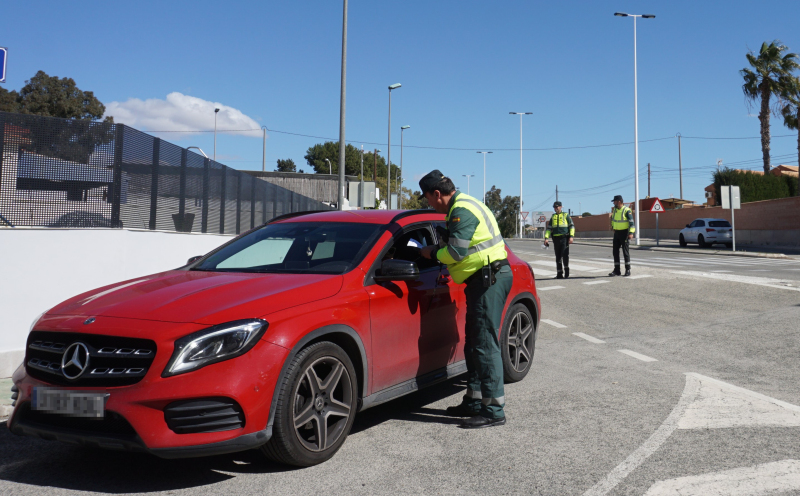
With the aim of preventing and raising awareness of the importance of the use of this device and child restraint systems, the DGT is carrying out a specific surveillance campaign from today until 17 March, in which it hopes to control 17,000 vehicles.
“The campaign we are presenting today focuses on child safety and restraint equipment systems, as it is one of the most effective measures to protect all occupants of the vehicle, and it is aimed not only at drivers, but also at vehicle occupants of the front and rear seats, as it is a fundamental measure for the protection of all of them and to avoid serious or fatal injuries,” explained the government delegate during the presentation of the device.
Mariola Guevara has indicated that this campaign is part of the Spanish Road Safety Strategy, which marks zero tolerance in risky behaviors such as overspeed, distraction, non-use of safety equipment, belt and child restraint systems, as well as in the consumption of alcohol and drugs at the wheel.
During these days, two hundred agents of the Traffic Group of the Civil Guard, with the collaboration of the local police of the twenty-nine municipalities adhered to the campaign, will control around 17,000 vehicles, including cars, taxis, buses and vehicles intended for the transport of goods. The drivers, passengers in the front and rear seats, will be monitored with special monitoring of the use of Child Restraint Systems.
So far, the following municipalities have joined: Abanilla, Alcantarilla, Alguazas, Alhama de Murcia, Archena, Beniel, Bullas, Calasparra, Campos del Río, Cartagena, Cieza, Fortuna, Fuente Alamo, Las Torres de Cotillas, Lorca, Lorquí, Los Alcázares, Molina de Segura, Moratalla, Mula, Murcia, Pliego, Puerto Lumbreras, San Javier, San Pedro del Pinatar, Santomera, Torre Pacheco, Toyectana.
Data on belt use in fatal accident
| YEAR | TOTAL NUMBER OF DEATHS | OBLIGATED USE OF BELT/SRI | NO BELT/SRI | % NON-USE |
|---|---|---|---|---|
| 2019 | 34 | 16 | 5 | 31% |
| 2020 | 26 | 15 | 7 | 47% |
| 2021 | 28 | 22 | 10 | 45% |
| 2022 | 43 | 29 | 5 | 17% |
| 2023 | 40 | 22 | 6 | 27% |
| 2024 to 6 March | 10 | 7 | 5 | 71% |
“Another worrying fact is that last year, of the six deaths who did not use a seatbelt, 75% had previously used alcohol and other drugs,” added provincial traffic chief Virginia Jerez.
Results last campaign
Summary of the results obtained in the controls carried out by the agents of the ATGC in the campaign from 6 to 12 March 2023.
| Controlled vehicles | Reported vehicles | % reported over total controlled | |
|---|---|---|---|
| Belt/SRI | 17.001 | 446 | 2.62% |
During the last campaign of surveillance and control of the safety belt and child restraint systems, a total of 17,001 vehicles were controlled, among them: 13,395 passenger cars, 3,161 freight vehicles, 259 buses and 186 taxis, showing the following results:
Cars:
- Drivers: 13,221 do use the belt and 174 do not, which means 1.30% of non-use.
- Passengers A/D: 4,464 do use the belt and 81 do not, which means 1.78% of non-use.
- Passengers A/T: 2,652 do use the belt and 66 do not, which means 2.43% of non-use.
- Child Restraint Systems: 989 do make use of the S.R.I. o seat belt, and 29 no, which means 2.93% of non-use.
Goods vehicles:
- Drivers: 3,091 do use the belt and 70 do not, which means 2.21% of non-use.
- Passengers A/D: 1,008 do use the belt and 19 do not, which means 1.85% of non-use.
- Passengers A/T: 37 do use the belt and 2 do not, which means 5.13% of non-use.
- Child Restraint Systems: 16 do make use of the S.R.I. o Seatbelt, and 1 no, which means 5.88% of non-use.
Buses:
- Drivers: of 259 drivers, 2 do not use the belt, which means 0.77%
- A/D passengers: the 4 passengers make use of the belt.
- A/T passengers: of 267 passengers 1 does not use the belt, which means 0.37%.
Taxis:
- Drivers: out of 186 drivers 1 does not use the belt, which means 0.54%
- A/D passengers: the 25 passengers make use of the belt.
- A/T passengers: the 49 passengers make use of the belt.
Type of track reported:
- Conventional routes: 373 complaints, which represents 84% of the total.
- Motorways and highways: 72 complaints, which represents 16% of the total.
Ten reasons justifying the use of seat belt and child restraint system
- They reduce the risk of death by 50% in the event of an accident.
- The belt reaches its maximum effectiveness in traffic accidents with vehicle rollover, where the restraint systems reduce the risk of death by 77%.
- On urban roads, the chance of death or serious injury in an urban traffic accident is 5 times lower by properly using restraint systems, safety belts and child seats.
- The use of the seat belt does not only reduce the risks of serious injuries and even the risk of death in the case of drivers, its protection capacity is equally effective with respect to all occupants, passengers traveling in the front seats, and also in the rear seats.
- The safety belt protects from being fired from the vehicle cabin, but also prevents the most severe impacts of the human body against the windscreen and other elements of the vehicle cabin, even against the body of other occupants of the vehicle.
- Not using seat belts by the occupants of the rear seats of the vehicle is as dangerous as not using them in the front seats, the probability of mortal impact of the human body of a passenger occupying any of the rear seats of the vehicle without using the seat belt is 8 times greater than that of the passenger who correctly uses seat belts in the rear seats.
- The drivers and passengers of the vehicles move at the same speed as the vehicles they drive and occupy, in the event of a violent braking with stopping of the vehicle, it must be taken into account that the bodies of the drivers and occupants moving at the same speed as the vehicle must withstand the inertias of said speed and withstand the physical forces that imply their stopping. In the case of a collision at a speed of 50 km/h the forces suffered by the human body are equivalent to suffering a fall from a second floor of height.
- In a frontal collision of a vehicle travelling at a speed of 80 km/h and when its driver or passengers travel without using a seatbelt, the result of death or serious injury approaches 100% of the cases.
- The seat belt works in a complementary way with the airbag, such devices without using the seat belts lose most of their effectiveness.
- Not wearing seat belts is along with speed and driving under the influence of alcohol, one of the most common major factors in the production of serious injuries.