
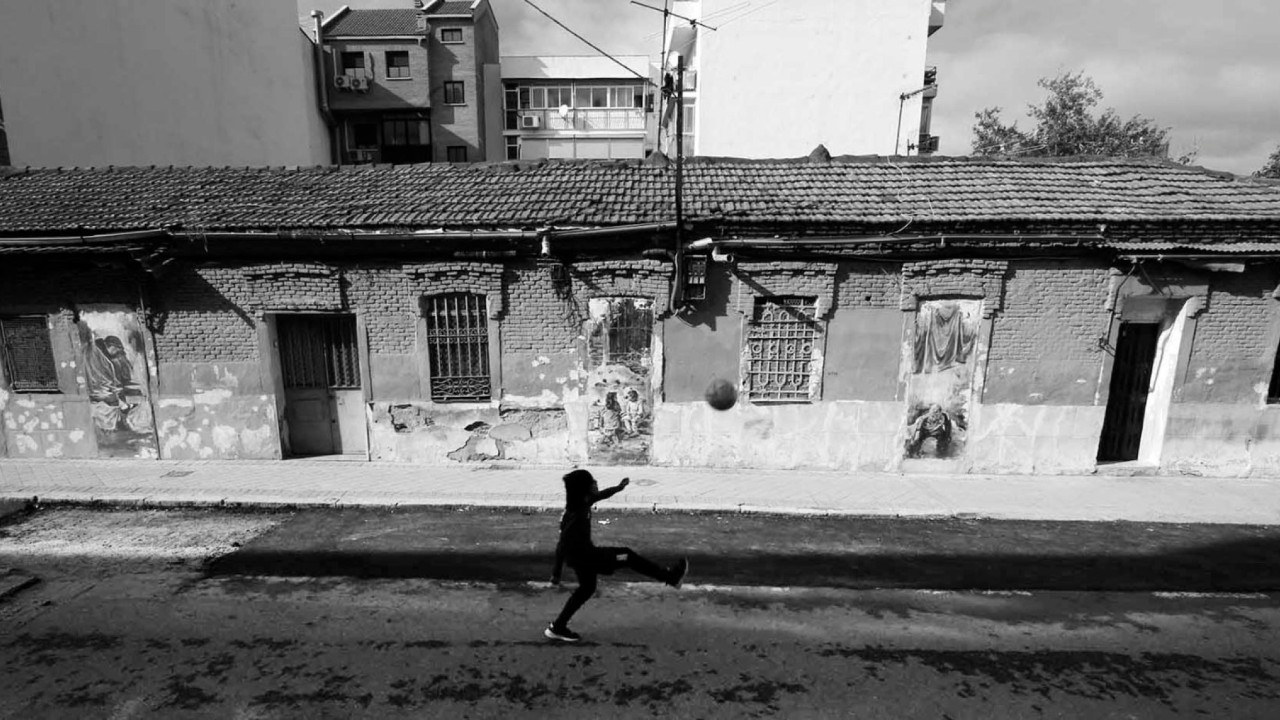
- Robert Capa, like other photographers like Gerda Taro, denounced in the main graphic media of the time the atrocity of aerial bombardments during the War
- The parish priest Ildefonso de Pedro and the neighbors who lost their homes due to the bombings are also recognized
The Official State Gazette (BOE) today publishes a resolution of the Secretary of State for Democratic Memory declaring the Place of Democratic Memory the Complex formed by the building located at number 10 of Peironcely Street, the space known as Plaza del Photographer Robert Capa, the annexed landscaped area and the Pastoral Center of San Carlos Borromeo, Madrid.
During his stay in Spain, Robert Capa, like other photographers such as Gerda Taro, denounced in the main graphic media of the time the atrocity of aerial bombardments during the War. Upon his return to Paris, his photographs caused a sensation. The impact of Capa’s photographs and the dramatic events they reflect is still very present in the memory of the inhabitants of Vallecas. So much so that the square located in the vicinity of Peironcely, 10, which also suffered the effects of the bombings, has been renamed by the residents of the neighborhood as Plaza of the Photographer Robert Capa.
The same luck ran the landscaped area on the sidewalk of the odd numbers at the beginning of Peironcely Street. The house that occupied number 3, known as “the priest’s house”, housed the parish priest of San Carlos Borromeo, Ildefonso de Pedro Miguelañez, 33, who resided there with his father and five sisters. In addition to them, 29 people lost their homes, following the destruction caused by aviation in support of the coup army.
The space popularly known as Plaza del Photographer Robert Capa and the plot of landscaped land are part of the same historical account of the victims of the fascism of this Madrid neighborhood: those who suffered the bombings of 1936 and who, after the war, arrived in Madrid fleeing the repression of the dictatorship and poverty, especially from Andalusia, Extremadura and Castilla-La Mancha. Entire families used the remains still standing of the houses destroyed by the bombs to build their humble homes that, in many cases, lived until the mid-1970s.
Currently, the Pastoral Center of San Carlos Borromeo hosts a religious community with a strong participatory and supportive vocation, which gives continuity to the work begun by its then parish priest. Among its initiatives are childcare, the distribution of solidarity meals, the accompaniment of people with addictions and the support of migrants and refugees.