
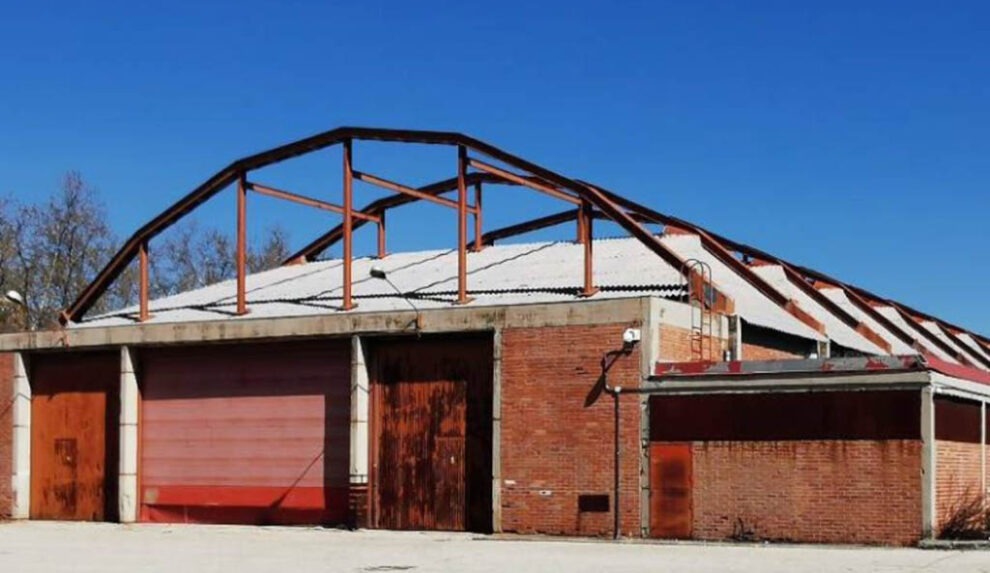
- They are an example of the Industrial Heritage in Spain and one of the most relevant aeronautical infrastructures of the process of modernization of commercial aviation
- Its conservation and enhancement are indispensable for its historical, technical and architectural value. This declaration represents the highest level of protection established by Law 16/1985, of June 25, on Spanish Historical Heritage
- The decision of the architect Alejandro de la Sota not to hide the structural system was an innovative solution for his time and constitutes one of the main values of the property
The Council of Ministers, on the proposal of the Minister of Culture, Ernest Urtasun, today approved the declaration of Asset of Cultural Interest (BIC) in the category of Monument of the Barajas-TABSA Aeronautical Workshops, located within the Adolfo Suárez Madrid-Barajas Airport. The Ministry of Culture began in February 2026 the processing of the file for this declaration, which involves the application of the maximum level of protection established by Law 16/1985, of June 25, on Spanish Historical Heritage.
The Barajas-TABSA Aeronautical Workshops are an exceptional example of the Industrial Heritage in Spain and one of the most relevant aeronautical infrastructures of the process of modernization of commercial aviation during the 1950s. Its conservation and enhancement are considered indispensable due to its historical, technical and architectural value.
The complex was designed between 1957 and 1958 by the architect Alejandro de la Sota Martínez (1913-1996), with the collaboration of the aeronautical engineer Enrique Guzmán, director of TABSA in that period, and the industrial engineer Eusebio Rojas Marcos. The construction is framed in the context of the intense public and private investment that Spanish airports experienced in those years, a process that culminated in the Airport Plan of 1958, which consolidated the separation between commercial and military aviation.
Aeronautical Workshops of Barajas-TABSA
The Barajas-TABSA Aeronautical Workshops were established in 1953 with the aim of assuming the maintenance of Iberia and AVIACO aircraft. Among the founding entities was the British company Bristol Aeroplane Co. Ltd., whose contribution was decisive in providing technical equipment and specialized personnel. From its first years of activity, TABSA progressively expanded its functions, incorporating inspection tasks, test benches and repair of an increasing number of engine models and auxiliary material, which made it necessary to build a specific ship adapted to all phases of the revision process.
The Barajas Aeronautical Workshops are made up of two buildings: a main nave of 107 meters in length and a smaller one for the engine test bench. The decision of the architect Alejandro de la Sota not to hide the structural system was an innovative solution for his time, providing a feeling of lightness and dematerialization that constitutes one of the main values of the property.
The building combines the functional efficiency required by its activity with a different technical solution and a clear commitment to a rationalist aesthetic. This is also manifested in the absence of accessory elements and the exposure of the structure and materials, such as beams, pillars, concrete, electrical installations, gypsum boards and pipes.
The architect
Alejandro de la Sota (1913-1996) is one of the masters of 20th century Spanish architecture. He was a professor at the Escuela Técnica Superior de Arquitectura in Madrid and a reference figure for several generations of architects. Among his recognitions are the National Architecture Prize and the National Plastic Arts Prize in 1973, as well as the Gold Medal of Merit in the Fine Arts in 1986.
His direct involvement in the initial phase of the TABSA project was decisive in designing a building precisely adjusted to the operational needs of the workshop, and which he resolved through an innovative spatial conception and the application of advanced technological solutions for the time.