
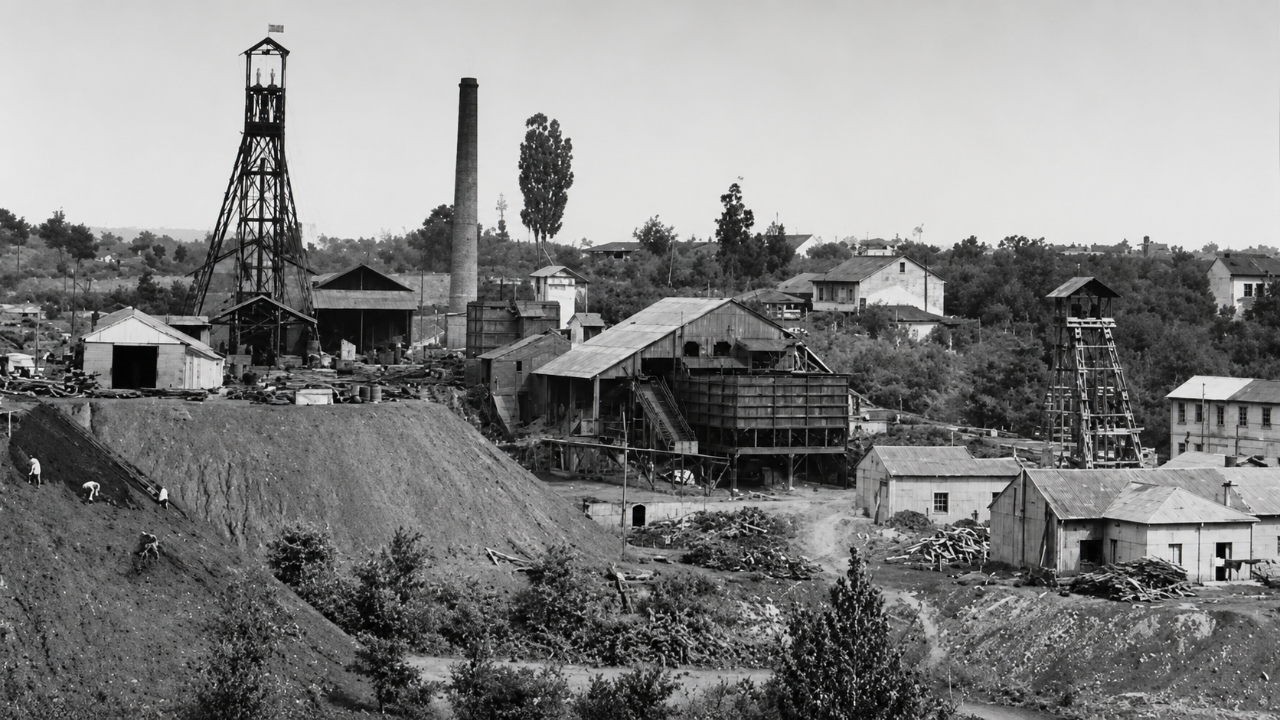
The Official State Gazette (BOE) publishes today the resolution of the Secretary of State for Democratic Memory declaring the “Mina de la Camocha” in Gijón (Asturias) a place of democratic memory, in accordance with the provisions of Law 20/2022 on Democratic Memory.
After the Spanish War and the establishment of the dictatorship, the rights and freedoms conquered during the republican period, including the rights of assembly and association, were abolished. The mobilizations in La Camocha represented an example of resistance in the struggle for democracy and not only challenged laws that impeded the free organization of workers, but also managed to strike a hard blow at the Vertical Union, one of the cornerstones of Franco’s regime.
Between 1955 and 1956, the miners of La Camocha channeled their labor demands through a commission that acquired cohesion and representativeness until imposing itself as an interlocutor during the nine-day strike in January 1957, assuming not only punctual but also global demands. The La Camocha commission can be considered the founding germ of the Workers’ Commissions.
In 1958, a strike in various farms was repressed with the declaration of the State Exception in Asturias, resulting in the banishment, dismissal and dismissal of hundreds of workers, which did not prevent the creation of new commissions that would organize the great strike of April and May 1962 in the metal sector, with an important role of the La Camocha miners commission, due to its great social mass, some 1600 workers.
The failure to comply with the agreed requests also provoked the emergence of new strikes, always answered with strong repression that, far from achieving demobilization, provoked greater union of the workers and the constitution of Workers’ Commissions and the Provincial Mining Commission in 1966, which was answered with the imprisonment of the main members of the Provincial Mining Commission and the illegalization of Workers’ Commissions in January 1967.
In 1977, a momentous strike took place in La Camocha, which managed to put an end to the Vertical Union for the first time in Spain. On the eve of its legalization in April of that year, the Workers’ Commissions of La Camocha, together with the UGT, became the only representatives of the workers.