
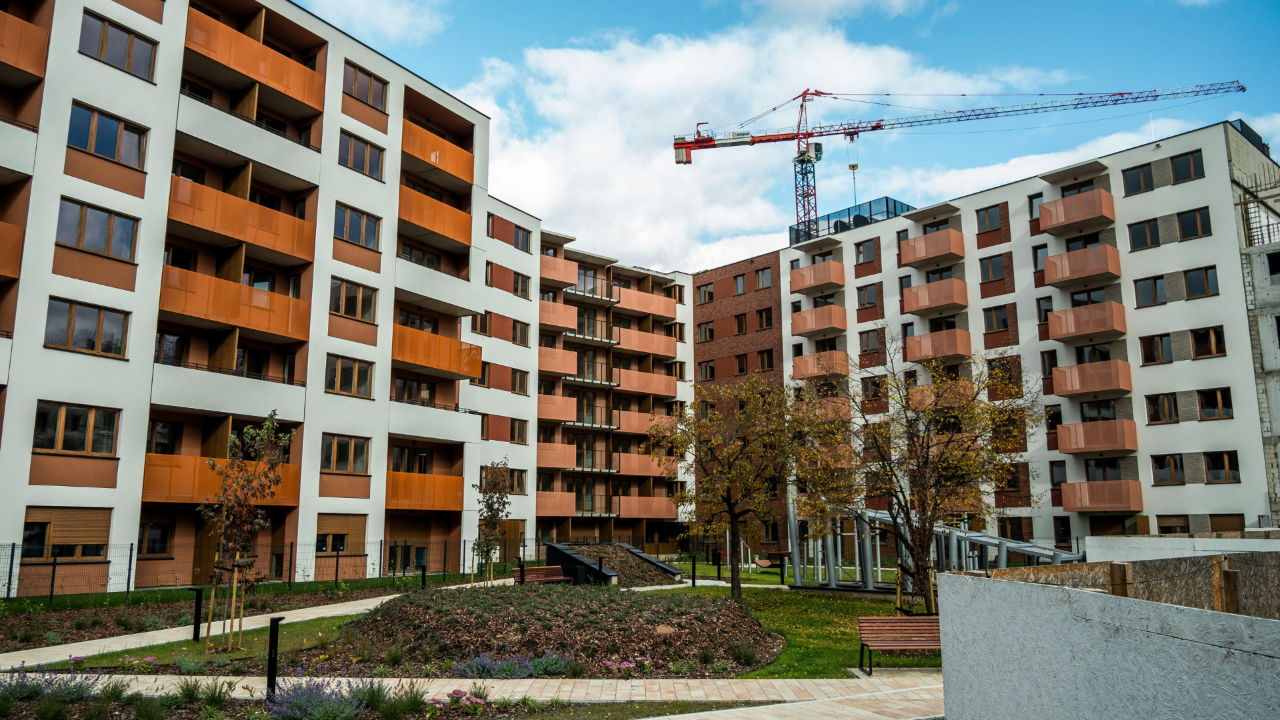
- The price of free housing continues to rise in Madrid to 3,902.3 €/m2, 440 euros more than last year.
- The public tender for the construction of Madrid in relation to the number of inhabitants is lower than other Communities such as Castilla La Mancha or Extremadura,
- Madrid is the second province with 24.4% of foreign purchases over 500,000 euros, three points more than last year. Mostly non-EU.
- Madrid surpasses Barcelona in the number of rental homes.
The Housing and Land Observatory (OVS) of the Ministry of Housing and Urban Agenda has published the annual bulletin corresponding to 2025, a year marked by an important reaction of the construction sector to social demand: both the rating of protected housing and new construction housing recorded great growth.
Madrid is located as the province in which the square meter of free housing is more expensive 3,809.9 m2, 440 euros more than the past 2024. A trend that continues to rise, since in the last quarter of 2025 the average price already reached 3,902.3 euros m/2.
On the contrary, with values lower than 1,000 €/m2 in free housing are Badajoz, León, Teruel, Cáceres, Zamora, Jaén, Cuenca and Ciudad Real
The public tender, in residential or non-residential buildings at an autonomous level with the data of 2025, has been located in Madrid at 10.9% of the total national investment, after Andalusia with 21.3% and Catalonia with 14.9%. However, if we establish the comparison of public tenders in buildings in relation to the inhabitants of each Community, not at the national level, we find that Extremadura is one of the most invested in proportion to its inhabitants, 466.4 euros, above La Rioja with 356.4 euros, compared to Madrid that maintains 154.8 euros inhabitant.
Ceuta and Melilla stand out above the national average, with 532.8 and 451.0 euros per inhabitant, respectively. They are followed by the Basque Country (379.2 €) and Navarre (290.6 €).
Stock of housing
As for the stock of unsold housing, the latest data refer to 2024, yielding a figure of 455,280 homes, with a great stability compared to previous years. In general, it is understood that the stock can be composed largely of dwellings of a certain age, intended largely for leasing, an activity that has grown significantly in recent years.
As for the territorial distribution of the stock of new unsold housing, this is characterized by a notable irregularity, focusing mainly on the Levantine coast, in the areas of Barcelona and Madrid, as well as in the Canarian archipelago, in the province of Toledo, also rebounding Seville.
Purchases by foreigners
In the year 2025, they amounted to 16.9% of the total, reaching 126,981 operations, which is 2,374 less than in the previous year. Mostly by citizens coming from the UK, Germany and the Netherlands. The fourth place would be occupied by the citizens of Morocco.
Madrid is the second province with 24.4% of foreign purchases over 500,000 euros, three points more than last year; the first is still the Balearic Islands, with the majority of these transactions being carried out by Community citizens, while in Madrid the majority of foreigners who buy this type of housing non-EU nationals. The percentage of homes bought by foreigners globally in Madrid is 6.89%, similar to last year.
Regarding the territorial distribution of operations over 500,000 euros, the Balearic Islands stand out, with 41.79% of the total, being 70.34% of these buyers of Community origin. Then there are Madrid, with 24.4% of foreign purchases of this type; Andalusia, with 19.22%; and Catalonia, with 13.15%.
Land for housing
The area of transacted soil in 2021 was 3,482 ha, representing an increase of 74.6%, after two consecutive years of reduction since 2018, when the area was reduced by 25% in 2019 to 17.5% in 2020.
However, in the last year 2025, this area has increased by 42.7%, going from 2,496 ha in 2024 to 3,562 ha in 2025, although it remains well below the levels of 2006.
As for the price of urban land, and analyzing the historical series since 2003, in 2025 the price is below the levels of 2006, where the cap is, reaching 286 euros; currently it has reached 173 climbing from the 142 in which it was established in 2020.
Rehabilitation
Municipal residential rehabilitation licenses peaked at 23,000 in 2006, accounting for 3% of total residential construction licenses. In 2024, the last annual figure provided by the Ministry of Housing and Urban Agenda, the figure is reduced to 10,014 homes; however, as a result of the sharp decrease in new building permits since 2007, this figure of rehabilitation represents 7.5% of the total
In 2006, before the beginning of the crisis, the regions with the highest number of protected rehabilitation actions were Catalonia, with 23%, and then Castilla León and Madrid, with approximately 15% each.
First of all, the Basque Country stands out, with 15,924 definitive qualifications, which represents 29.6% of the national total. Next, Navarre is located, with 13.8% of the total of these actions. Thirdly, there is Madrid, which has declared having carried out 6,189 new actions of this kind in 2025. Finally, Castilla-La Mancha also has a significant weight in the last year, with 4,922 final ratings of protected rehabilitation, which represents 9.1% of the total recorded in 2025.
According to the Survey of the Structure of the Construction Industry published by the Ministry of Housing and Urban Agenda, data from 2025 indicate that Madrid is the third Community in number of actions of this type currently, with 6,189, reducing its number in more than 7,000 actions. The Basque Country is the first with 15,924 qualifications, reaffirming more than 2500 performances, although maintaining some important figures. which represent by themselves about 29.6% of the national total; and secondly we find Navarre, which has declared having carried out 7,429, new actions of this kind in 2025, a thousand four hundred more than last year.
Rental of housing
According to information gathered by the SERPAVI (State System of the Rental Price of Housing) in terms of the number of witnesses, rent, amount and area of the houses rented as habitual housing during the last year of which records are available, that is, of the year 2023, the Community of Madrid and Catalonia stand out, as the autonomous communities with the highest number of homes for rent (474,935 and 471,908, respectively). Curiously, last year 2023 it was Catalonia that was in the lead. If we look at the historical series since 2016, we can see the growth of this type of residential rental housing in all the Communities.
The average surface area in Madrid is 70 square meters, one of the lowest compared to other communities.
As for the main dwellings according to the tenure regime by CCAA regional, the 2021 census reflects a total of 2,546,489 dwellings in the Community of Madrid, of which 1,885,554 are owned, that is, 74.05%, while 660,935 are rented or transferred, 25.95%. Spain’s average rent in the same year stood at 19.21, while the European Union average was 30.1%.
The mortgage firm that is linked to housing continues to increase in Spain since they fell below minimums in 2014. In 2025, a total of 643,811 mortgages have been signed, mobilizing 117,176 million.
The funding provided to Housing Plans
The autonomous communities that in 2025 present a greater share of the credit destined for protected housing over the total credit for acquiring housing in their territory are Extremadura (21.5%), Asturias (11.7%), Aragón (10.9%), Murcia (9.5%) and the Basque Country (9.1%); while those that register the lowest proportion are the Balearic Islands (1.4%) and Galicia (2.4%), while Madrid stands at 5.3% similar to last year and has been decreasing since 2006.
The highest mortgage rates are currently recorded in the Balearic Islands (1,341 euros), Madrid (1,184 euros), Catalonia (846 euros) and the Basque Country (788 euros). On the contrary, the lowest ones correspond to Extremadura (443 euros), Murcia (511 euros), La Rioja (521 euros) or Castilla y León (532 euros). Madrid hit its low in 2016 with a quota of 744 in the series that goes since 2006.
Main housing stock
The housing stock as a habitual residence in 2013 was 18,228,064, reaching 19,278,057 in 2025, a growth of around 5.7%; while in Madrid it is currently 2,657,361, 6.9% than in 2013.
The communities with the highest volumes of non-main dwellings continue to be Andalusia, the Valencian Community and Catalonia, followed by Castilla y León, Galicia, Castilla-La Mancha and the Community of Madrid. Although the latter has been reducing the number of them from 379,727 to 447,188 in 2013.