
- In the Community of Madrid, Ajalvir, Ciempozuelos and Torrelaguna’s reading animation projects have been awarded with more than 2,700 euros each
- The María Moliner Reading Animation Campaign awarded a total of 331 reading dynamization projects in 2025, developed in libraries of municipalities with less than 50,000 inhabitants
- The program, funded by the Ministry of Culture through the General Directorate of Books, Comics and Reading, has a total investment of 1.1 million euros
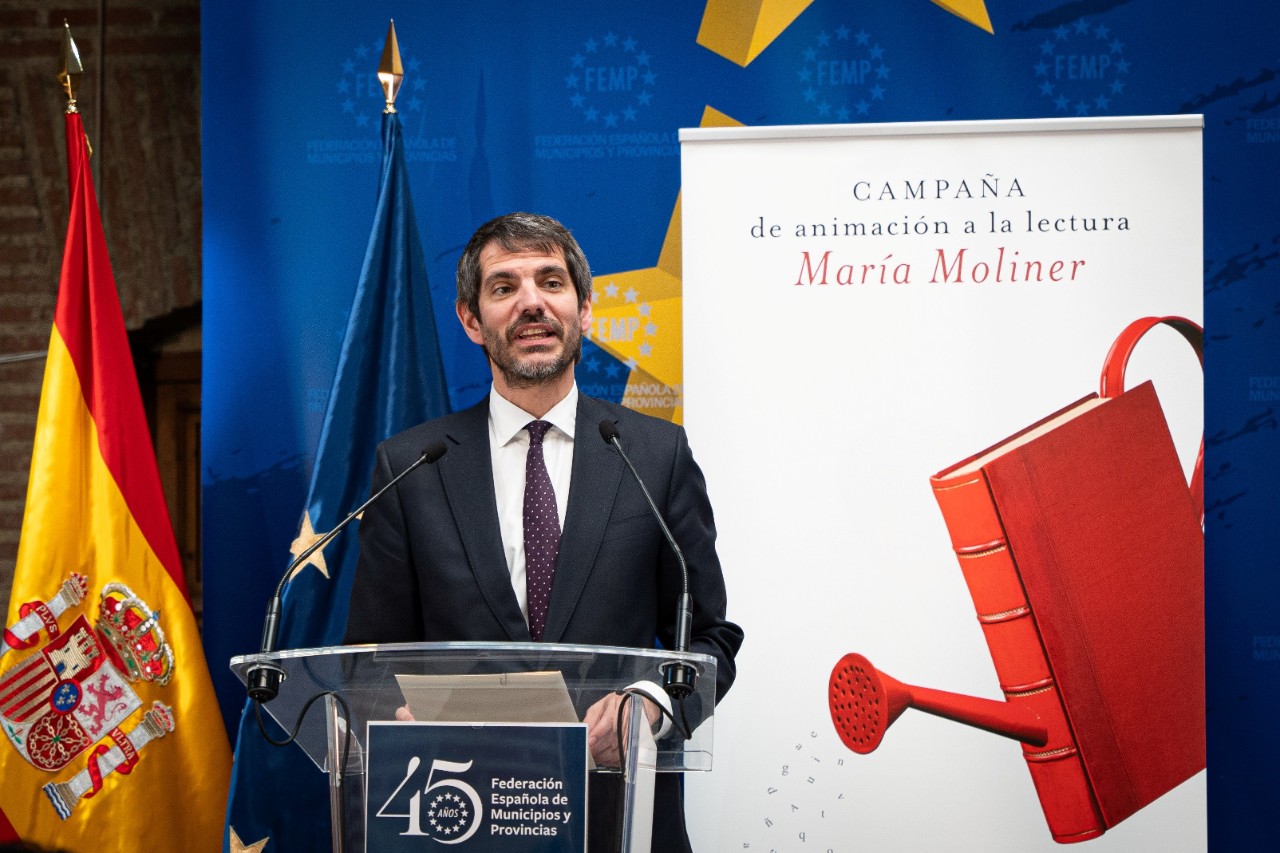
The Minister of Culture, Ernest Urtasun; the General Director of the Book, Comic and Reading of the Ministry of Culture, María José Gálvez; and the President of the Spanish Federation of Municipalities and Provinces (FEMP), María José García Pelayo, today presented the prizes of the Reading Animation Campaign María Moliner in its XXV edition. The event was attended by mayors and librarians of the municipalities awarded with the ten best projects of the 562 presented.
Specifically in the Community of Madrid, the proposals presented by the libraries of the municipalities of Ajalvir, Ciempozuelos and Torrelaguna have been recognized and awarded a prize of 2,777.77 euros each. The total amount with which they have been awarded amounts to 8,333.31 euros.
The Minister of Culture, Ernest Urtasun, has pointed out that these awards “distinguish the task of libraries of cultural dynamization throughout our country; always with new ideas, talent and generosity. Because public libraries are the main guarantee of compliance with cultural rights, the great door to culture and the most effective antidote against inequality, especially in rural areas and in small and medium-sized municipalities throughout Spain.” And he added that “libraries are free, horizontal, democratic places; nothing that frightens or hurts us has a reason to be inside a library, because the library is a safe space, where we regain citizenship and rehearse happiness and calm in our daily lives.”
The María Moliner Reading Animation Campaign, convened by the Ministry of Culture in collaboration with the Spanish Federation of Municipalities and Provinces (FEMP), has awarded reading animation projects, with special attention to those who promote equal opportunities in access to books and reading, to the most socially disadvantaged sectors, as well as to the population with disabilities, older adults, sick people, and also actions for digital literacy and those that encourage social and intergenerational coexistence. The implementation of activities that promote environmental awareness has also been valued.
The program, funded by the Ministry of Culture through the General Directorate of Books, Comics and Reading, has had a total investment of 1.1 million euros. Throughout the 25 editions of the Program, more than 15,000 projects have been presented to these awards and 2,500 municipalities have participated.
This initiative is key in promoting access to books and reading, while approximately half of the Spanish population resides in municipalities with fewer than 50,000 inhabitants. The goal of the campaign is, following the ideal of María Moliner herself, that any reader anywhere can get the book that interests her.
The projects awarded a special prize receive 10,000 euros, which will be used mainly for the purchase of books and/or periodicals for public libraries.
Ten best projects
The ten projects awarded were:
· Muro de Alcoy (Alicante), for the project ‘Esteem between Lletres/ Quiéreme entre letras’, with inclusive and intergenerational proposals, adapted to the diverse needs of its community.
· Villafranca de los Caballeros (Toledo), for the project ‘Orality and classic tales take us into the magic of forests’, with which it encourages the enjoyment of reading from early ages, under the guiding thread of a magical forest.
· Ugena (Toledo), for the project ‘Words that unite’, with a great component of sensitivity and originality and which includes the solidarity storyteller ‘Tales for the DANA’.
· Suances (Cantabria), for the project ‘Biblioteca de Suances, país de las maravillas’, recognized for its careful aesthetic and creative proposal, articulated around ‘Alicia en el País de las Maravillas’ and for its ability to collaborate with other entities.
· Horche (Guadalajara), for the project ‘Biblioteca de Horche: Library En-cuent-hada’, based on fantasy and mythology, which translates into intergenerational and inclusive activities, with special attention to migrant groups.
· Alagón (Zaragoza), for the project ‘RecoREADERS’, with which from reading aloud and reading clubs, has managed to attract diverse audiences through creative workshops and proposals such as literary trips.
· Gata de Gorgos (Alicante), for the project ‘All roads lead to the library’, which combines the promotion of reading with the literacy of migrant women in Valencian and Spanish, as well as the enhancement of local heritage.
· Ares (A Coruña), for the project ‘Reading for pleasure… so it has to be!’ with which she promotes reading with activities such as storytelling with stuffed animals, with pets outdoors or on the lap of grandparents, as well as blind dates with books.
· Lliria (Valencia), for the project ‘Participation creates library and community’, with which they have managed to actively involve their users with activities such as easy reading clubs, a escape room against misinformation or language literacy programmes.
· Gelsa (Zaragoza), for the project ‘The infinite verbs of the book’, which stands out for the diversity and originality of its activities, with initiatives such as bibliobici, bibliopiscina, bibliorío and innovative projects of creation and participation.
In addition to these ten special awards, 321 other libraries have been distinguished for their reading animation plans, with about 2,800 euros of prize each. The selection process has been carried out according to criteria such as the clarity and interest of the project for reading animation, good planning and feasibility, as well as originality and innovation and the social integration activities contained in the proposal and with special attention to the municipalities of less than 5,000 inhabitants. This campaign aims to make reading break all the structural gaps and become a real social habit.