
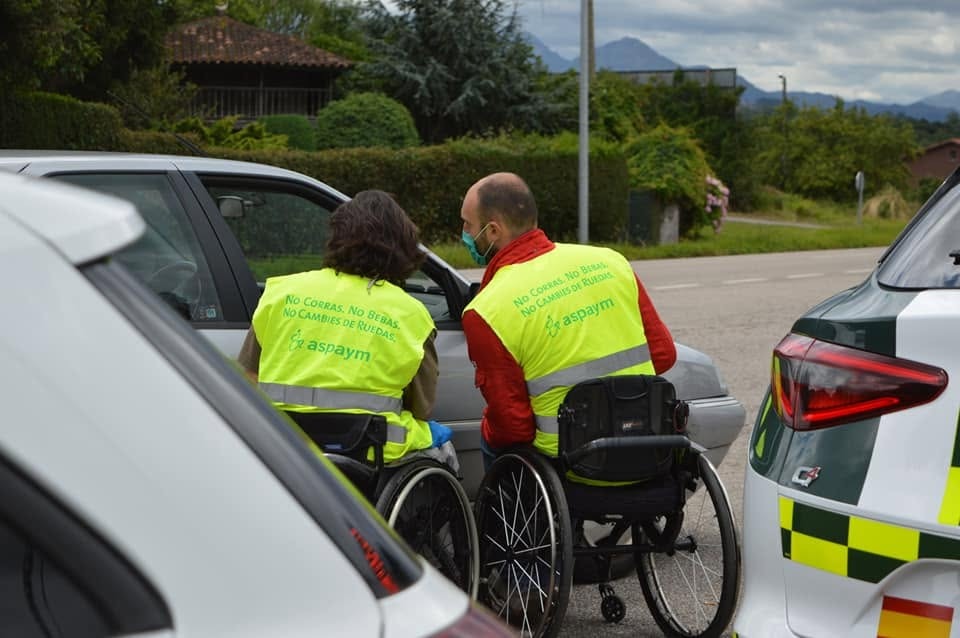
The Directorate-General for Traffic has presented this morning a new special campaign to monitor and control the consumption of alcohol and other drugs at the wheel, which will be maintained until next Sunday, 19th, with the aim of preventing one of the main causes of road accidents. During these seven days, the Traffic Group of the Civil Guard will intensify controls on the roads, with the collaboration of the regional and local police who join the initiative to also reinforce surveillance on urban roads.
The campaign responds to the need to reduce the behaviours that are most at risk for road safety, including alcohol and drug consumption. In fact, alcohol is the second most common concurrent factor in traffic accidents and was present in more than 8% of the fatal accidents recorded in 2024 in the Asturias area.
The data also show that this is a persistent behavior, whose presence has increased both in the total percentage of accidents and in the percentage of fatalities. The number of deaths in road accidents in Asturias in which at least one driver tested positive for blood alcohol increased by 17% in 2024, compared to the previous year, and by 23% in 2019.
HAND IN HAND WITH ASPAYM
Since 2007, the National Federation of Spinal Injuries and Other Physical Disabilities (ASPAYM) has been working with the DGT to raise awareness among drivers of the serious risk of driving while drinking alcohol and other drugs.
Under the motto “Don’t run, don’t drink… don’t change the wheels”, volunteers with spinal injuries victims of a traffic accident will accompany traffic agents in charge of carrying out checks in several provinces of our geography.
At that time, the ASPAYM volunteer will approach the retained vehicle, conveying the common message of the campaign and demonstrating at the same time with his presence, the irreversible consequences and consequences of traffic accidents.
Mayte Gallego, president of ASPAYM, stressed during the presentation that “Every precaution when taking the car is essential.” As he has indicated, “all these campaigns against distractions at the wheel, against speed limits or, as now, against the consumption of alcohol and drugs, are reduced to the same thing: an excess of confidence that ends up playing us a bad trick and that can change our lives in an instant for the rest of our days; to us or to other people who are also circulating”.
That’s why he stressed that “It is important not to fall into disproportion, to ask ourselves whether or not we are in a position to take the car and, in the event of any trip, to do so with our heads as clear as possible, without external influences, that guarantee a safe trip for us, our companions and the rest of people driving in motor vehicles, bicycles or on foot”.
CONSEQUENCES OF ALCOHOL ON DRIVING
Alcohol consumption has serious consequences on driving and accident, such as increased reaction time, speed underestimation, and vision (tunnel effect) and coordination problems. The result is that the chances of suffering an accident increase considerably and multiply even more in combination with other drugs.
The risk increases even within the permitted legal margins, and the effects are becoming more acute as concentration increases. With a rate of 0.5 g/l in blood, the risk of a collision is doubled, with 0.8 g/l he's five times older and with 1.5 g/l, Up to twenty times more.
Therefore, the Directorate General of Traffic insists that The only really safe rate at the wheel is 0.0%, a recommendation supported by both scientific evidence and accident data. Countries such as Sweden and Norway, world leaders in road safety, already adopted the rate of 0.1 mg/l of expired air in 1990 with good results.
The introduction of this rate, accompanied by other complementary measures, resulted in a 12% reduction in accidents with victims, an 8% reduction in fatal accidents and also a 16% reduction in cases of people driving under the influence of alcohol.
The Thin Line Between Infraction and Crime
Driving with alcohol or drugs has fatal consequences; at best, with an administrative sanction, but in many others with prison sentences. In 2025, according to data from the Public Prosecutor’s Office for Road Safety, 47,103 drivers were convicted of driving under the influence of alcohol and drugs.
To these normative or criminal punishments must be added the most important and that is that the life of a person who has killed another/s in a traffic accident for having committed the recklessness of driving having ingested alcohol or drugs is not the same again.