
· The catastrophic episodes, mostly caused by the forest fires, which occurred between March 31 and July 27, 2026 in Andalusia, Aragon, Balearic Islands, Principality of Asturias, Castilla-La Mancha, Castilla y León, Catalonia, Galicia, La Rioja, Community of Madrid, Foral Community of Navarre, Basque Country, Region of Murcia and Valencian Community
· The royal decree includes the fires in the Community of Madrid and the provinces of Ávila and Toledo that motivated the declaration of emergency of national interest on July 23 and also the one originated recently in the Castilian municipality of Vall d’Uixó
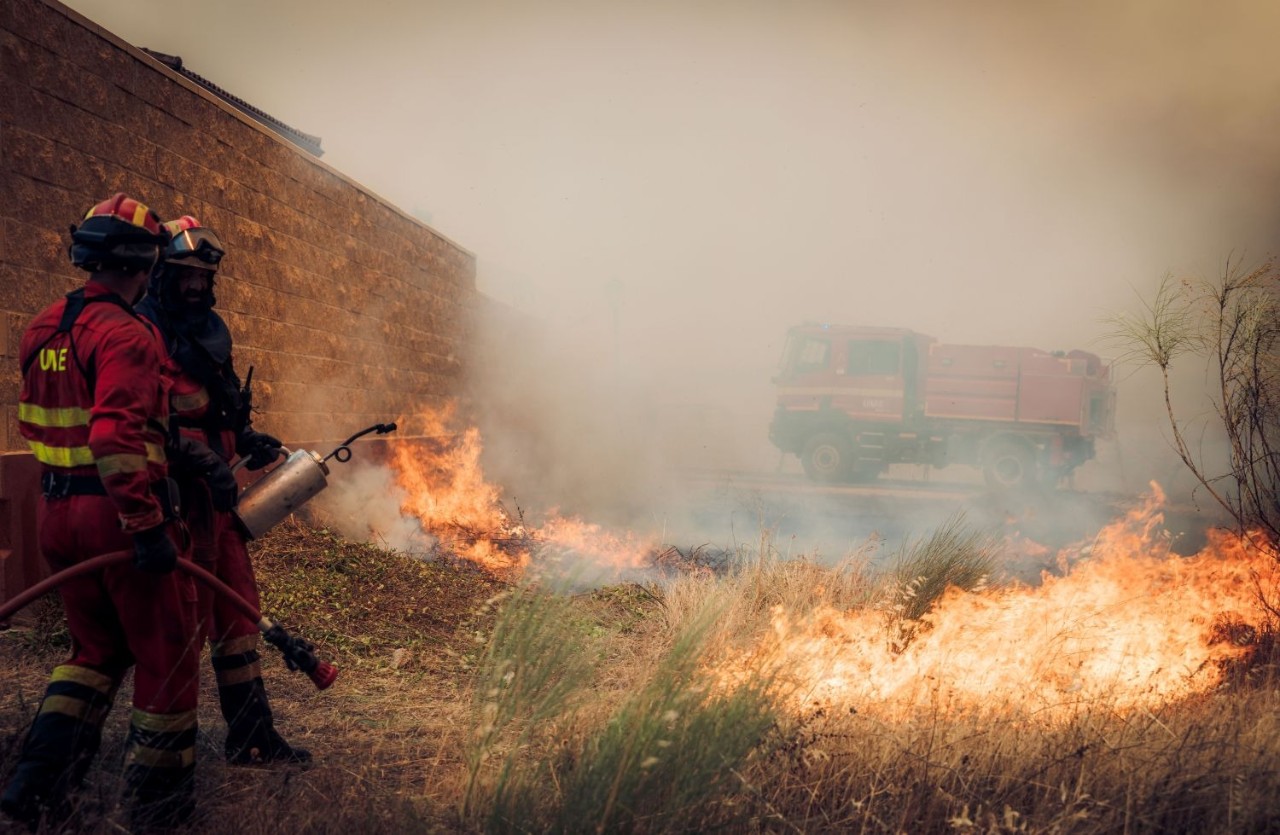
The Government, on the proposal of the Ministry of the Interior, has declared this Tuesday Areas affected by a civil protection emergency The territories affected by a total of 211 catastrophic episodes, mostly as a result of forest fires, that have occurred between March 31 and July 27, 2026 and that have caused damage in regions of fourteen autonomous communities.
The declaration includes the fires originating in the Community of Madrid and in the provinces of Ávila and Toledo that motivated the declaration of emergency of national interest on July 23, the first time that this decision is adopted in emergencies arising from forest fires. The fire that has recently occurred in the Castilian municipality of Vall d’Uixó is also collected. In both cases, the work of extinction continues.
The agreement of the Council of Ministers also covers the area affected by the fire of Los Gallardos, in the province of Almería, which has been one of the most serious episodes of the period, due to its personal and material consequences, with thirteen people dead.
During the month of April, forest fires were recorded in Galicia and Asturias, among which was the forest fire declared in Ponteareas, in the province of Pontevedra, which reached operational situation 2 and required the support of state media. In April, an episode of coastal phenomena in Menorca and another of rains and storms in Catalonia were also reported.
The weather instability during the month of May recorded new episodes of rains and storms reported to CENEM in Mallorca, Murcia and Catalonia. In La Rioja there were the detachments of a wall in Nalda and part of the wall of the Castle of San Vicente de la Sonsierra.
The second half of the month was characterized by the increase of forest fires, with notable episodes in Rugat and Benidorm, in the Valencian Community; Santa Eulària des Riu and Can Anfos, in Ibiza; and Òrrius, in Catalonia.
At the beginning of June, new rainfall episodes were reported in Catalonia, and the activity of forest fires continued to increase, such as those in Carrascoy-El Valle, in the Region of Murcia; Villanueva de los Castillejos, in Huelva; Padrón, in A Coruña; and Boborás, in Ourense, which reached operational situation 2.
During the second half of June, Castilla y León recorded the coincidence of numerous fires in the region of El Bierzo, and also reached the operative situation 2 the fires of Ezkabarte, Alcampell-Tamarite de Litera and Uncastillo. In Catalonia, the fires of Talavera, Forallac, Sant Quirze Safaja, Tàrrega and Tiana made it necessary to adopt preventive confinement measures in different population centers.
In the last days of June there was an episode of high-intensity storms and rains in La Rioja, associated with an orange warning from the State Meteorological Agency, which motivated the activation of the emergency phase, operational situation 1, of the Special Plan of Civil Protection against Floods of La Rioja (INUNCAR). Haro was the municipality most affected, concentrating 70 actions after registering 54.9 l/m² of precipitation.
At the end of June and during the month of July, in addition to the tragic episode in Los Gallardos, the operational situation 2 reached, among others, the fires of Calzada de Calatrava, Leciñena, La Fueva, Borox, La Bisbal d'Empordà, Loporzano, Soneja and Peñarroya de Tastavins.
In the following days the high activity of the forest fires has continued, registering new episodes in various autonomous communities, especially in Catalonia, Castilla y León, Illes Balears and the Community of Madrid, which motivated new activations of the corresponding civil protection plans in operational situation 1 and 2.
Finally, along with these events, during the period included in this Agreement, there have been other civil protection emergencies of different nature, such as fires in industrial facilities, accidents in the transport of dangerous goods and incidents in chemical or industrial facilities, which motivated the activation of the corresponding civil protection plans and the adoption of measures of prevention and protection to the population.
Outside the temporal scope of the agreement, includes the strong winds recorded in Catalonia on the occasion of the “Marta” storm, communicated to the National Emergency Center (CENEM) on February 9, following the activation of the Special Emergency Plan for Wind Risk in Catalonia. This event had not been covered by the two agreements on the declaration of an area seriously affected by a civil protection emergency approved on 10 February and 7 April.
Grants from the Ministry of the Interior
In accordance with the provisions of article 24 of Law 17/2015, of July 9, on the National Civil Protection System, the agreement already includes a series of aid that the victims can request from the moment the emergency occurred and whose management is the responsibility of the Ministry of the Interior.
This aid is intended to alleviate personal injury; material damage to housing and belongings; expenses of local corporations; industrial, commercial and service establishments, as well as to subsidize natural or legal persons who have made personal benefits and goods to respond to the consequences of the emergency.
It also provides for the possibility of approval of an exemption from the fees of the Autonomous Agency Central Traffic Headquarters (duplicates of circulation or driving licences, as well as casualties of damaged vehicles) and by issuance of the ID card.
The declaration of an area affected by a civil protection emergency also opens the way for other government departments to be able to provide other aid that is specific to their areas of competence, and which may include the following:
· Tax benefits: the Ministry of Finance will specify the exemption in the Real Property Tax quota and the reduction in the Economic Activities Tax quota. As usual, aid for personal injury will be exempt from the Personal Income Tax.
· Labour and Social Security Measures: the ministries of Labour and Social Economy and of Inclusion, Social Security and Migration will be able to develop labour measures and bonuses and exemptions from Social Security quotas.
· Aid to local corporations: the Ministry of Territorial Policy and Democratic Memory will grant aid, up to 50 percent, to projects implemented by local entities to repair municipal infrastructure, facilities and equipment.
· Damage to public infrastructure and the public domain: all ministries, within the scope of their competences, may declare a special area of action, as well as the emergency of works to repair the damage caused to public infrastructure.
· In terms of contracting, they may be considered emergency works, services or supplies, subject to the agreement of the contracting body in accordance with article 120 of Law 9/2017, of 8 November, on Public Sector Contracts, contracts for the repair or maintenance of infrastructures, equipment or services, works for the replacement of damaged goods and assessments of damages, whatever their amount.
· The occupation of property affected by expropriations arising from the carrying out of these works may be declared urgent, in accordance with the Law on Forced Expropriation of 16 December 1954.