
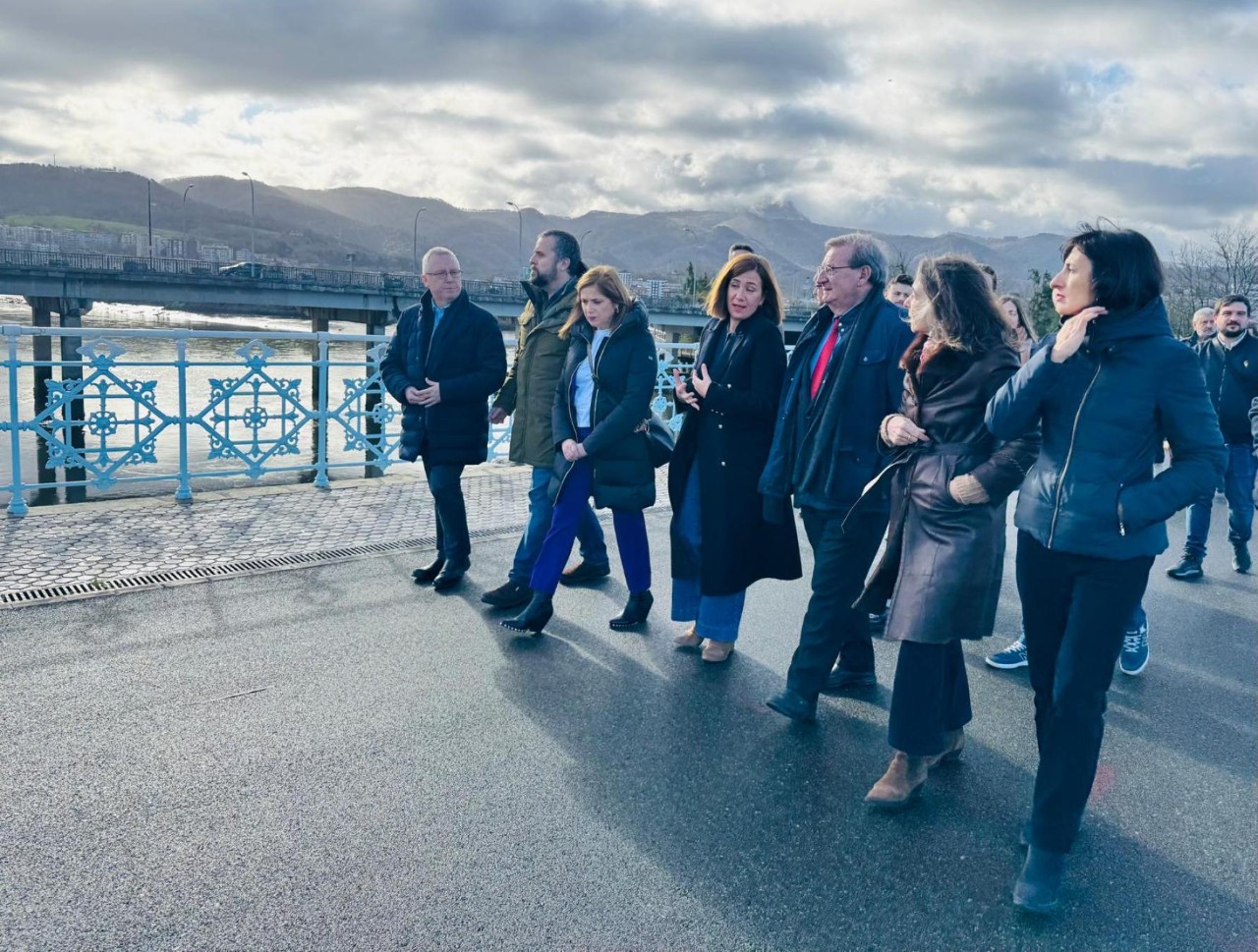
The Ministry of Territorial Policy and Democratic Memory has opened the file to declare the Avenida de Irún Bridge, in Guipuzkoa, as a Place of Democratic Memory, because of its historical relevance and because it is considered a material reference of the memory of the victims of war and exile.
The Avenida Bridge played an important role in the case of the exile to France, in the first months of the war, as it was one of the main land connection routes between the two countries. Thousands of refugees used this route to leave for Hendaye, in some cases under the bullets of the rebelled troops.
“The Government of Spain has accepted the request of the City of Irún, of June 14, last year, and has decided to initiate the procedure of declaration of the Avenida Bridge as a Place of Democratic Memory, as proposed by the Democratic Memory Act of October 2022,” said the Secretary of State for Democratic Memory, Fernando Martínez, who participated today in an act of tribute to the victims in Irún.
The Bridge was the setting in which the first of the five waves of refugees that occurred from Spain to the outside during the War developed. Just a month after the fighting began, during the offensive of the rebellious troops in Gipuzkoa, there was a first exodus of about 15,000 people, mostly women and children, who crossed the border into Hendaye during the days before the occupation of Irun.
“On the bridge of Avenida de Irún, events of singular relevance were developed for their historical and symbolic significance, linked to Democratic Memory, especially referring to the departure of thousands of citizens at the beginning of the war in Spain and during the Franco dictatorship: exile, exchange of prisoners, etc., which make this bridge a benchmark of Memory for all of Spain,” added the Secretary of State.