
The Minister of Territorial Policy and Democratic Memory, Ángel Víctor Torres, presided today, in the National Auditorium, the annual act of tribute to the victims of the Coup of 1936, the War of Spain and the Dictatorship, in which 22 declarations of Recognition and Reparation have been delivered to people and groups who suffered repression, murder or exile during this historical stage of our country.
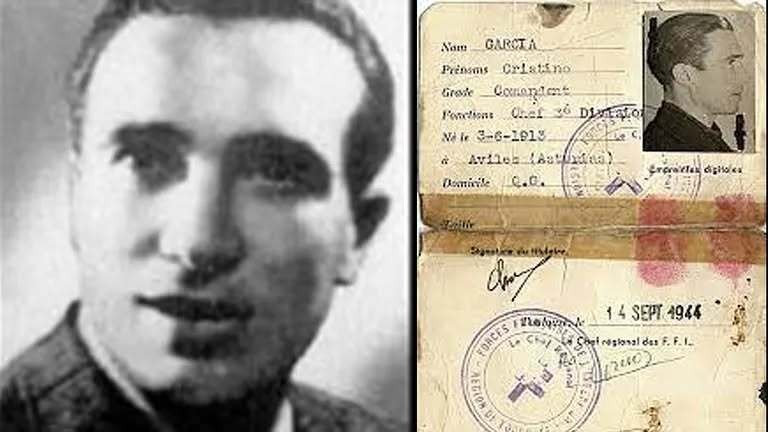
In this meeting, women have been recognized, among other figures, such as the Mallorcan Aurora Picornell, symbol of the workers’ struggle and feminist commitment; the poet José Bergamín, forced to more than three decades of exile for his ideas; the Amical Association of Mauthausen, for his enormous contribution to the rescue of the Democratic Memory, or the Asturian Cristino García Granda, born in Gozón who was a trade unionist, Spanish communist militant, anti-Francoist guerrilla and member of the French resistance during the Second World War, declared Prelate Son in 2022.
Below are the biographies of the 22 declarations of Recognition and Reparation granted by the Ministry of Territorial Policy and Democratic Memory:
CRISTINO GARCÍA GRANDA
Born in Gozón (Asturias), he was a trade unionist, Spanish communist militant, anti-Francoist guerrilla and member of the French resistance during the Second World War. During the Spanish War, he participated actively in different battles, achieving the rank of lieutenant in the 14th Guerrilla Army Corps. In 1939, after the fighting ended, he went into exile to France, where he was imprisoned in an internment camp. During the Second World War he participated in the French resistance at the head of the 158th Division of the Spanish Guerrilla Group, with the rank of lieutenant colonel. He was sentenced to death, along with nine of his companions, after a supreme war council, in the early morning of February 21, 1946, and was shot in the walls of the municipal cemetery of Carabanchel Bajo, where he was buried.
AURORA PICORNELL FEMENIAS
Born in Palma, a trade union leader and seamstress by profession, she was a woman committed to the struggle of the working class and for the equality of women. Pioneer in the organization and celebration of the Day of Working Women, celebrated for the first time in Spain at the Casa del Pueblo in Palma on March 8, 1934. Nicknamed La Pasionaria mallorquina, she was during the Second Republic one of the most outstanding leaders of the Communist Party in Mallorca. After the coup d’état of 1936, members of the rebels in Mallorca imprisoned and tortured her. Aurora Picornell was shot along with other women, known as the Roges des Molinar, on the eve of King's Day in 1937. He was 24 years old.
FRANCISCO RODRÍGUEZ BETANCOR
A native of Las Palmas de Gran Canaria, an electrical mechanic and member of the UGT, he participated in the constitution of the Socialist Group of Los Llanos de Aridane in 1931. Elected mayor of that town on March 12, 1936, when the coup d’état of July 18 triumphed, he fled to the mountains along with several councilors and socialist militants. He was arrested in November of the same year, imprisoned in Los Llanos and shot in the pine grove of Fuencaliente. His exhumation, in 1994, was the first judicial exhumation carried out in Spain during the democratic stage.
THE 15 ROSES OF GRAZALEMA
Health Alberto Barea, Catalina Alcaraz Godoy, Isabel Atienza Gómez, Jerónima Barea Rincón, María Josefa Barea Rincón, Teresa Castro Ramírez, Ana Fernández Ramírez, Cristina Franco Domínguez, Josefa de Jesús Gómez Pérez, Lolita Gómez, María Josefa Nogales Castro, Teresa Menacho, Antonia Pérez Vega, María Isabel Román Montes, Nativity Vílchez, peasants, cattle breeaters and women workers’ unions were not arrested or interrogated. When they refused to give information about their relatives, they were imprisoned by the Falangists, raped, kidnapped, forced to drink castor oil and walked. Together with the boy Francisco Peña, the Bizarrito suffered torture, to be finally shot at km 57 of the Ronda road. It was in February 1937.
RAMON RUBIAL CAVIA
Born in Erandio (Bizkaia), he was president of the PSOE from 1976 until his death and president of the General Basque Council in the pre-autonomic stage. He joined the metallurgical union of UGT in 1920, becoming a member of the military in the Young Socialists and the PSOE in 1922. Since then he became a prominent activist for the workers’ cause. He fought in the Spanish War on the Northern Front, being captured on November 1, 1937 in Bilbao and sentenced to death, a sentence that was commuted to thirty years in prison. He was a prisoner in several jails and prisons for nearly two decades. He was released from prison on August 23, 1956. After the advent of democracy, he was a senator for Bizkaia and one of the main referents of Spanish socialism of the recent democratic stage.
JULIA HIDALGO ARGÜESO
Native of Sanlúcar de Barrameda. She defines herself as a mother, grandmother, feminist and communist. He arrived in Madrid to study Political Science, a career that was cut short by detentions and exile. She was first and foremost an anti-fascist fighter during the Franco dictatorship. Detained by the Politico-Social Brigade, tortured in the General Directorate of Security, victim of Billy the Child and imprisoned in the Carabanchel Women’s Prison in the 1970s. After leaving prison, he went into exile in Paris and London for a year and a half. In one of her three arrests she was prosecuted for sedition to the state with an eight-year fiscal request in prison. Leader of the PCE and United Left has also stood out for disseminating the work and figure of María Teresa León.
VÍCTOR DÍAZ- CARDIEL
Born in Fuensalida (Toledo), a metallurgical worker, a historical militant of the Communist Party of Spain since 1956. For his political activity he was imprisoned during the Franco dictatorship and spent nine years in prison, from 1965 to 1974. In the first general elections after the dictatorship, he was a candidate for the Congress of Deputies for Madrid. He was also general secretary of the Communist Party of Madrid during the Transition. He has been a member of the United Left since its foundation in 1986, and was secretary of organization, member of its Political Council and its Presidency. He is currently the spokesperson for the Platform for a Center for Peace and Memory in the former prison of Carabanchel.
MARÍA JOSÉ PICÓ ROBLES
She is president of the Association of Victims of Alicante: Stolen Babies and Irregular Adoptions. She is looking for her twin sister, who disappeared in the Hospital of Alicante in March 1962. On the second night after the birth, a nurse told her mother that one of the girls was “Malita” and, a few hours later, that she had died. María José started the search for her sister in 2011. The juvenile prosecutor, in view of the numerous irregularities and absences in the registers, issued an exhumation order. None of the remains found matched the DNA of María José’s parents. Despite that, the case was filed. María José is, from the association of victims of Alicante, a tireless fighter in defense of the clarification of the children abducted in Spain.
JOSÉ BERGAMÍN GUTIÉRREZ
A native of Madrid, writer, his literary work is the most extensive and diverse of the members of the Generation of the Republic, a denomination that preferred the Generation of 27. It includes aphorisms, essays, poetry, theatre and literary and political articles in the press. To this should be added his extraordinary work as an editor of books (Ediciones del Arbol, in Spain, and Séneca, in Mexico) and magazines, such as “Cruz y Raya”. His commitment to the Second Republic was manifest. In July 1936 he was president of the Alliance of Anti-Fascist Intellectuals and cultural attaché at the Spanish Embassy in Paris, where he sought moral and financial support for the Republic. At the end of the war he went into exile in Paris, later in Mexico, Venezuela and Uruguay, where he was a professor and continued to be associated with the World Movement of Supporters of Peace. After his return to Spain in 1958, he returned for the second time to Parisian exile in 1963 for having signed a Letter of Intellectuals in Support of the Asturian Miners on Strike and published articles against the Franco regime in Caracas. After 31 years of exile, he returned definitively in 1970 and died in San Sebastián in 1983.
MARÍA VÁZQUEZ SUÁREZ
Born in Vilaescura, Ourense), she was a Galician teacher who, with the arrival of the Republic, identified herself with the pedagogical reform. She collaborated with the International League of Iberian and Hispanic American Women and the Association of Republican Women. In 1933 he joined the FETE-UGT. She participated in campaigns and rallies with speeches focused on educational policies and the defense of women’s rights. With the coup d’état of July 18, 1936, she was arrested in La Coruña on charges of defending secular school and free love. She was transferred to the prison of Pontedeume and on August 19 she was shot on a beach in Miño. His house was ransacked and his books burned. He was 42 years old.
DEMOCRATIC JUSTICE
Justicia Democrática was an association of judges, prosecutors and judicial secretaries of Spain, which was made known in 1971 anonymously and clandestinely during the Franco dictatorship. It brought together members of the judiciary with democratic beliefs and aimed to implement the rule of law in Spain and democratize the structures of the administration of justice. It had its origins in Barcelona in 1971, but was formally constituted in 1972, at the home of the Madrid magistrate Clemente Auger, in a meeting attended by jurists such as Jesús Chamorro, Carlos Jiménez Villarejo, Fernando Ledesma, José Antonio Martín Pallín and José María Mena, among others. Later others were incorporated such as Perfecto Andrés Ibañez, Cándido Conde-Pumpido, Juan Alberto Belloch or M.ª Teresa Fernández de la Vega. Democratic Justice was dissolved after the adoption of the 1978 Constitution. This clandestine organization served as a direct precedent for the creation, with the advent of democracy, of progressive associations in the judiciary and the prosecutor’s office, such as Judges for Democracy and the Progressive Union of Prosecutors.
JOSE MARIA DE LLANOS PASTOR.
The PADRE LLANOS was born in Madrid in 1906. He was a Spanish Jesuit, the best known of the “workers’ priests” of Spain. He went from being a confessor close to the Franco regime to living since the end of 1955 in a shantytown in the Pozo del Tio Raimundo, a popular shantytown settlement in Vallecas, dedicating his life to the social transformation of the working-class neighborhood. He promoted electric cooperatives to bring light to thousands of families, promoted the improvement of water infrastructures, schools, block homes to replace shacks and collaborated with workers’ movements in social struggles and for the return of democracy. His direct contact with the disinherited changed his perspective and he ended up joining Workers’ Commissions and the Communist Party of Spain (PCE), starring in iconic moments like a rally in Vallecas in 1977 with his fist up. Despite his political commitment to the PCE, he maintained his status as a Jesuit priest until the end of his days. El Pozo del Tio Raimundo and Padre Llanos are a special reference for the role played by the workers’ priests and the neighbourhood movements in the conquest of democracy.
AMICAL OF MAUTHAUSEN AND OTHER CAMPS AND OF ALL THE VICTIMS OF NAZISM IN SPAIN
The Amical of Mauthausen and other camps and of all the victims of Nazism in Spain was born in 1962 clandestinely driven by former deported Spanish republicans (such as Joan Pagès —his first president—, Amadeu López Arias, Eliseu Villalba or Joaquim Amat-Piniella) with the support of the French association Amicale de Mauthausen. Legalized in 1978, it brings together former Republican deportees from the Nazi concentration camps, as well as the relatives and friends of both the survivors and the deportees killed in the camps. The association represents the deportees of this Austrian camp and of all the camps of the III Reich, although it takes the name of Mauthausen as being the camp to which they were deported most Spaniards. His intense work in favor of the memory of those who lived and fought during the war in Spain before crossing the French-Catalan border into exile, and later suffered deportation to the Nazi camps, is noteworthy.
LUIS ALTOLAGUIRRE BOLÍN
Born in Malaga, brother of the writer Manuel Altolaguirre. It belonged to a landed, religious and conservative family. He had presented himself to the Congress of Deputies for the Spanish Agrarian Alliance party integrated into the CEDA in the February 1936 elections, although he did not win a seat. Together with José María Hinojosa and forty-six other detainees, they were taken to the wall of the San Rafael cemetery and shot on August 22, 1936 by a group of militiamen who had just assaulted the provincial prison. He was 32 years old.
EMILIA GRAÑA RAMOS-SABUGO
Born in Vigo, she is 79 years old and has not forgotten how she discovered inequality when she was a girl, in the 50s. After spending her childhood in Vigo, she went to study in Madrid and studied Political Science at the Complutense, where she met those who would be fighting partners in the Women’s Democratic Movement of which she is co-founder with Cristina Almeida and Paca Sauquillo. She participated in the first feminist demonstration, in the 1970s. She was detained for three days for having a book by Wilhelm Reich on female sexuality in her room. The work was not forbidden, but the regime considered those ideas dangerous.
MODEST WHITE LOVE
Born in Orense, writer and journalist in Galician and in Spanish. In 1919 he emigrated to Buenos Aires (Argentina), where he took an active part in the Federation of Galician Societies. Back in Spain he contacted the Generation of 27 and met Federico García Lorca. During the War he defended the Republican cause. He returned to Spain in 1965. His last stage was very fruitful, despite being relegated by the official culture of late Francoism due to his left positions, the critical nature of his work and his homosexuality, which appears prominently in the erotic poems published posthumously as Ars Amandi. He was linked to the Galician Homosexual Liberation Front and was a numerary member of the Galician Royal Academy. He died in Vigo in 1979.
TORIBIO MARTÍNEZ CABRERA
Born in Andiñuela de Somoza (León), he was a Spanish soldier who achieved the rank of general and remained loyal to the Second Republic during the Spanish War. Military Governor of Cartagena, prevented the uprising of the square, headquarters of the republican navy. In November 1936 he was appointed head of the Central General Staff of the Republican Army, playing an important role in the Republican military organization. After the Francoist victory, he was arrested, subjected to a war council and sentenced to death. He was shot in Paterna (Valencia) on June 23, 1939, a victim of Franco’s repression.
JOSÉ MARÍA HINOJOSA LASARTE
He was born in the Malaga town of Campillos, son of landowners with deep religious convictions, graduated in law between Granada and Madrid, but it was in Malaga where he established friendship with Emilio Prados and Manuel Altolaguirre. With them he directed the magazine Litoral, around which the poets of the Generation of 27 ended up gathering. His book La Flor de California is considered one of the first and purest books of surrealist prose in Spanish literature. He was arrested and imprisoned in Malaga on July 24, 1936 along with his father, Salvador, and his brother Francisco. The three were taken from the provincial prison by militiamen on August 22 and shot in front of the walls of the cemetery of San Rafael.
MARÍA DE LOS ÁNGELES MARTÍNEZ MADROÑO
María de los Ángeles Martínez Madroño is one of the women affected and linked to the cause of the stolen babies in Spain and the coercive maternity hospitals of Franco’s regime. She was part of the group of women who visited and made visible the conditions of the center of the institution of Peñagrande in Madrid. This center, under the Patronato de Protección a la Mujer, was under the spotlight of investigations due to the confinement of young and internal mothers whose children, in many cases like theirs after having given birth at age 16, allegedly ended up in networks of irregular adoptions and abduction of babies.
XAIME QUINTANILLA MARTÍNEZ
Born in A Coruña, a doctor, writer and politician, his political activity focused on the defense of galleguism and socialism, participating in the First Assembly of the Irmandades da Fala in 1918 and in other political assemblies. First Republican mayor of Ferrol, in 1931, at the head of a municipal corporation composed of the PSOE and the Radical Party. After the military uprising against the Republican government on July 18, 1936, he was first imprisoned in Mariña and then in the prison ship Plus Ultra, being shot on August 18 by the uprisings in the cemetery walls of the Ferrolano neighborhood of Canido, along with fourteen other prisoners.
ALBERTO JIMÉNEZ FRAUD AND NATALIA COSSÍO LÓPEZ-CORTÓN
Alberto, born in Malaga, was a professor and pedagogue, secretary of the Board for Extension of Studies and first director of the Student Residence. And a prominent disciple of Francisco Giner de los Ríos. Natalia Cossío, historian and translator, was the daughter of Bartolomé Cossio, one of the most important figures of Spanish pedagogy, successor of Giner de los Ríos at the head of the Free Institution of Teaching, and promoter of the Pedagogical Missions. Alberto and Natalia got married and shared a deep connection with the pedagogical project of the Free Teaching Institution and the Student Residence. After the outbreak of the war in Spain they had to take the path of exile. They lived in Paris, Cambridge and Oxford where they suffered multiple hardships, but they always maintained the spirit and intellectual memory of the Spain of the Silver Age. They returned to Madrid in 1963, for a short time until traveling, to Geneva where Alberto was a translator of the UN. After the death of the pedagogue, Natalia presided over the foundation dedicated to the preservation and reprinting of his works and cultural legacy.
LA GALERNA DE HUELGAS OF 1976
Neither the Transition nor the conquest of democracy in Spain can be understood without the social demands and strikes that took place before and after the dictator’s death. In the first quarter of 1976 alone, more than 17,000 strikes were launched in Spanish territory, the largest wave of workers’ mobilizations after the Spanish War. The rise in wages and the reduction in the working week were the demands that motivated them. It began with the paralysis of the Madrid metro. It was joined by massive stoppages in the SEAT, construction, metal and teaching. More than two million workers on strike across the country. The most serious and symbolic conflict occurred in Vitoria-Gasteiz, where the police intervention on March 3 resulted in 5 deaths and hundreds of injuries. The 1976 strikes were decisive for the collapse of Carlos Arias Navarro's continuing project, accelerating the end of his government in July 1976 and forcing the democratic opening of the Transition. Social demand is one of the founding milestones of our democracy.