
- All the Delegations and Subdelegations of the Government of Spain will install an information table so that the victims know the available aids
- The delegate of the Government of Spain in Castilla-La Mancha highlights the “pride of country” he has felt when seeing the functioning of public services, the solidarity of the Castile-Manchegos and the coordination between administrations
Sabrido shows his condolences to the victims for the railway accident in Urda (Toledo)
03/11/2026
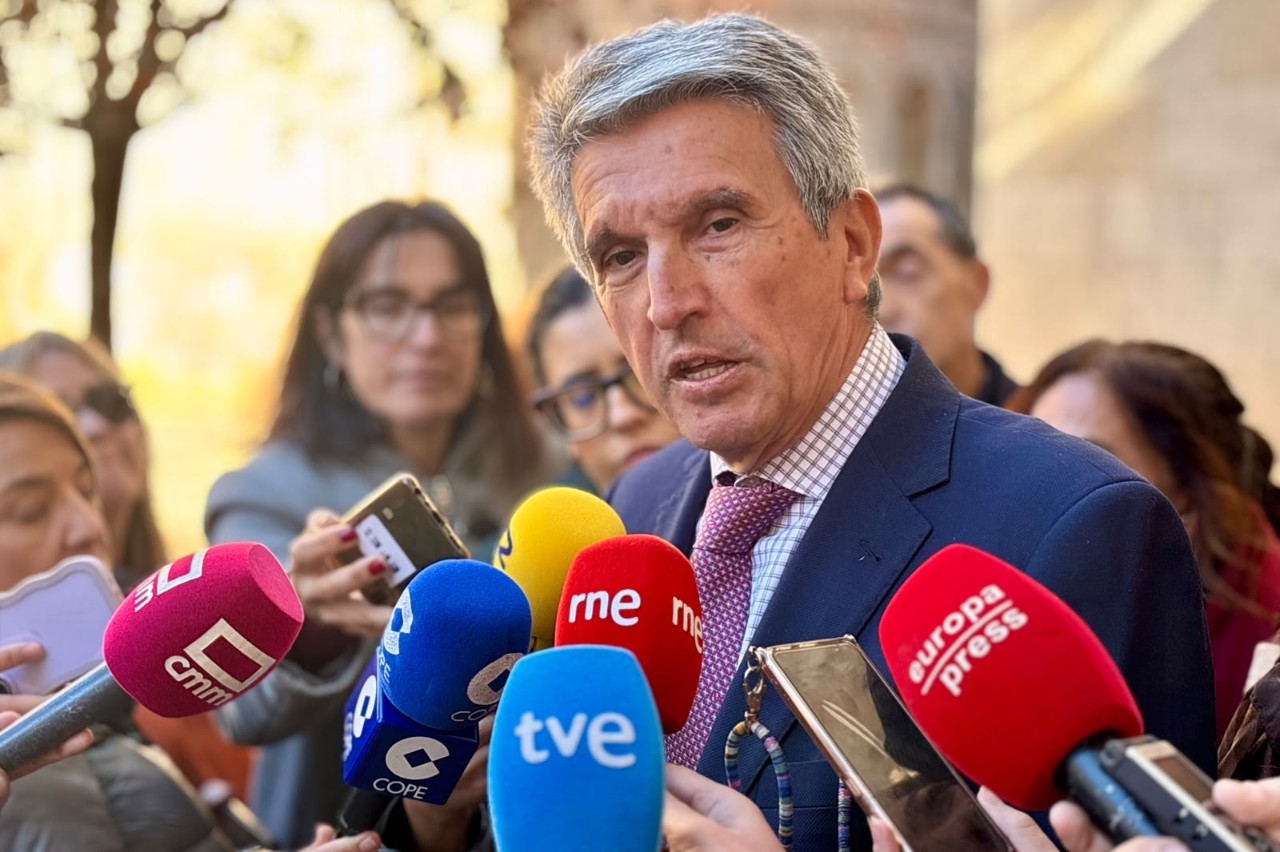
Proud of how firefighters have worked, the health services, how the EMU has worked, how the Civil Guard has worked, how the National Police has worked, how the Civil Protection has worked, of course. I believe that we should be proud as a country of these public services that we have
Toledo.- The delegate of the Government of Spain in Castilla-La Mancha, José Pablo Sabrido, has sent his condolences to the victims and relatives of the accident, expressing his "deep pain, shared by all Spaniards, which will be difficult to forget". He has also made himself available to families and the wounded, to whom he has sent a message of “solidarity”.
On the other hand, Sabrido has expressed the “pride of country” that he felt during the emergency, based on the functioning of public services, the solidarity of the Castile-Manchego people and coordination between administrations.
“Proud of how firefighters have worked, the health services, how the EMU has worked, how the Civil Guard has worked, how the National Police has worked, how Civil Protection has worked, of course. I think we should be proud as a country of these public services that we have,” he said.
“I also want to express the pride of Spanish in how we have been able to respond with tremendous solidarity, starting with the people of Urda,” remembering, among other actions, the blood donations that have been made, the help for the transfer of the victims by the neighbors, or the provision from other autonomous communities for any need.
The delegate also praised the coordination between administrations that has taken place, which “has allowed the work to have been done in a reasonable time”, while the work by the Civil Guard is still maintained.
Finally, Sabrido wanted to make it clear that “all family members are being accompanied by both the Mental Health Commissioner and the companies themselves, so that they have the psychological care they need”.
Agreement of the Council of Ministers
The Council of Ministers approved this morning a Royal Decree-Law on urgent measures to support the victims of the railway accident in Urda (Toledo), which provides for 30 million euros to speed up the receipt of aid by those affected and thus avoid the waiting times inherent in the ordinary insurance procedures.
The measure has been presented by the Minister of Transport and Sustainable Mobility, Óscar Puente, at the press conference following the Council of Ministers, and is articulated in a Royal Decree-Law that aims to establish immediate aid to victims and advance part of the compensation corresponding to the civil liability insurance, which will be added to the mechanisms already existing in the current legal system, which recognizes the right of victims of railway accidents and their families to comprehensive assistance.
This aid is complementary to the plans, insurance and cover provided by law for victims of railway accidents and is therefore compatible with mandatory civil liability compensation. In addition, they will be received in full since they will be exempt from taxation.
The amount mobilized by the Government amounts to 30 million euros: EUR 15 million for emergency aid and another EUR 15 million for advances. The amount to be received has been defined as follows:
- In cases of death, a direct aid of just over 72,121 euros for each deceased person and the same amount as an insurance advance.
- In cases of bodily injury, the aid is structured by severity levels, with amounts ranging from slightly more than 2,404 euros in cases of minor entity to more than 84,141 euros in cases of maximum severity. The figures are the same for the insurance advance.
Working people affected by the accident will be able to benefit from special social security protection. Work losses due to temporary incapacity resulting from the accident will, on an exceptional basis, be considered as a work accident for the purposes of the economic benefit, which will allow the benefit to be received from the first day of leave (not from the fourth day) and in an amount greater than that corresponding to a leave due to common contingencies (75% of the regulatory basis, instead of 60%).
In addition, pensions for permanent incapacity, death and survival, as well as the financial benefit for partial permanent incapacity resulting from the accident, shall, for the purposes of calculating their amount, be considered as benefits arising from an accident at work, provided that it is more favourable for the beneficiaries.
Persons included in the State Passive Class System who, as a result of the accident, are entitled to a retirement pension for permanent disability, widowhood, orphanhood or in favour of their parents, may receive a higher pension. The system of extraordinary pensions shall apply, provided that it is more beneficial to the beneficiary.
This protection will be applied ex officio, without the need to submit an application, and will have retroactive effects, even when the leave or pension has already been extinguished or recognized.
On the other hand, the Government creates Comprehensive Care Offices for the victims of the Urda railway accident. These Offices are deployed through the Government Delegations and Subdelegations.
The Comprehensive Care Offices, together with the other Citizenship Care Offices of the Government Delegations and Subdelegations, will help the affected persons to request and process the aid and advances.
In addition, if any person affected by the accidents cannot travel to an Office, they will be cared for in their own home, anywhere in the national territory, by personnel of the Government Subdelegations, thanks to the program "The Administration Near You" of the Ministry of Territorial Policy and Democratic Memory.
The contact details of the Subdelegations of the Government of Spain in Castilla-La Mancha are as follows: Albacete, 967769118; Ciudad Real, 926989000; Cuenca, 969759000; Guadalajara, 949759000; Toledo, 925989000.
The Royal Decree-Law also includes the limitation of the prices of alternative transport to the train while the High-Speed line Madrid – Andalusia is cut off and of accommodation services linked to the movements affected.
The objective is to prevent the consequences of the accident from being aggravated by price increases that hinder access to necessary goods and services, introducing a regime of temporary limitation of the maximum prices applicable during the duration of an emergency situation that significantly alters the conditions of supply and demand of a specific market, in order to protect equity, transparency and the confidence of citizens in the market.
This limitation consists in setting as the maximum price the one applicable in a previous reference period, subject to an objective and verifiable criterion, thus avoiding increases that could seriously harm consumers and users at a time of special fragility.