
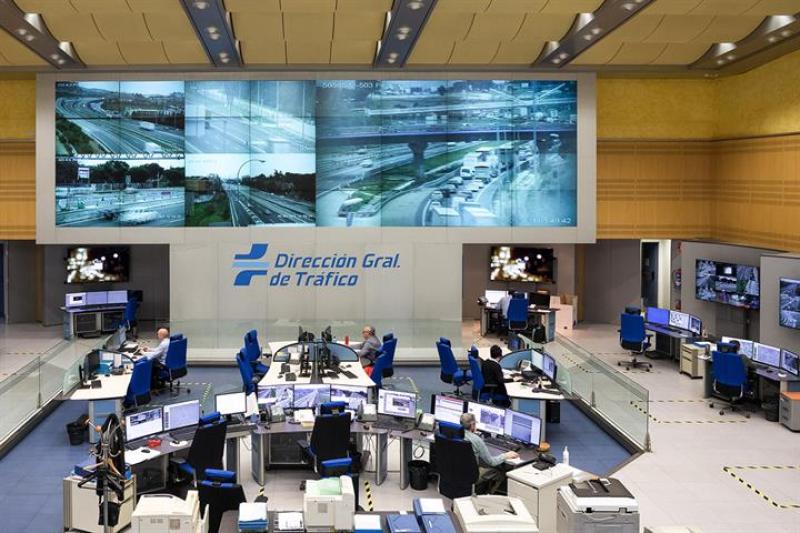
From 3 p.m. on Tuesday, 5 December, and until 24 a.m. on Sunday, 10 December, the Directorate-General for Traffic (DGT) has set up a special system to monitor and control long-distance journeys on the occasion of the Constitution and Immaculate National Holidays, with almost 8 million journeys planned throughout the country and in Cantabria around 92,000.
The Government delegate in Cantabria, Ainoa Quiñones, has recommended to those who travel these days on the Cantabrian roads that they pay special attention to traffic signs, information panels and traffic conditions.
In order to cover all these journeys, which will significantly affect roads destined for mountain areas for winter sports, but also others destined for tourist rest areas and those of second residence, the DGT has prepared a special operation that includes regulation, management and surveillance measures that guarantee mobility and fluidity on the roads and, at the same time, ensure their road safety.
This device has, as usual, the full availability of the means available to the General Directorate of Traffic and includes both human means (agents of the Traffic Group of the Civil Guard, official personnel of the Traffic Management Centers, helicopter patrols and personnel responsible for the maintenance of equipment and the installation of measures on the road), as well as technicians (780 fixed radars (92 of them of stretch) and 545 speed control mobiles, in addition to the 13 helicopters, 39 drones, 216 cameras and 15 camouflaged vans to control the use of mobile and the safety belt).
The provincial head of Traffic, José Miguel Tolosa, has indicated that, in the case of Cantabria, there is the deployment of up to 180 personnel of the Traffic Sector of the Civil Guard, the participation of the personnel (up to 57 people) of the Northwest-Cantabrian Traffic Management Center, based in A Coruña, and with the collaboration of the local police of the main municipalities of the Autonomous Community.
He also pointed out that the areas where a greater presence of vehicles is expected are the junction between the A-8 and A-67 motorways, in the vicinity of Torrelavega, and in the aforementioned A-8, especially in the eastern part of the Community, bordering the Basque Country.
TRAFFIC FORECASTS AND MEASUREMENTS
When the festivities are celebrated on Wednesday and Friday, this will cause the departure of the large urban centers to take place in two phases: the first and most significant on Tuesday 5 (between 17 and 22 hours) and Wednesday 6 (from 10 to 14 hours), for the beginning of the bridge period and, the second, on Thursday 7 (between 18 and 22 hours) and Friday 8 (from 9 to 14 hours), for the beginning of the holiday and the weekend. For its part, the return will be focused mainly on Sunday 10, mainly between 16 and 23 hours.
In the rest of the intermediate days, in addition to the long-distance trips, there will also be short movements in the alternating output-entry direction coinciding with the holidays.
For all these reasons, in order to encourage traffic in the most sensitive areas during each of these six days, the DGT has planned, among other regulatory and management measures, the installation of reversible and additional rails with cones in the hours of greatest traffic flow and the establishment of alternative itineraries.
Likewise, the works on the roads will be paralyzed, the celebration of sports tests and other events that suppose the occupation of the road will be limited and the circulation of trucks in general and those who transport certain goods in certain sections, dates and times will be restricted.