
The Government, through the Ministry of Industry and Tourism, allocates 8,097,633 euros to Asturias to finance three projects to improve the Historical Heritage with tourist use.
The three projects selected in Asturias, published in the resolutions
Provisional, they are as follows:
TOWN COUNCIL OF CASTRILLÓN: Recovery of the Arnao Mine and its environment (2nd phase). 2,115,803.00 euros.
TOWN COUNCIL OF AVILÉS: Integral rehabilitation of the BIC Palacio de Balsera for its destination to art space Ciudad de Avilés. 3,000,000.00 euros.
CITY COUNCIL OF GIJÓN: Rehabilitation and enhancement of the archaeological remains of the defenses and northeast area of the Castro de la Campa Torres de Gijón (Asturias) for tourist and cultural purposes. 2,981,830.00 euros.
92 projects throughout Spain
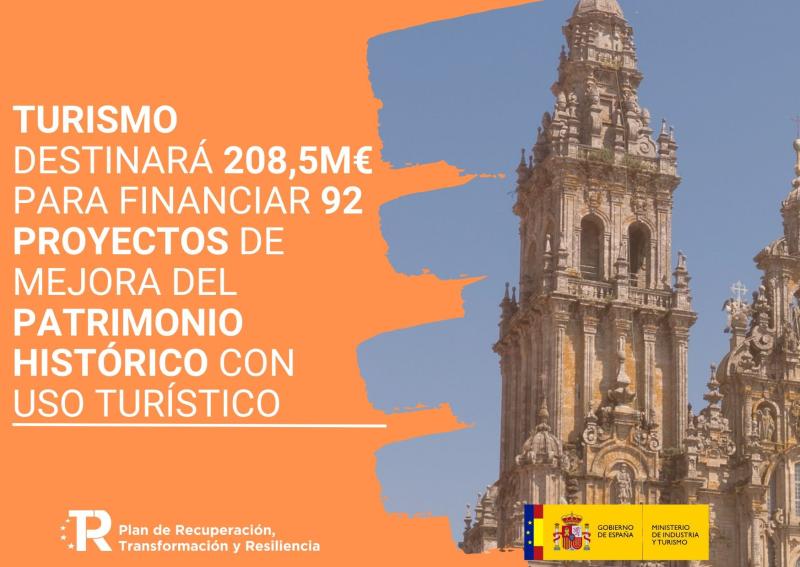
The Minister of Industry and Tourism, Jordi Hereu, announced today the publication of the provisional resolutions of the aid line of the Program to Improve Competitiveness and Revitalize Historical Heritage with Tourism Use, by which 92 projects presented by local entities and autonomous communities will receive grants worth 208.5 million euros to improve tourism use in Goods of Cultural Interest (BIC).
The projects have been selected taking into account the characteristics of the destination and the viability, quality and tourist potential of the same. Among the valuation criteria, destinations with a risk of depopulation have also been considered to boost their tourist potential and strengthen social and territorial cohesion.
During the ceremony of handing over the keys of the new Parador de Molina de Aragón (Guadalajara), to the president of Paradores, Raquel Sánchez, the Minister of Industry and Tourism pointed out that the objective of this aid is to promote cultural tourism through projects of maintenance and rehabilitation of the historical heritage that clearly incorporate the improvement of the tourist use of these goods.
The actions to be carried out in these projects include the conservation, maintenance, valuation and rehabilitation of assets declared as Cultural Interest Assets (BIC) for tourist use. It also includes other measures such as improving universal accessibility, improving energy efficiency and saving the consumption of water and energy resources, or reducing and compensating the carbon footprint, among others.
“Cultural heritage has a central role as an element of attraction and enjoyment of visitors in destinations,” said Jordi Hereu, who also added “the richness of our country’s cultural heritage, recognized internationally in the 50 properties declared World Heritage by UNESCO.” Spain is the third country with the most declarations in Europe and the fourth worldwide.