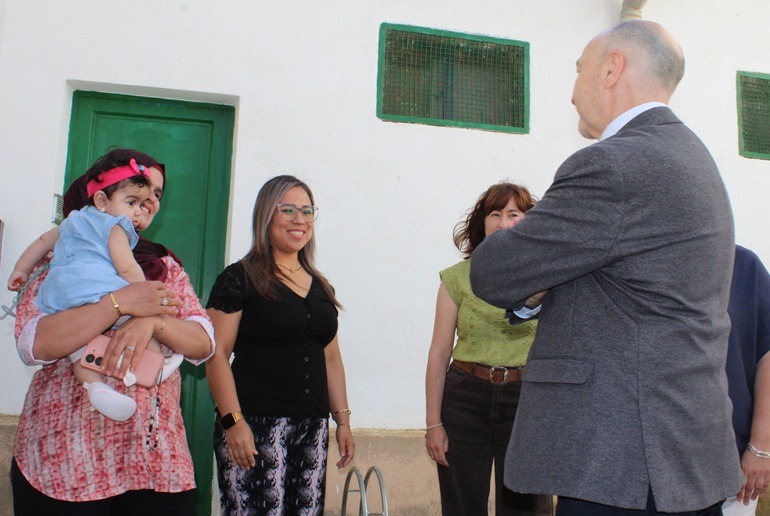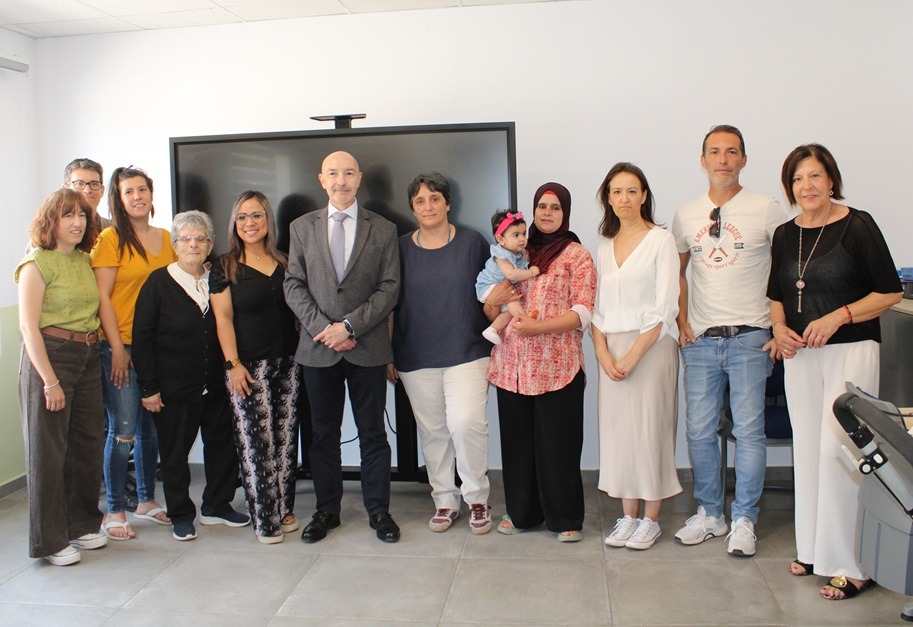
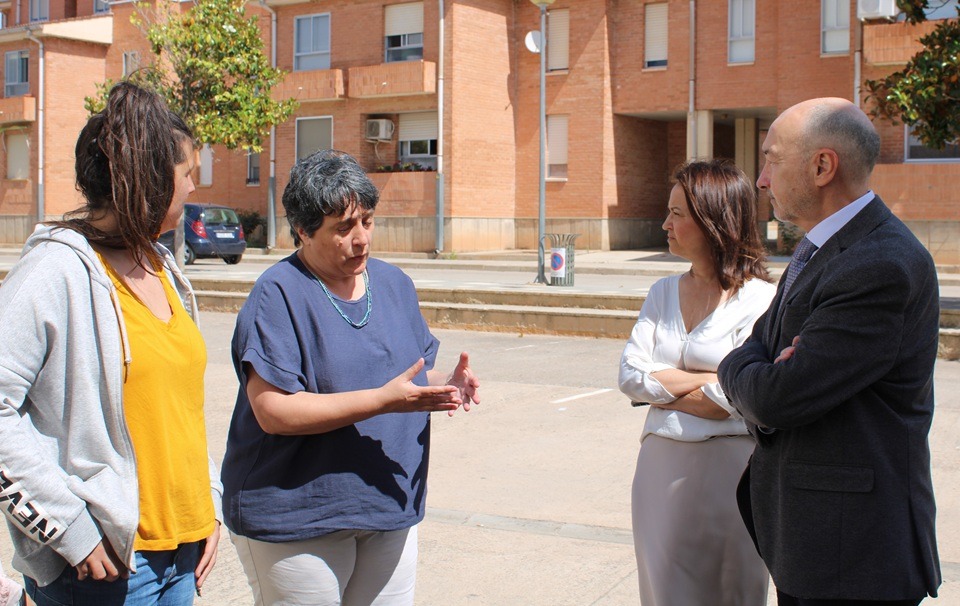
Zaragoza.- The delegate of the Government of Spain in Aragón, Fernando Beltrán, visited this Thursday the Sociocultural Association Alto Jalón, in Ariza, one of the collaborating entities in the process of regularization of migrants, with the aim of knowing how this initiative is being developed in rural areas when barely a month is left before the deadline for applications.
During the visit, Beltrán stressed that the process is being carried out “with total normality” and announced that provisional resolutions are already being received, waiting for the final ones to begin to arrive.
“Regularization is going to change lives. We are giving rights to people who deserve it and who need it. In addition, it allows them to leave the submerged economy and contributes to combating human trafficking and the situations of abuse suffered by many people in vulnerable situations,” said Beltrán.
Accompanied by representatives of the municipal team, the delegate has been able to speak with several neighbors of the region who are processing their request for regularization through this entity. This is the case of Melisa del Pilar Tejada, 40 years old and originally from Peru, who has been living for about two years in Morés with her husband and two children. “It’s a very welcoming town with neighbors who make me feel at home,” he said. She works taking care of an elderly person and has explained that from the first day she spoke with Isabel Renieblas -of the association Alto Jalón- it gave her the security and tranquility that her process was going to go well: “It’s hard to leave your country, but you always look forward to the future of your children. I am happy and eager to have the final resolution to be able to join this country that has opened its doors to us.” Another story that exemplifies this process is that of Nawal El Morsli, 40, who has been Ariza’s neighbour for four years. She arrived from Morocco to the town to care for her husband, who is recognized as having a 95% disability.
“These are the faces of immigration: people looking for an opportunity, a future and the possibility of developing their vital project in our villages,” said the government delegate.
The sociocultural association Alto Jalón has more than three decades of experience in the region Community of Calatayud and in this regularization process there are three volunteers who are helping users with the processing. As its coordinator, Isabel Renieblas, has pointed out, “it is a very complex and very simple process at the same time because the requirements are very clear. The most important thing from the beginning has been to transmit security and trust to all these people. Give them information, peace of mind and support.”
From Alto Jalón, 75 applications have been processed so far and they estimate that by the end of the month, by the end of the deadline, they will have submitted around 120. They are accompanying neighbors not only of Ariza but also of other localities of the area such as Morés, Terrer or Sabiñán; in addition to some towns of the province of Soria given its proximity. Renieblas has recognized that it is being a very exciting experience for them: “I have proposed to the delegate to collect all the life stories that are coming to us because they are overwhelming, some positive and others negative. They are very long processes in many cases until they arrive in Spain. There are cases of very young people who have been on a patera for four or five days.”
The delegate of the Government of Spain recalled that in recent weeks meetings have been held with collaborating entities, with business organizations and with unions to take the pulse of the regularization process and resolve any doubts that may arise. “We are maintaining permanent contact with all the actors involved to ensure that this process is carried out with the maximum guarantees and reaches all the people who can benefit from it,” he concluded.
All the information available on the regularization website
The Ministry of Inclusion, Social Security and Migration has created a web portal (inclusion.gob.es/regularizacion) specifically intended to inform about the extraordinary regularization process.
The website compiles all the detailed information of the process including specific documentation such as application forms, fact sheets, explanatory videos and an extensive document of 100 technical questions that answer the most frequent questions about regularization.
From the regularization website, it is also possible to start the process itself if an electronic certificate is available, request a prior appointment for the face-to-face presentation of the application and make inquiries.