
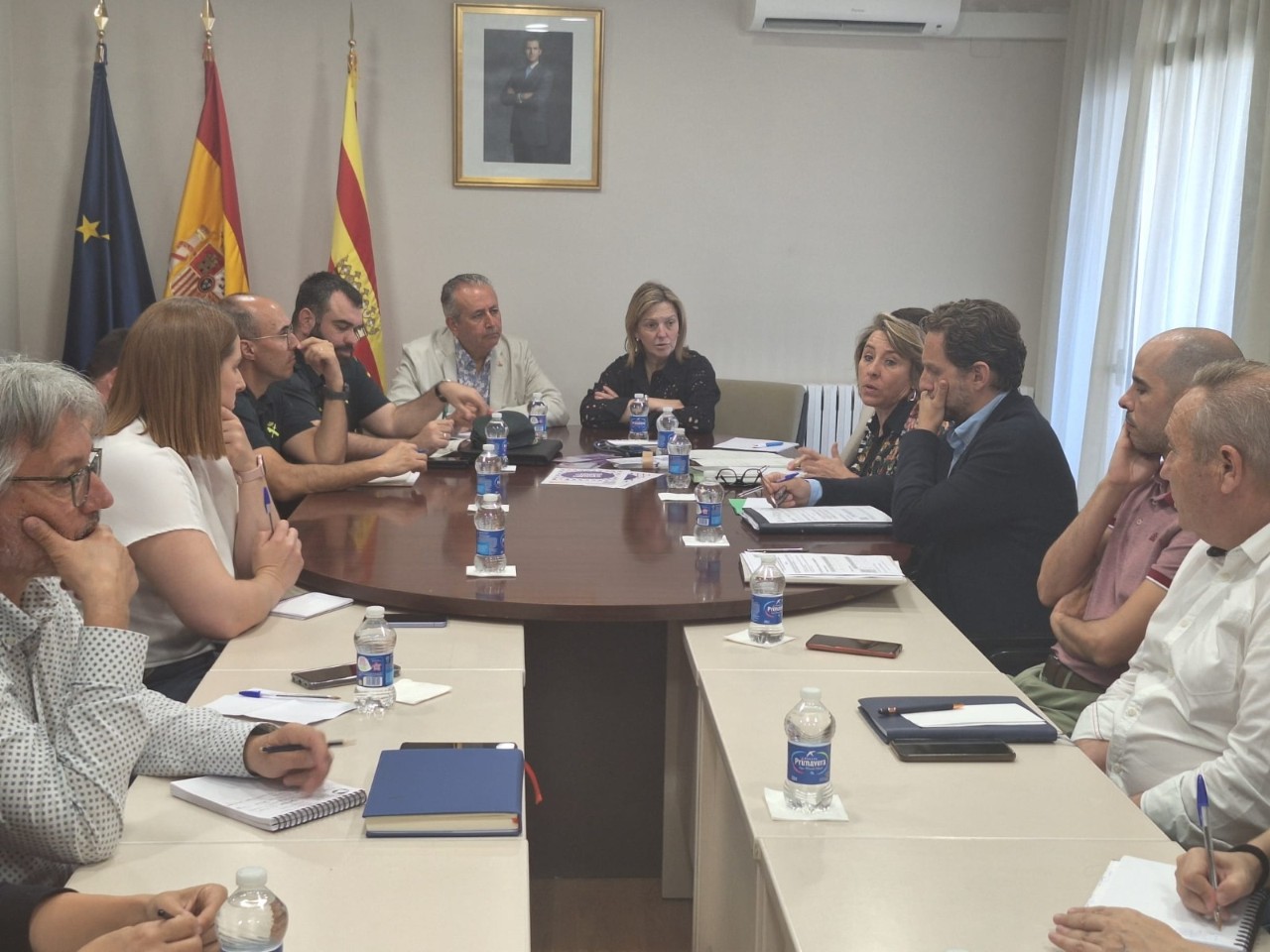
Velilla de Cinca.- The subdelegate of the Government in Huesca, José Carlos Campo, has presided in Velilla de Cinca a meeting with mayors, agricultural organizations, social entities, unions and warehouses to prepare the fruit campaign in the Bajo/Baix Cinca. The meeting has served to address different aspects related to the sector, among which the reception of seasonal workers in the context of extraordinary regularization has been particularly important.
The deputy delegate defended that the extraordinary regulatory process put in place by the Government of Spain “is a great opportunity” for the fruit sector, because “they are people who are already here and that farmers and companies need to fill jobs”. The season of thinning and gathering fruit requires every year about 25,000 seasonal people in Aragon, of whom about half work in the province of Huesca.
Beyond its socio-economic impact, Campo has described the regulatory process as “an act of justice with those people who have chosen our villages for their life projects, and who thanks to their efforts maintain the production chain of a crop that requires work both in the field and in the warehouses. These people will now have the same rights and duties as other neighbors.”
The subdelegate recalled that the process takes place with absolute normality throughout the province. He also thanked the City Council of Lleida, a province with which economic fabric is shared, for having set up an office to speed up the procedures, “a measure that will benefit many people who work in companies in Bajo Cinca”.
To clarify doubts about the extraordinary regularization, as well as in the matter of hiring of seasonal workers, the provincial heads of Immigration and Labour Inspection have attended the meeting. The Civil Guard has also participated, which as every year strengthens its presence in the territory during the campaign, including the support of the Cavalry Group.
For the 2026 season, the Office of Foreigners of Huesca has processed about 1,000 recruitment authorizations at the origin of migrants, many of them women who will work in fruit stores. With regard to the Labour Inspectorate, during the meeting it was recalled that work will continue to prevent situations of labour exploitation and, in terms of labour risks, the regulations relating to high temperatures will be affected.
Prevention of male violence
In the line of work of the Subdelegation of the Government in Huesca to extend the prevention of male aggression in all areas of society, the Subdelegate of the Government in Huesca has stressed the importance of introducing this perspective in the work environments linked to the fruit campaign.
During the meeting, José Carlos Campo has requested the collaboration of municipalities and companies to disseminate the materials of the Violeta Point in visible places of the localities and jobs. It has also made available the Violence against Women Unit of the Subdelegation to expand this campaign with training activities for both municipal staff and people in charge of farms or warehouses.
“There are many women who every year join the collection of fruit or triage in warehouses, sometimes as part of contingents of foreign workers, so they may not know the resources existing in Spain, so it is a way to reach them and they know that there is a protection system,” said the deputy delegate.