
The Government of Spain has allocated a total of 71.7 million euros to tourism in the Autonomous Community of La Rioja over the last five years. Of these, the Central Executive has distributed 67.86 million euros from the Recovery, Transformation and Resilience Plan (PRTR) to promote sustainable and digitized tourism projects, as well as another 3.9 million euros from the items agreed in the regular calls of the Destination Tourism Sustainability Plan.
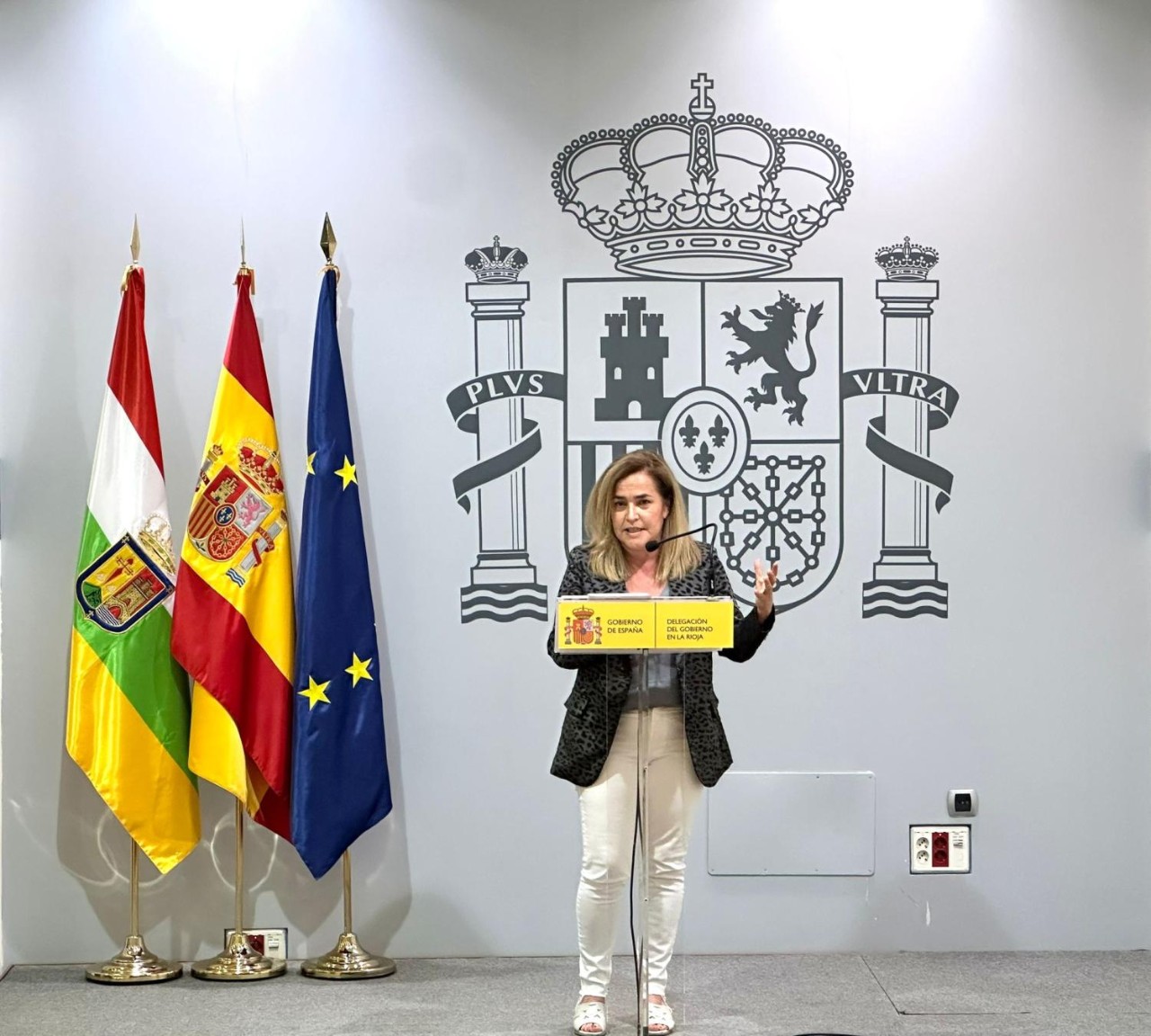
The government delegate in La Rioja, Beatriz Arraiz Nalda, has offered a balance sheet of Tourism investments in the region, “one of the areas in which European funds are having the greatest impact.”
Arraiz Nalda has explained that these amounts have been allocated to sustainability plans, digitalization, diversification and to maintain our Heritage, with the aim of “strengthening the competitiveness and sustainability of the Rioja tourism sector, promoting digital transformation and the transition to a greener and socially responsible tourism”.
As the delegate stressed, “the almost 72 million euros destined by the Government of Spain in La Rioja becomes the largest and unprecedented economic deployment in terms of public investment destined exclusively for the tourist sector in our community.”
“For the leading position of our country as a tourist destination, the Central Executive has promoted the renewal of pioneering and consolidated destinations, as well as new emerging destinations and has supported digitization projects to improve the management of companies in their relationship with customers, in the management of their profits or in their brand positioning,” he added.
Sustainability
To concretize the funds destined by the Government of Spain to tourism in La Rioja, the delegate has classified them into five large blocks. The first is the one that refers to Sustainability, to which 53.97 million euros have been allocated for the development of 20 projects in La Rioja, and which is understood as a triple sustainability that combines the social, the environmental and the economic.
In this regard, the delegate pointed out that “the Destination Tourism Sustainability Plans are one of the great programs because of their size, but also because of the impetus it has given to multi-level governance because it requires cooperation at the three levels of the Administration: state, regional and local”.
This Sustainability Axis in La Rioja is divided into four main areas:
- Regular calls for Destination Tourism Sustainability Plans with 3.9 million euros.
- -Extraordinary calls for these plans for the years 2021, 2022 and 2023, with 45.74 million euros.
- National Plan Xacobeo 2021, with 2.98 million euros.
- National Enogastronomical Plan of 2022, with 1.35 million d euros.
Both Rioja municipalities and townships have benefited from the funds allocated by the Government of Spain, as well as the Government of La Rioja itself has obtained funds for the development of cohesion actions.
Within the 20 projects, Arraiz Nalda has highlighted the funds allocated to different Cohesion Actions between Destinations (ACD), supralocal interventions that seek to connect and strengthen different tourist destinations within a wider region or geographical area. These actions focus on completing, relating or cohesion the tourist actions of different destinations, balancing the tourist flows and promoting a more sustainable and balanced tourist development.
For these DTAs, the Government of Spain has allocated 24.57 million euros to La Rioja. These Cohesion Actions are mainly related to the development of the Valle de La Lengua project, which aims to promote sustainable wine tourism and language tourism as backbone and cohesion elements of our community, through the development of projects that develop in a sustainable way all the tourism potential of La Rioja, through the valorisation of the most unique and identity resources, such as the culture of wine and the cradle of Spanish.
On the other hand, but also within the Sustainability Axis, the Xacobeo National Plan is included, by which the Autonomous Community of La Rioja has received 2.98 million euros, as well as the National Enogastronomical Plan, with more than 1.35 million euros.
Digitization
The second of the axes is related to Digitalization, as a fundamental instrument to achieve this sustainability. This work is carried out through three aid lines, from which five projects with 4.01 million euros have benefited.
From the first one called Ultima Milla and which is mainly in charge of the private sector, mainly tourism and technology companies, two companies have benefited from their digitalization implementation projects in Logroño and Calahorse with a total of 556,000 euros.
In addition, to promote the digitalization of tourism in Spain, there is the Network of Smart Tourist Destinations, to which the City of Logroño belongs, an administration that has benefited from 160,000 euros for the technological modernization of its tourist infrastructures.
As part of the Network of Smart Tourist Destinations, the City of Logroño has received another 352,000 euros for one in which the autonomous communities of Castilla y León and Navarra are also involved, amounting to the total aid obtained for this joint project of 1 million euros.
Also in this Digitalization Axis, the City of Logroño has received another 2.95 million euros in aid for digital transformation. The project presented by the Consistorio Logroñés will be integrated into the Intelligent Destination Platform, promoted by the Secretary of State for Tourism.
Diversification
The third axis is Diversification for the improvement of competitiveness, of which in La Rioja there are 8 projects with 10 beneficiaries that have obtained aid worth 1.1 million euros.
The delegate referred to “the Experiences of Tourism Programs in Spain, a pioneering program because it advances in the traditional approach of the product, towards that of tourism experiences, in which people and experiences are put at the center of the design of the offer”.
Specifically in La Rioja, different associations have been beneficiaries along with municipalities and companies for presenting projects that value what characterizes us as a region: wine, the Camino de Santiago or Paleontology, among others.
Heritage
Arraiz Nalda has referred to the fourth axis, related to the Program of support for the historical heritage of tourist use, whose purpose is to renew the country's heritage to put it into operation not only for tourists, but also for the enjoyment of residents in the municipalities in which it is located. In total, five projects in Rioja have received 10.46 million euros for the empowerment of their heritage.
This is the case of the 7 million euros received by different municipalities such as Nájera, for the rehabilitation of the container building of the old Church of San Miguel or the old Abacial Palace, or Aguilar del Río Alhama for the consolidation of the Roman Wall and the improvement of its accessibility in the Site of Contrebia Leucade or the project of the city of Alfaro for the rehabilitation of the Convent of Concepcionista.
In addition, to add value to our heritage, the Autonomous Community received almost 3 million euros for the rehabilitation and tourist use of the Leiva Castle and for the creation of the Interpretation Center of the Castles of La Rioja.
Sectoral Conference
The direct transfers that the Autonomous Community has obtained, by agreement of Sectorial Conference, is the fifth and last axis. In this section, the funds allocated by the Government of Spain to La Rioja amount to 2.2 million euros, which have been allocated to digital skills, social sustainability and energy efficiency.