
- With these murders, the number of women killed in 2026 by their partners or ex-partners rises to 33
The Government Delegation in Castilla-La Mancha condemns the latest confirmed murders in the provinces of Barcelona and Cantabria
04/08/2026
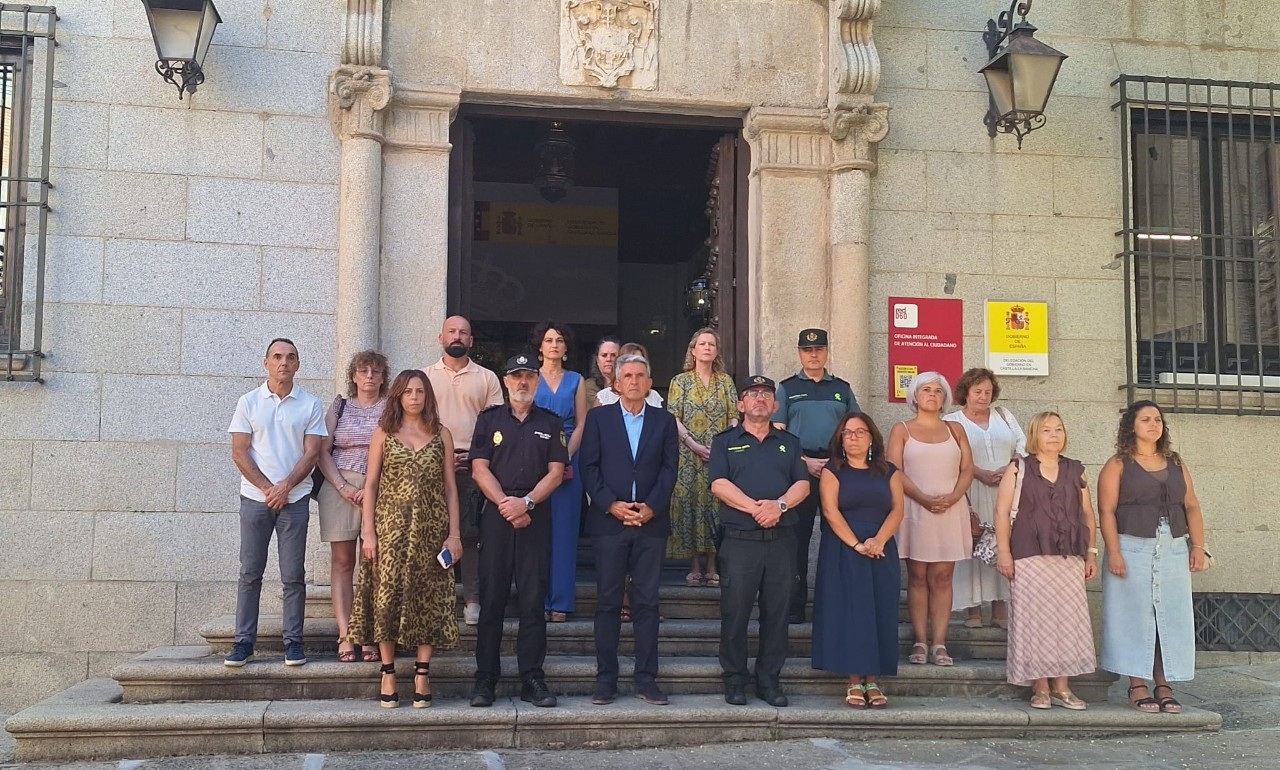
The victims are Camila Kellem, 34, murdered by her spouse in the province of Barcelona on July 28, and Paula, 27, murdered by her partner in the province of Cantabria on July 31.
Toledo.- The Delegation of the Government of Spain in Castilla-La Mancha has shown its condemnation for the latest machista murders confirmed in the provinces of Barcelona and Cantabria. Since 2003, when the collection of official data began, 1,374 women have been murdered for gender violence. Since 2013, 68 boys and girls have been killed for gender-based violence against their mother and 533 have been orphaned as a result of this violence.
The victims are Camila Kellem, 34, murdered by her spouse in the province of Barcelona on July 28, and Paula, 27, murdered by her partner in the province of Cantabria on July 31.
In addition to the Government delegate, the event was attended by representatives of the Government Delegation ' s Unit for Coordination against Violence against Women; representatives of the State Security Forces and Corps; members of other public administrations; and workers of the Delegation.
Statements by the delegate
The delegate of the Government of Spain in Castilla-La Mancha, José Pablo Sabrido, has conveyed his condolences to family and friends of the victims, and recalled that “whenever there is a woman killed by male violence we will call for this act”.
“First of all, to remember her, at this moment Camila and Paula, and with them her friends and their families. Secondly, because no murder is going to deserve not to be reported. And there is a third, which is no less important, and that is because we have to continue to raise awareness among society that these murders are a scourge that must not be endured and that society must feel it as something of its own,” Sabrido said.
The government delegate concluded by saying that “we will never forget women, we will never forget the male murders and we will never stop asking for the complicity of society.”
Institutional declaration
In application of the protocol approved by the Ministry of Equality and the Ministry of Territorial Policy when a machista murder occurs, an institutional statement has been disseminated in which it is stressed that, as a democratic society, “we cannot tolerate any type of violence against women because they are women”.
Male violence “is a structural violence, based on sexist discrimination, inequality and imbalance in power relations between women and men. Violence against women and girls violates their fundamental rights to life, liberty, physical and moral integrity, equality and dignity.”
Likewise, the commitment of the institutions is reaffirmed in the face of the negationist approaches of male violence and an appeal is made to all administrations and society as a whole to maintain this struggle from unity and firmness, moving towards a more just, egalitarian and violence-free society against women.
Resources of Assistance
The Ministry of Equality, through the Government Delegation against Gender Violence, recalls that telephone 016, online consultations through email 016-online@igualdad.gob.es, the WhatsApp channel on the number 600 000 016 and the online chat available on the web violenciagenero.igualdad.gob.es, operate 24 hours a day, every day of the year.
The 016 provides advice on available remedies and the rights of victims of all forms of violence against women, as well as legal advice from 8 a.m. to 10 p.m., every day of the week, with care in 53 languages and a service adapted to possible situations of disability.
In case of emergency, you can call 112 or the telephone numbers of the National Police (091) and the Civil Guard (062). If it is not possible to make a call, in a situation of danger the ALERTCOPS application can be used, which sends an alert signal with geolocation to the State Security Forces and Bodies.
These means can be activated by the victim and also by anyone who knows or suspects of a case of gender violence, since the eradication of this violence is a collective responsibility.