
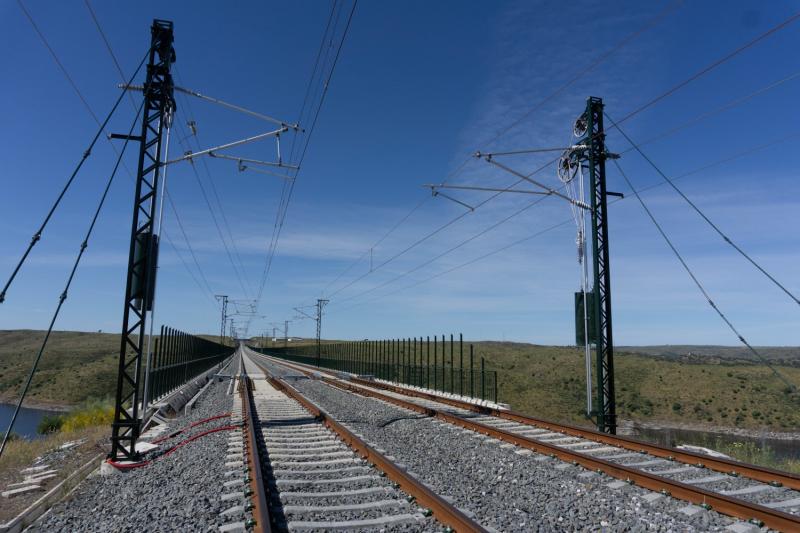
Adif AV takes a new step in the electrification of the high-speed rail connection to Extremadura with the tensioning, on August 23, at 23.59 h, of the catenary between Peñas Blancas and Frontera Portuguesa. With this operation, the 90-km stretch between the Carmonita substation (Badajoz) and the exit of the Badajoz station is energized, including the stations of Aljucén, Mérida and Badajoz, and checks all the elements that make up the catenary, as well as the signaling and communication facilities. The performance was completed on May 19, when the 112 km stretch between the exit of the station of Plasencia and Peñas Blancas was put in tension. The voltage of the line up to the Plasencia station (11 km) is completed, in the absence of a canton due to the condition of a high voltage line, and in Cáceres the electrification works of tracks 3 and 5 are completed.
In addition, Adif has awarded the contract for maintenance and conservation of the energy systems of the Plasencia-Badajoz section (355 km of electrified roads) for 6.8 million euros.
More performances completing the high-speed shaft
The actions to complete the high-speed axis in the region take place in different areas: the track assembly is carried out in the Baipás of Mérida and the excavation of the Dehesa del Terzuelo tunnel (1.5 km) has reached 250 m. This tunnel is one of the longest of the Talayuela–Plasencia route - with all the sections in execution or completed - and one of its most unique structures. Another of the most relevant structures located on this route, the viaduct of Arroyo Grande (284 m), in which the foundation works have been completed and the execution of the elevations is addressed. Adif AV also renews the tracks and extends the platforms in various stations, such as Badajoz, where the works face their last phase. In addition, the Madrid-Oropesa section by the Ministry of Transport, Mobility and Urban Agenda (Mitma) is in Informative Study.
High Speed Electrification System
The electrification of the Plasence-Badajoz section is based on an alternating current system of 2x25 kV and 50 hertz frequency. The power supply to the line is made by means of traction substations, which transform the voltage from 220 kV or 400 kV to the 2x25 kV required by the catenary.
The electrification of the line contributes to a safer and more sustainable circulation, free of CO2 emissions to the atmosphere. This feeding system also allows a better distribution of currents and is deployed in the new high-speed lines of Spain. The system allows to extend the distance between traction substations, placing them at about 60-65 km, with the consequent savings in facilities and impact on the environment.
European funds
This action contributes to the achievement of Sustainable Development Goal (SDG) 9, which has among its goals to develop reliable, sustainable and quality infrastructures. This action is co-financed by the European Regional Development Fund (ERDF). A way to make Europe.