
Revaluation of pensions, improvement of the remuneration of public employees, improvement of birth and care permits, increase of scholarships for study, increase of degrees and places of Professional Training, reinforcement of public services provided to Melillenses with increase of those and professionals in the same… “The Government of the Nation is focused on citizenship and if we see each and every one of the measures that have been taken, we can see that this Government is focused on improving the quality of life of the Melillenses and on the general welfare.”
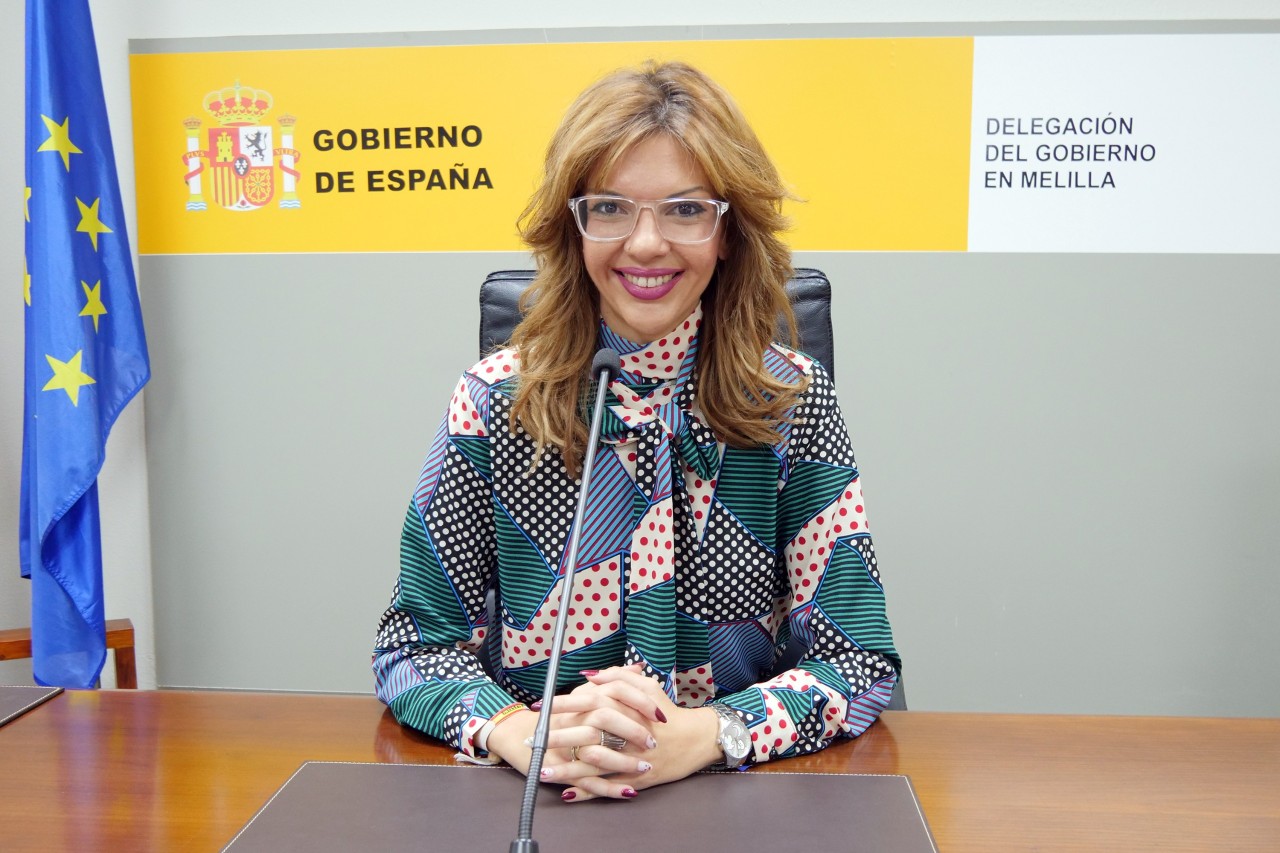
The Delegate of the Government in Melilla, Sabrina Moh, on the occasion of the end of the year, has taken stock of the legislature and, although she has made it clear that we are at the equator of it and that the Executive will continue to work for and for people, she has wanted to put in value that “from minute one, we have put ourselves to work for what matters to us, which are families and workers and for making a quality leap to the Welfare State”.
Two years, the head of the delegation made clear, in which Melilla “has been and is being a priority for the Government of Spain”. “Gone are the years in which Melilla was abandoned, as happened with the governments of the PP, in which not only not a single investment was carried out, but also all the investments that were in progress were paralyzed,” he recalled.
More resources for families
Moh recalled that, during the PP governments, families, the elderly and workers were the ones who suffered the greatest damage. In contrast, for this government, citizenship and its well-being has been the absolute priority.
“We have revalued pensions and today, in Melilla, the average pension is 1,601 euros per month, 453 euros more than in 2018. In addition, we have increased minimum pensions by 6% and non-contributory pensions by 9%”, he added.
Likewise, he referred to the firm commitment to the improvement of the Welfare State with the modernized public administrations, the reinforcement of the staff of public employees and public employees, and the improved remuneration, year after year, of the professionals who carry out the work of the public service, which has meant an increase by 2022-2024 of 9.5%.
In this regard, it has highlighted the fact that the Government has approved a new increase in the salary of public employees of 2.5% for this year and up to 2% for 2026 and that the remuneration of these workers is increased by 11% between 2025 and 2028.
But he has also referred to the increase in the minimum professional wage, which has stood at 1,184 euros per month, or the labor reform, which has meant that indefinite contracts increase in our city to 6,517, 214% more than in 2019, or the fact that affiliation to Social Security is maintained month by month above the 25,000 members. “Last November we reached 25,768 employees, 2,186 more members than in November 2018”, he stressed and stressed that this “is the path on which we are going to continue working because our bet is that of stable and quality jobs, against the precarious employment model of the right”.
Moh also wanted to highlight the fact that citizens can enjoy three more weeks of paid childcare leave, which will be added to the 16 that were already in force thanks to the social policies of the Socialist Government. He has also pointed out the increase in scholarships, such as residency scholarships, which have been improved by 200 euros, from 2,500 to 2,700 euros for the academic year 2025-2026; the improvement of care for the Unit, with the increase in all financial benefits and the extension of the hours of care of home help; the help of up to 100 euros for all young people under 16 who need support to access glasses;… “Faced with the cuts we suffered in the past, today there is an extension of rights and we are going to continue strengthening the Welfare State”, he has countered.
Social measures such as the electric social bond, which has 724 beneficiaries in our city, or the minimum vital income, which supposes an aid for 13,882 melillenses.
Investments for Melilla
Sabrina Moh, has celebrated the completion of the implementation of the University Hospital of Melilla, with an investment of more than 150 million euros, the largest made by the General Administration of the State in the city in all history and which has meant “putting at the service of the Melillenses the most modern and advanced means and technology”.
Continuing with the field of Health, the highest representative of the Government of Spain in our city has also referred to the integral reform of the Primary Care Emergency Service (SUAP) in the facilities of Alvaro de Bazán, with an investment of almost 1 million euros and which has involved the inclusion of new and state-of-the-art equipment to improve assistance in basic emergencies.
“While the PP dismantles public health in the Autonomous Communities in which it governs, something that unfortunately we also suffered in Melilla with the previous government, the socialists are betting on a quality public health system,” he said.
One investment, he pointed out, has also materialized in the field of Education. Thus, he referred to the CEIP Encarna León, with an investment of almost 12 million euros with a capacity for about 1,000 students and that has come to expand the educational centers of the city, along with the Virgen de la Victoria Institute, and the former Central Market, which the Government of Pedro Sánchez also launched in the previous mandate.
To this is added, in this legislature, the construction of a children's school in Altos de la Vía, where practically half of the 4.6 million euros that this infrastructure supposes are financed by the Socialist Government, through the Mechanism of Recovery, Transformation and Resilience.
But, in addition, an unparalleled commitment has been made to Education, with the record of teacher hiring, which together with the improvement of media and the construction of centers, has allowed the historical improvement of ratios. To this is added the impetus given to Vocational Training (VET), with an investment of 18 million euros that has resulted in the implementation of more than 30 new VET cycles and the increase in students in recent years by 35%.
Continuing with infrastructures, the Delegate referred to the 10 million euros that has meant the modernization and improvement of the border crossing of Beni-Enza, with the implementation of biometric systems and automated management of entry and exit, which also translates into greater security for the work of professionals of the State Security Forces and Corps.
Recovery Plan
The Delegate, continuing with the support of the Government of Spain to our city, has referred to almost 100 million euros invested in our city from the Recovery, Transformation and Resilience Plan (PRTR), of which just over half has been directly invested by the State.
The funds, channeled both by the General Administration of the State and by the Autonomous Community, are allowing progress in key areas such as infrastructure, sustainable mobility, digitalization, ecological transition, social cohesion and the strengthening of the welfare state.
In terms of infrastructure and sustainable mobility, more than 10 million euros have been allocated to actions such as the reorganization of García Margallo Street, the Plazoleta del Rastro or various urban sections, as well as to the pacification of roads, the improvement of school environments, the expansion of bike lanes and the acquisition of electric public transport vehicles.
The Plan is also contributing to the reindustrialisation and boost of the business fabric, with support linked to the Electric and Connected Vehicle (VEC), the MOVES II and MOVES III programmes, and financial support for SMEs and the self-employed through CERSA. In addition, 732 SMEs and self-employed people have already benefited from the Digital Kit, with an investment of 2.8 million euros, in addition to aid from the Kit Consulting program
In the field of energy transition and sustainability, the PRTR promotes self-consumption projects, renewable energies, energy rehabilitation of buildings and actions against the climate emergency, such as the PERTE Agua, which allocates 2.1 million euros to the digitalization of the water cycle in the city
The Plan also promotes housing, education, equality and social services policies, with the construction of social rental housing, the rehabilitation of neighborhoods, the creation of 1,084 new Vocational Training places, the reduction of the digital divide in educational centers and the implementation of a 24-hour Comprehensive Care Center for victims of sexual violence, endowed with 1.2 million euros
The PRTR is committed to tourism, trade and culture, with investments exceeding 10 million euros for tourism sustainability plans, improvements to the historical heritage, national and international promotion of Melilla and support for the modernization of the tourist and commercial sector
Overall, “the Recovery Plan is consolidated as a key tool to transform the daily life of Melilla, strengthen its social cohesion and lay the foundations for more sustainable, digital and inclusive growth”, he concluded.