
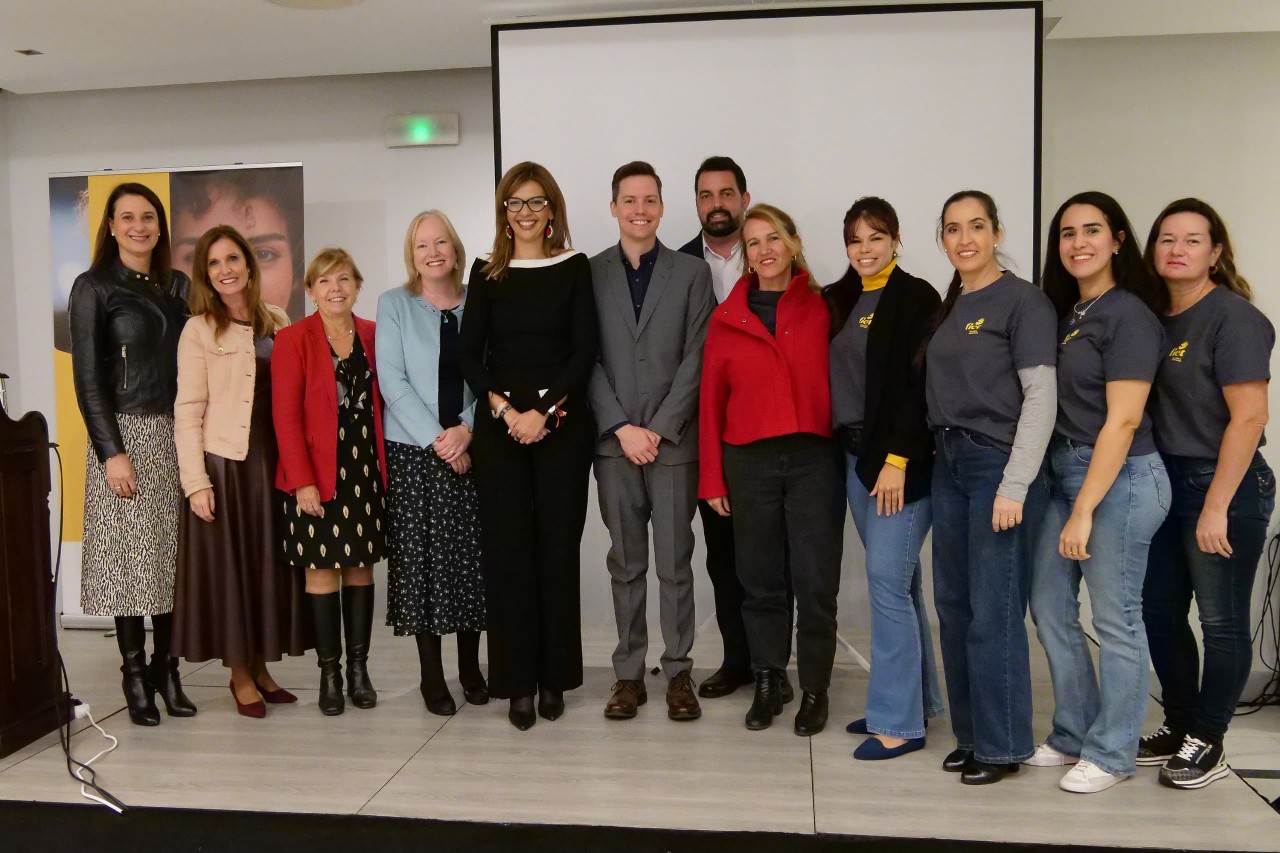
“Eradicating trafficking and sexual exploitation of women and girls is possible.” The Government Delegate in Melilla, Sabrina Moh, participated in the presentation of the New Beginnings House of the NGO FIET, where she stressed the need to strengthen joint work to combat violence against women.
“The union and coordination between administrations, institutions, specialized entities and society as a whole is the most powerful tool to achieve this”, he said, while emphasizing that only through a comprehensive response – combining prevention, protection, prosecution of crime, awareness raising and education on equality – will it be possible to dismantle the structures that sustain this form of violence and build safe and dignified environments for all women and girls.
“The objective is clear: to guarantee a society free of exploitation, where every woman can develop her life with full freedom, autonomy and rights,” stressed the highest representative of the Government of Spain in our city, who insisted that the joint will, social commitment and responsible and coordinated action “place us today on the real path towards the definitive eradication of this reality.”
In his speech, Moh pointed out that yesterday the International Day for the Elimination of Violence against Women was commemorated and took advantage of his speech to reaffirm “the need for administrations, entities, agencies and society as a whole to work together to make visible, raise awareness and eradicate gender violence”.
Fundamental work of Fiet
During her speech, the Delegate has valued the work carried out by the Fiet entity for 16 years, offering integral accompaniment to victims of trafficking to rebuild their lives and promoting awareness and prevention. He stressed that this trajectory “has been recognized many times”, recalling the Menina award granted last year by the Government Delegation in Melilla.
The head of the Government Delegation said that the work of entities such as Fiet is fundamental because “violence against women is global, persistent and structural.”
Thus, he stressed that trafficking in women and girls is “an extreme expression of that inequality” and “a serious violation of human rights” and referred to the United Nations data of 2024, according to which women represent 61% of the victims worldwide, while in Spain almost 98% of the victims for the purpose of sexual exploitation are women and girls.
The Delegate has warned that Spain is “the first country to consume prostitution in Europe”, one of the main destinations for victims, and that the business of sexual exploitation continues to expand and adapt, especially through the use of the Internet, while she has warned that there are studies estimating more than 114,000 women in prostitution in the country, many of them at high risk of trafficking.
Integral approach
Faced with this reality, Moh has insisted on the need for a “comprehensive approach: prevention, sanction, assistance, protection and reparation”, always from the perspective of human rights and with the participation of the whole society. In this regard, he has affirmed that the Government of Spain works “tirelessly” in this objective, and has highlighted the help that the work of entities and organizations such as Fiet entails.
The Delegate recalled that prostitution and trafficking are “closely linked”, with prostitution being “the main destination of the victims”. She explained that there is no single victim profile, although there are risk factors such as being a woman, social and economic vulnerability or migration. It has also warned that the demand for prostitution, including pornography, “feeds the system”, contributing to the reification of women and the normalization of consumption among young people.
Moh stressed that combating this reality requires “prevention, sexual education, social transformation and social rejection of exploitation,” stressing the premise: “If there is no demand, there is no exploitation.”