
Red.es, an entity attached to the Ministry for Digital Transformation and the Public Service, through the Secretary of State for Digitalization and Artificial Intelligence, and the Ministry of Health agree to the implementation of the Program for the Development of Intelligent Digital Services in the National Health System in La Rioja.
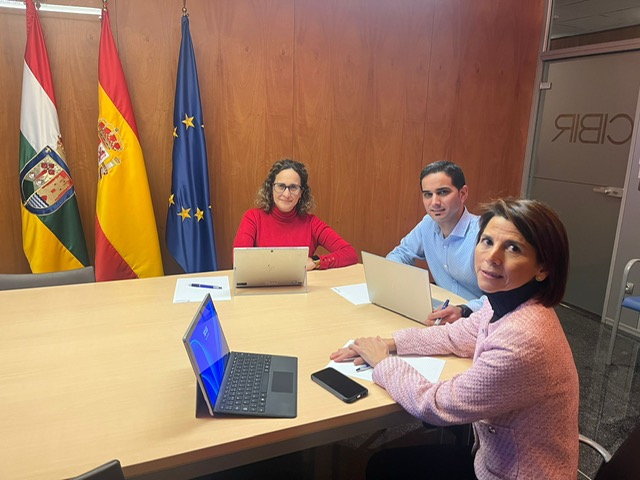
The initiative is part of the Multiregional Operational Program of Spain (POPE) funded by FEDER 2021-2027, which is endowed with a total budget of 223 million euros extra for the National Health System. Today, Laura González Hernández, deputy deputy director of Health in the Digital Public Services Directorate Red.es, held the first kick-off meeting of the Program for the Development of Intelligent Digital Services in the National Health System in La Rioja, together with Noemí Cívicos Villa, general director of Digital Health and Information Systems for the National Health System of the Ministry of Health, and José Pérez Alonso, director of Systems, Technologies and Innovation for Health of La Rioja. The Intelligent Digital Services Program in the National Health System is funded by Red.es with FEDER funds and by the Ministry of Health.
The autonomous communities can access this financing through a collaboration agreement with the Government of Spain. Once the agreement has been signed and the actions started, the administration of each autonomous community must justify the actions carried out within the framework of the agreement.
In the case of La Rioja, the signing of the agreement will allow you to have 727,696 euros extra to strengthen digital health in the community.
Strategic lines for the digital impulse of the National Health System
The agreements will last four years and, among the main lines of action, the implementation of remote monitoring programs of chronic pathologies, the use of advanced health analytics, and the development of use cases based on Artificial Intelligence, focused on the help of diagnosis and early detection, as well as in the support of health professionals, especially in primary care among other applications. Use cases will include some intended for the diagnosis and monitoring of rare diseases. The results obtained in each community will be made available to the National Health System as a whole.
In addition, it seeks to facilitate the implementation of remote monitoring and telecommunications programs, promoting a more personalized, accessible and sustainable care model.
Together, we are working to de-bureaucratize health care, free up time for professionals and ensure equity in the provision of medical services in all Autonomous Communities. In short, the aim is to improve the quality of care by optimizing the resources of the National Health System (SNS).