
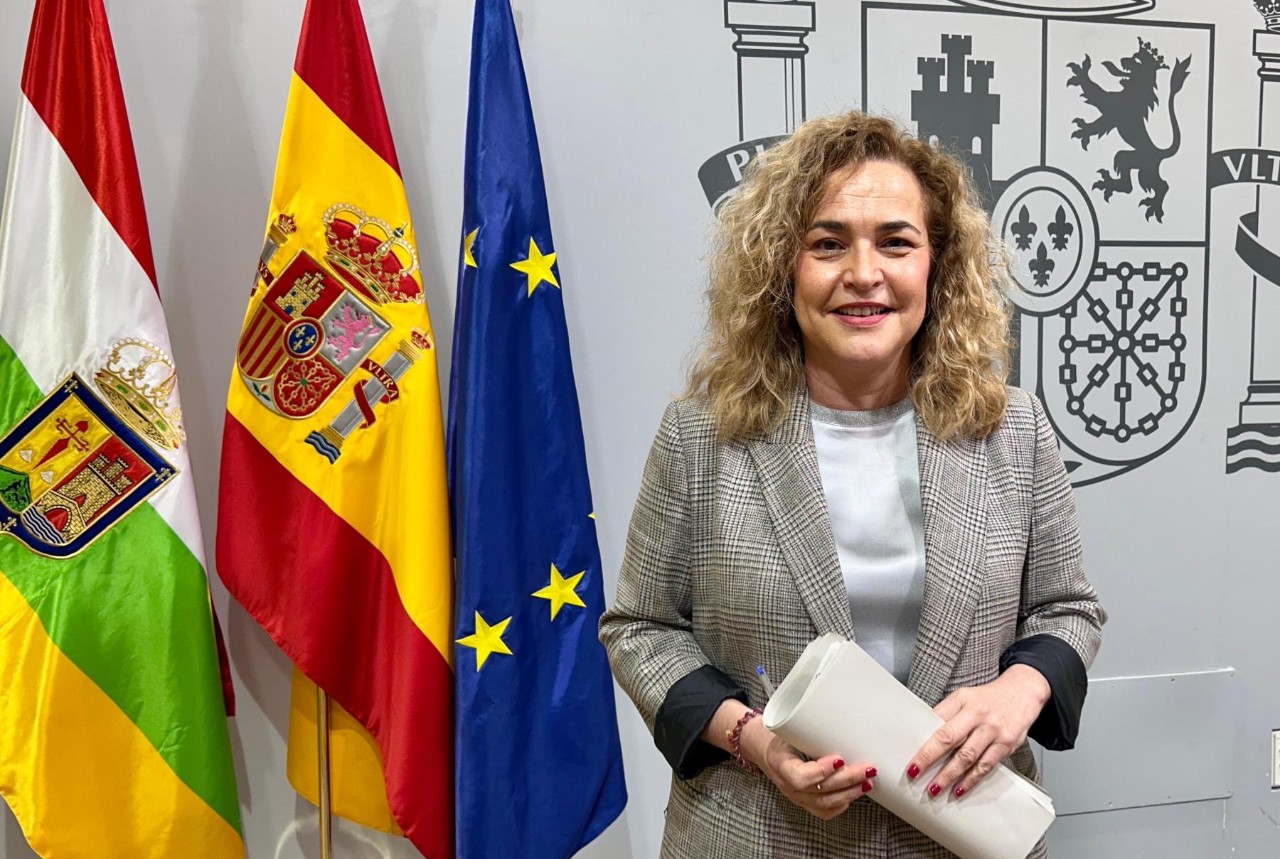
The government delegate in La Rioja, Beatriz Arraiz Nalda, announced today at a press conference a new economic injection of more than 4.8 million euros for the promotion of Rioja wines in international markets. This measure, which is part of the Wine Sector Intervention of the CAP Strategic Plan 2023-2027, financed by the European Agricultural Guarantee Fund (EAGF), will benefit 36 Rioja projects.
“This government has always been, is and will be on the side of the Spanish primary sector. The workers of the land of the Rioja countryside are at the heart of our economy and our traditions”, said Arraiz, responding to the attempts of some political sectors to use the countryside as an instrument of confrontation.
Key measures to support the agri-food sector in Rioja
The delegate stressed that, since 2023, the Strategic Plan of the CAP has had 43 key measures, of which the Government has already fulfilled more than 90%, consolidating its commitment to a fair and sustainable agricultural model.
Among the specific actions for La Rioja, Arraiz has listed:
- More than 8.8 million in direct aid for farmers in Rioja since the beginning of the legislature. This aid has benefited 6,032 producers in sectors such as fruit and livestock, meat and dairy, in addition to supporting the acquisition of fertilizers and production in rain-fed crops.
- Support for the “green harvest” of the wine sector: in 2024, the Government allocated 14 million euros to La Rioja, strengthening the sustainability of the sector.
· Today the resolution of the Ministry of Agriculture is published in the BOE, activating a budget of 19.2 million euros for the green harvest throughout the country. A mechanism that is enabled for the third consecutive year with the aim of promoting market stability, by avoiding a possible oversupply of grapes.
- Irrigation modernization: an investment of 37.2 million euros to modernize the irrigation communities of the Najerilla River, benefiting 7,453 producers and covering 13,628 hectares. In addition, 380,000 euros have been allocated for the digitization of irrigation in Rincón de Soto and the Ebro River.
- The maintenance of the system of modules in the income tax for agricultural activity: since 2020, the Government reaffirmed its commitment to maintain this simplified taxation model, used by the majority of farmers in Spain, with approximately 800,000 farms benefited. A system that was at risk of being eliminated in 2014, under the management of the Popular Party.
- The bonus of the special tax on hydrocarbons for agricultural diesel: Spain remains one of the countries that maintain this bonus almost to the maximum allowed by the European Commission, which reduces production costs and strengthens competitiveness compared to other countries where this aid has been limited or eliminated.
- The record in agricultural insurance: the budget of 315 million euros for 2025 represents an increase of 49% compared to 2018, providing greater security and protection to producers.
Arraiz has stressed that these investments seek not only to guarantee the economic viability of the agricultural sector, but also to combat depopulation and strengthen territorial cohesion in rural areas.
Public consultation for the Family Agriculture Act
The delegate has announced that on March 3, the public consultation period will open for the elaboration of the Family Agriculture Law, a key rule to promote generational change, gender equality in the rural area and the sustainability of family farms.
“80% of farms in Spain are managed by families. This law will strengthen its essential role in the social and territorial cohesion of our rural areas, ensuring their sustainability in the face of the challenges of the 21st century”, he said.
A firm and continuous commitment
The Government Delegation in La Rioja reaffirms its commitment to the agri-food sector, remembering that this year the largest historical budget in aid to the countryside in Spain will be reached.
“Investing in our field is investing in the future of our society. The Government of Spain continues to bet on a competitive, sustainable and fairer agricultural sector, capable of generating wealth and well-being for our rural communities”, concluded Arraiz.