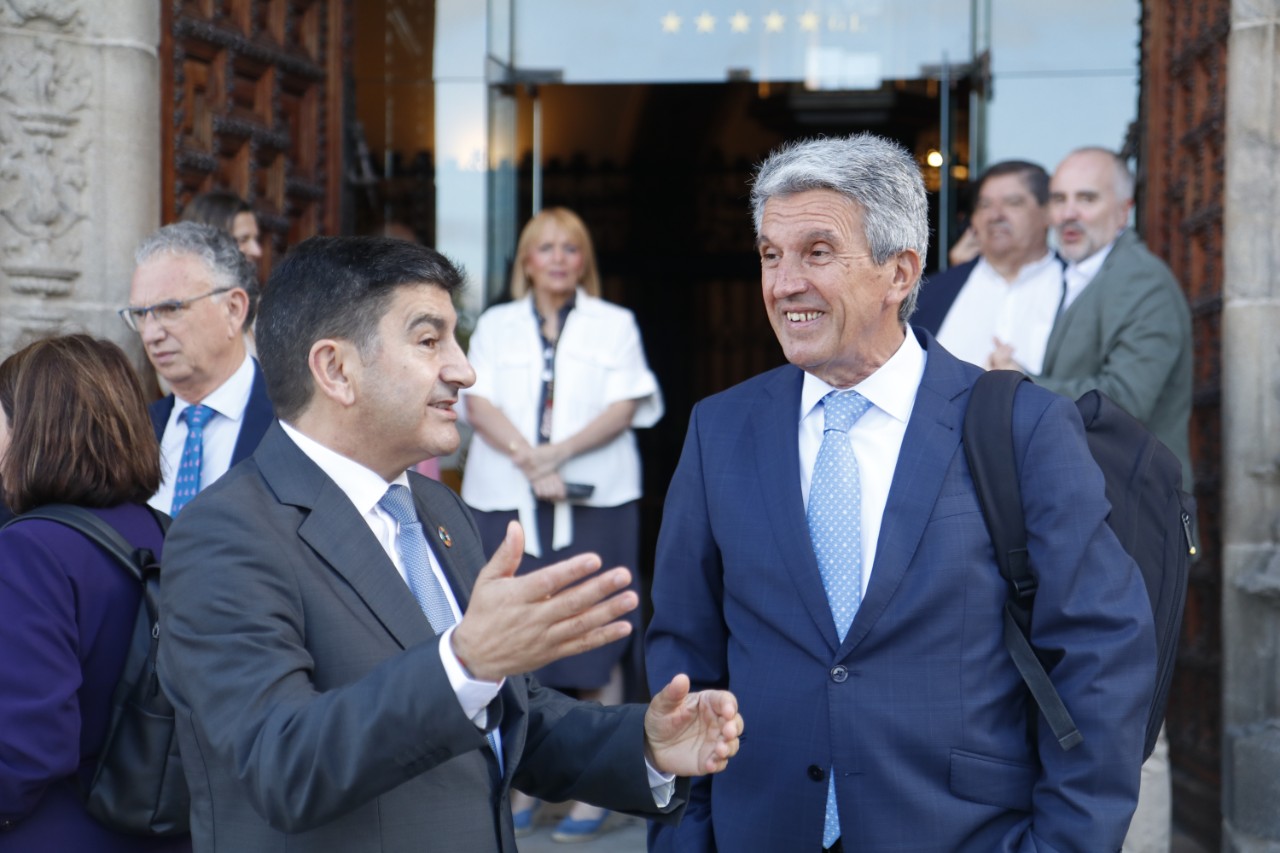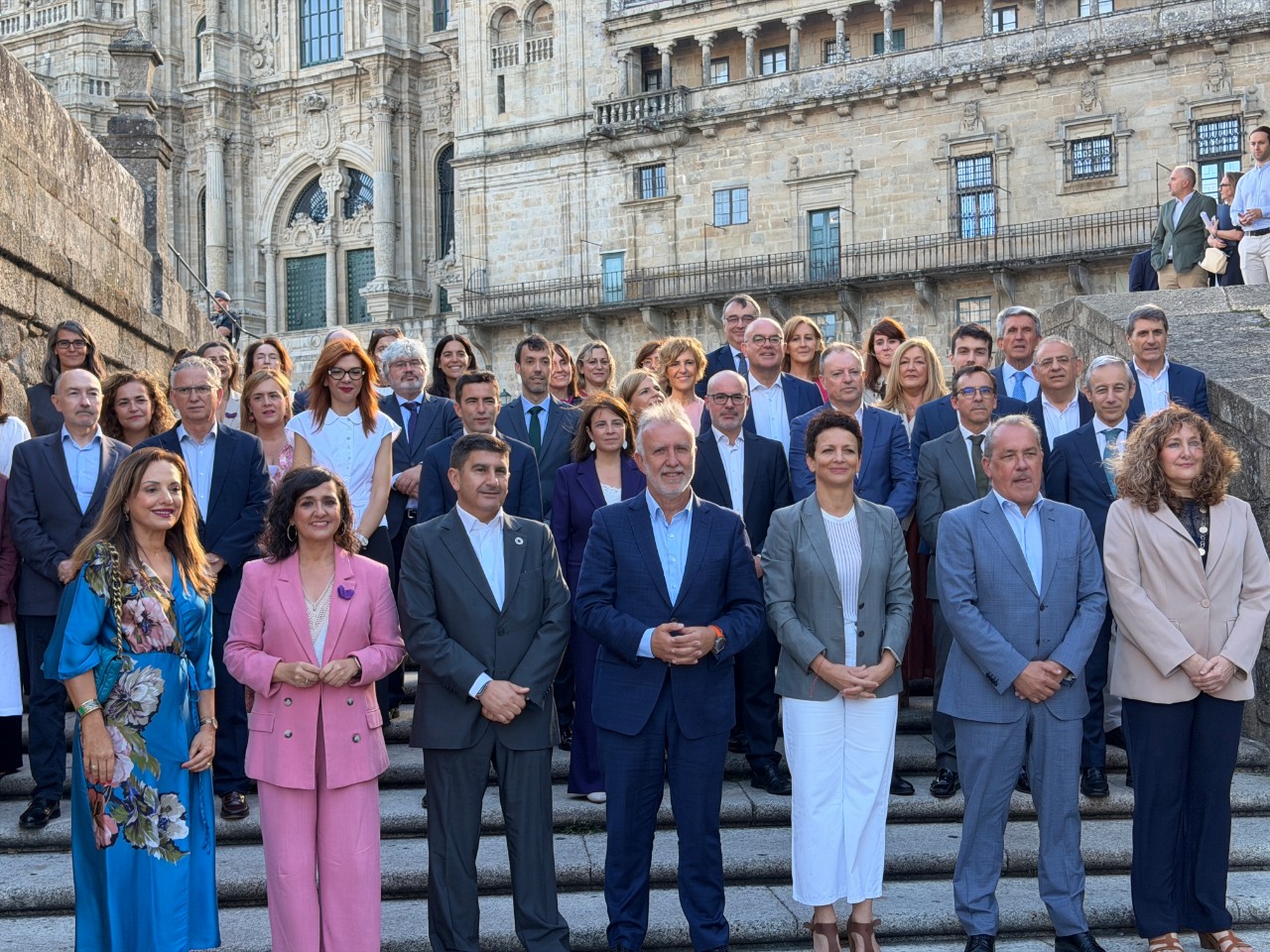
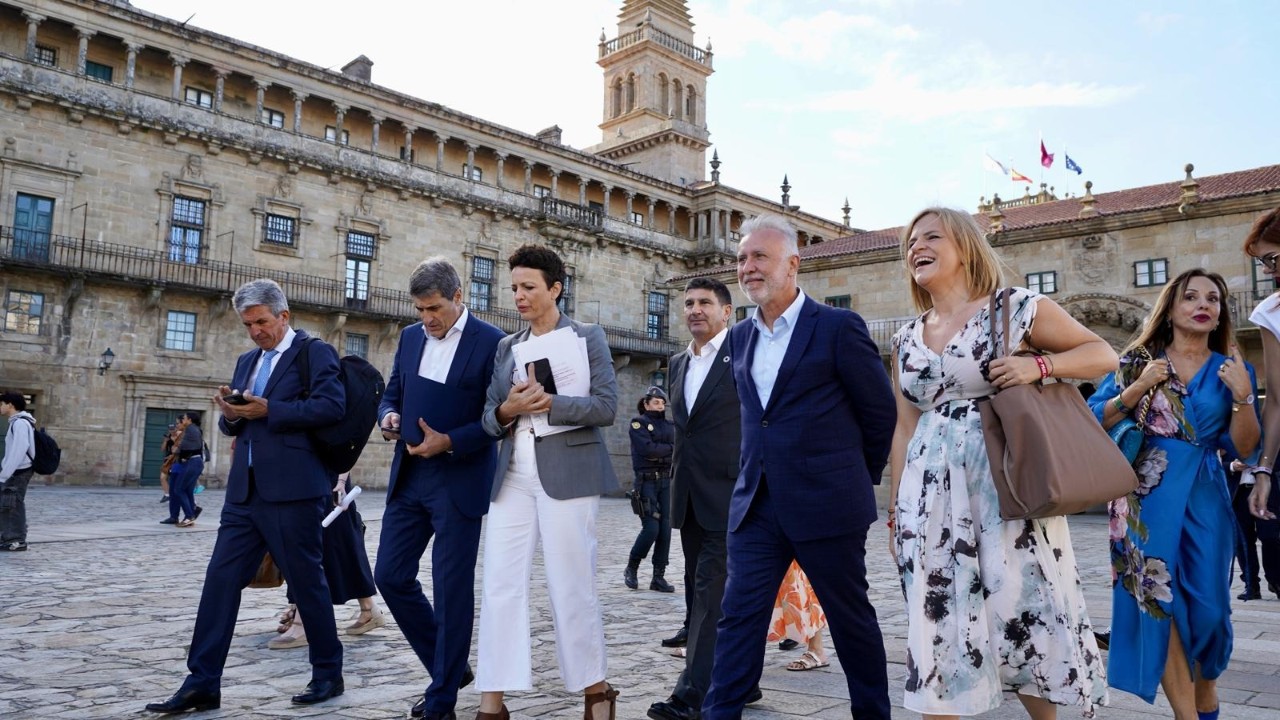
Santiago de Compostela (A Coruña).- The delegate of the Government of Spain, José Pablo Sabrido, made an assessment after the meeting of the Interministerial Commission for the Coordination of the Peripheral Administration of the State (CICAPE), held in Santiago de Compostela (A Coruña).
Sabrido said emphatically that the meeting “has been very interesting in the sense that we have put all the problems in collaboration and coordination”, which will allow us to better address the challenges facing the country.
“I believe that this work is very important,” said the delegate, “because it will allow us to take to each of the autonomous communities what is the enormous work that the government is doing, not only in favor of all Spaniards, but also in favor of Castilla-La Mancha.” In this sense, Sabrido concluded that “Castilla-La Mancha advances thanks to the policies of Pedro Sánchez”.
CICAPE agrees to create working groups to address the singularities of the Balearic and Canary Islands, and of Ceuta and Melilla
The Interministerial Commission for the Coordination of the Peripheral Administration of the State (CICAPE), chaired in Santiago de Compostela by the Minister of Territorial Policy and Democratic Memory, Ángel Víctor Torres, has agreed to the creation of two new specific working groups. One, to address the peculiarities of the insularity of the Balearic and Canary Islands; and another, which will be responsible for the geographical singularities and the migratory context in Ceuta and Melilla.
The minister explained that the will of the Government of Spain is to strengthen coordination between ministries and the peripheral administration to offer “more agile and adapted responses to the reality of each territory”. In this regard, it has valued the incorporation of 945 officials of the C1 and C2 subgroups to the delegations and subdelegations of the Government; as well as the approval, last Monday, in the extraordinary Council of Ministers, of a “Royal Decree-Law that opens the door to compensation for workers of the General State Administration (AGE) destined in the peripheral or ultraperipheral territories, in this case, Illes Balears”.
In addition, it has positively valued the implementation of productivity by objectives, which means that “the 7,000 workers of the AGE in the territories can perform a more direct work in the delegations and subdelegations of the Government.”
Torres stressed that the holding of these biannual meetings - which bring together the delegates of the Government and the under-secretaries and under-secretaries of the ministries - has been decentralized and that, with this, four have already been convened outside Madrid (València, Córdoba, Zamora and Santiago de Compostela). The minister considers that, in this way, they “defend the plural reality of our country and the State of the autonomies”.
CICAPE continues to advance the process of modernizing the territorial structure of the General Administration of the State, a model based on structures more flexible, specialized and adapted to the geographical and demographic characteristics of each community, with the aim of "providing the best possible public service," said Torres.
About the CICAPE
The Inter-Ministerial Commission for the Coordination of the State Peripheral Administration (CICAPE) is responsible for coordinating the activities of the State Peripheral Administration with the various ministerial departments.
The CICAPE has the following functions:
- To improve the coordination of the actions of the State Peripheral Administration with the Ministerial Departments and, where appropriate, with their Public Bodies.
- To promote communication and exchange of information between the State Peripheral Administration and the Ministries and their Public Agencies.
- To propose general criteria and basic lines of action for the peripheral administration of the State in its relations with other public administrations.
- To issue a report, when requested by the competent bodies, in relation to the normative projects in the field of peripheral administration of the State.
- To establish the channels of information in relation to the actions and projects to be developed by the Ministerial Departments and their Public Bodies, in the field of the Peripheral Administration of the State.
- As many functions as are necessary to achieve the general objective of coordination of the peripheral administration of the State.