
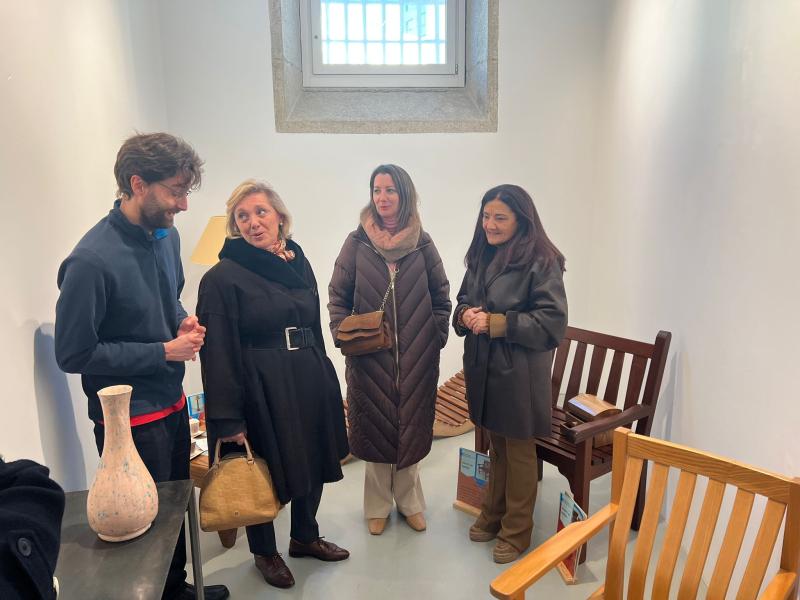
The subdelegate of the Government in Lugo, Isabel Rodríguez, today highlighted the workshops and courses developed by penitentiary institutions in the centers of the province “promoting the reeducation of the penitentiary population and training it in traditional trades, and then reintegrating these people into society through dignified jobs.” He did so during the inauguration this afternoon in the Old Prison of the exhibition “Labrando el futuro”, which has wooden furniture and ceramic pieces made by the inmates in the C.P. de Bonxe, in which also participated the mayor of Lugo, Lara Méndez, the councilor for Education, Felipe Rivas, and the director of the penitentiary center, José Manuel Pernás; as well as the instructors who teach the formations.
“The result of these workshops is admirable, as it shows the effort and talent of the people who participate in these programs,” said the subdelegate who advanced the commitment of the Government to continue with this type of activities that represent “a window to the world” for the inmates. At the same time, he thanked the collaboration of the City of Lugo for hosting this exhibition in O Vello Cárcere, “a space that perfectly reflects the transformation that the authors of the exhibition are making in their lives to achieve full integration in the current world.”
“Labrando o futuro” presents until February 12 different works carried out in the Workshop of the Training Cycle of Medium Degree of Professional Training of Wood and Furniture and in the Course of Reproduction of Molds and Ceramic Pieces that take place in the center of Bonxe. Among the works are hips, tables, mirrors and wooden jewelers, as well as ceramic works such as hórreo and meninas.
During the event, Isabel Rodríguez thanked the performance and involvement of prison officials in adapting the intervention in prisons to the profiles demanded by the labor market, as well as the professionals who teach the training, and invited the neighbors of Lugo to visit the sample to be witnesses “of a project that serves as a stimulus to continue working in the education, training and reintegration of the inmates.”