
“Gender violence is a structural violence, that is why a comprehensive law was necessary, to address not only what has to do with the criminal, with the protection of victims that also, but also prevention, sensitization, training to the very important professionals, the part that has to do with awareness from the media and include minors.”
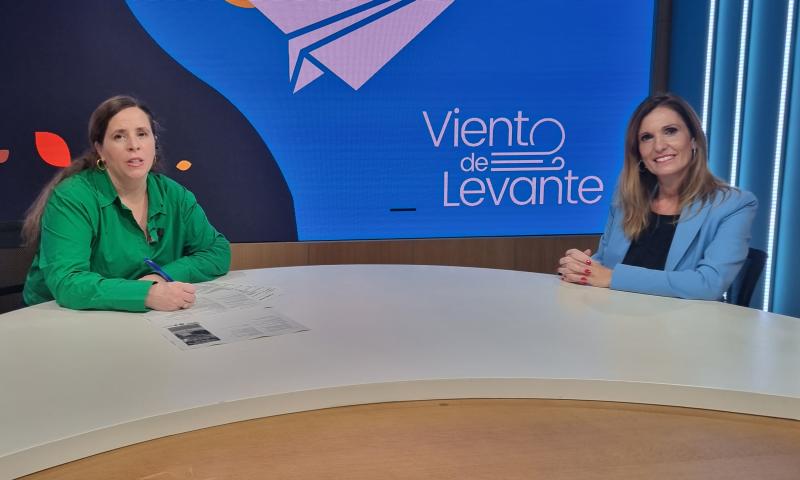
The Head of the Coordination Unit Against Violence Against Women of the Government Delegation in Melilla, Laura Segura, in an interview on Television Melilla, has addressed the 20 years of the entry into force of the Comprehensive Law against Gender Violence in our country.
Two decades in which he has pointed out that much progress has been made, although he has recognized that “there is still a long way to go” and has stressed the importance of the challenges that society faces such as negationism, “which is doing so much damage” and which is “complicit and favors the silence of the victims, and which brings violence against women back to the space from which it came and in which it should never have been, which is in the space of the private, trying to camouflage with another violence, trying to confuse society with half truths, trying to blur the data and trying to dismantle what is the reality and the evidence”.
Pioneer and referent
Segura, during the television interview, explained that the law against gender violence, as well as being a pioneer, has been and continues to be a reference. “Many of the contents of the law are now in many of the legislations at both international and European level, as well as in the European directive.”
“Although 20 years seems like a lot, for a law they are nothing,” he said, pointing out that this is a “young” law that “continues to grow” and that he recalled that it was approved unanimously by all the parliamentary forces in Congress in 2004, but “it was not easy because it had been gestating since 1999.”
Segura has also had words of remembrance for Ana Orantes, given that, “she was unknowingly the driving force behind a law that has practically changed our country.” “She went to a television program with the highest audience in 1997 to tell about her experience of 40 years of brutal violence, how she abused her, how she assaulted her, how everything she did hurt her, but what hurt her most was the violence her children had suffered,” she recalled.
13 days after that public denunciation Ana Orantes was murdered by her ex-husband. “The court ruling said that both had to share the same house and he burned it alive in the courtyard of his house and this shocked this country and moved everything that was necessary for a law of this nature to be promoted, so she, without knowing it, changed many consciences in this country and from there is addressed a law, which is an integral law,” he explained.
Activities 25N
The Head of Unit pointed out that the days held last Thursday at the Civil Guard Command are part of the activities carried out by the Government Delegation on the occasion of the 25th International Day for the Elimination of Violence against Women.
But it has also advanced that, as in other editions, on November 25 the reading of the manifesto will take place and during this month the Meninas Recognitions will take place, with which people and institutions distinguished in their fight against gender violence are recognized, the second edition of the Children and Youth Contest for Equality and against Gender Violence, whose bases have already been launched, and which are in all the educational centers “that have already taken over the works and are working children and also our adolescents and young people in their activities” and whose prizes will be awarded at the end of November.