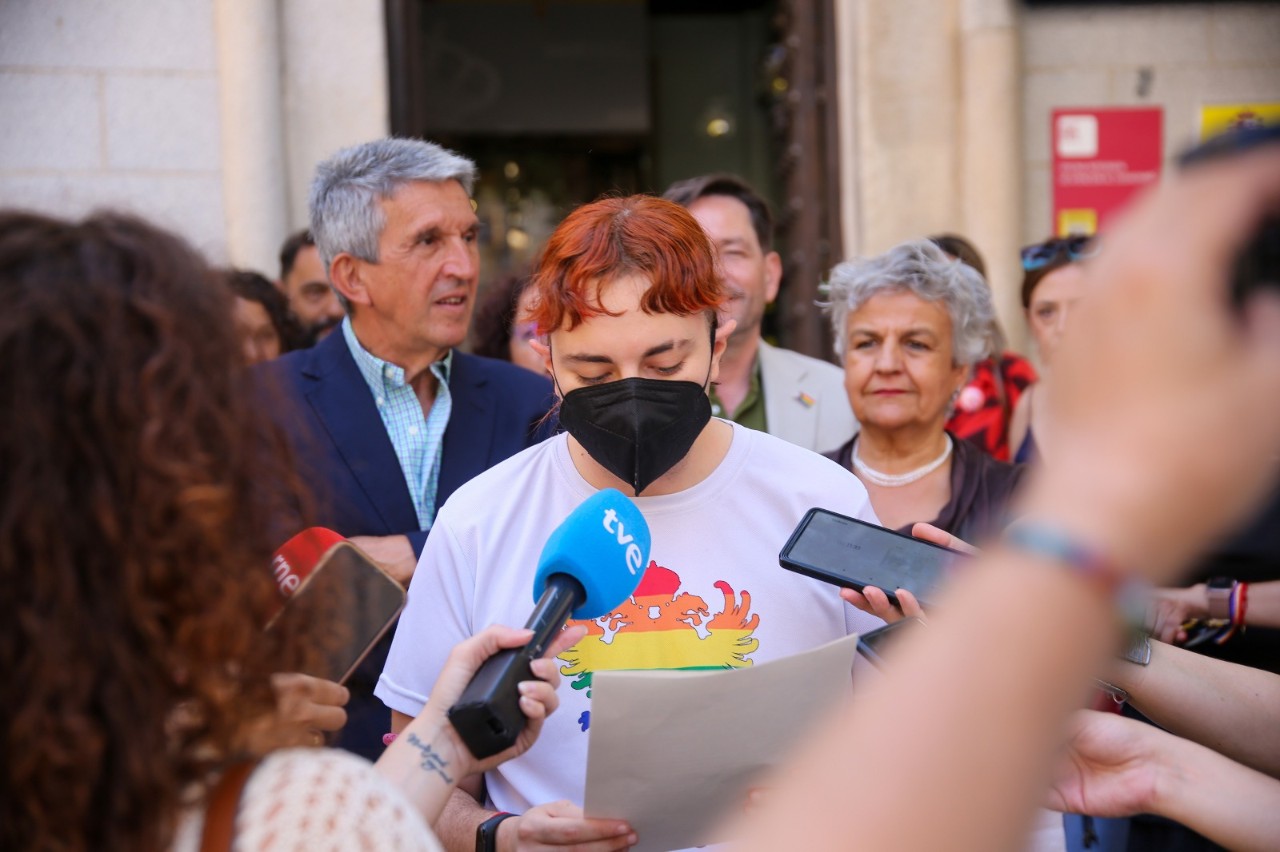
- David Rey, coordinator of the trans group of the Toledo association ‘Bolo Bolo’, has been in charge of reading the manifesto focused on “pride, memory and democracy”
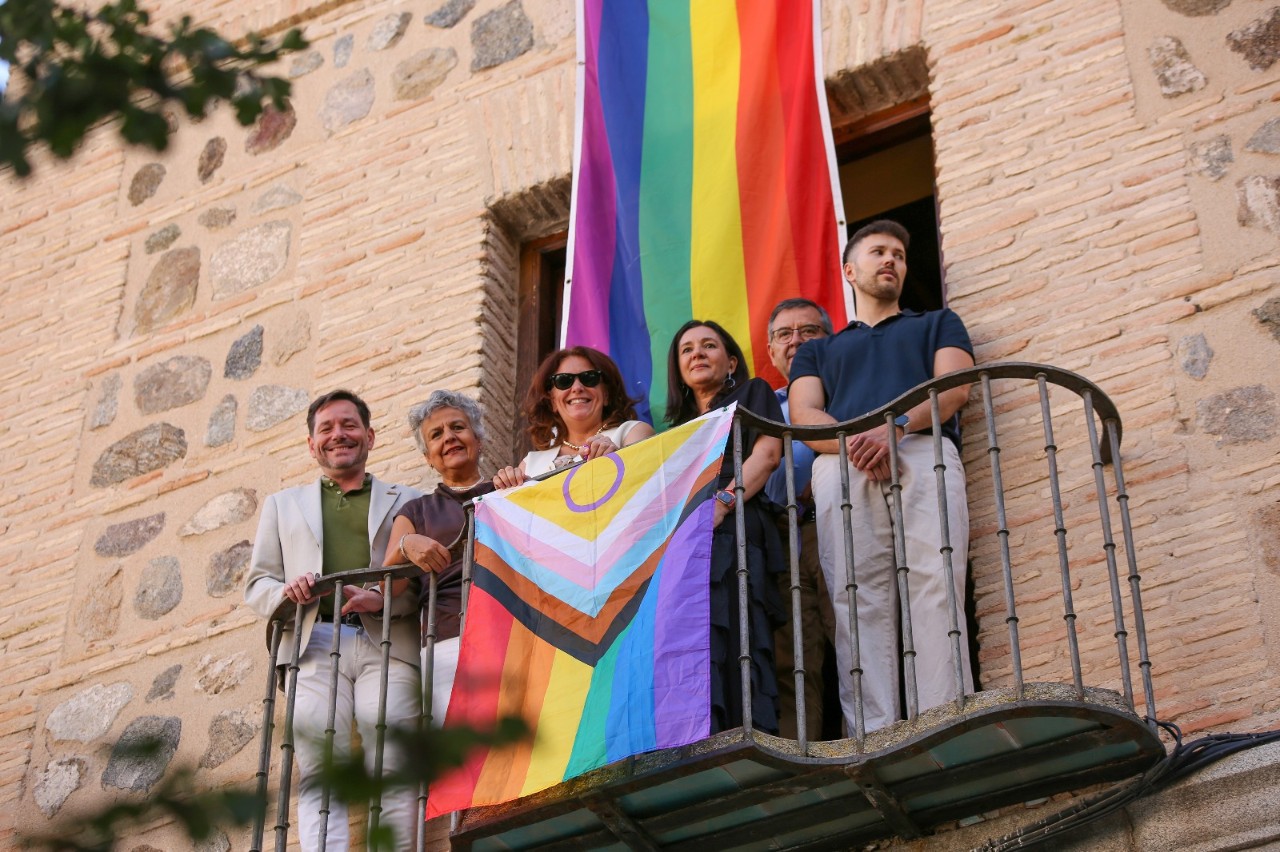
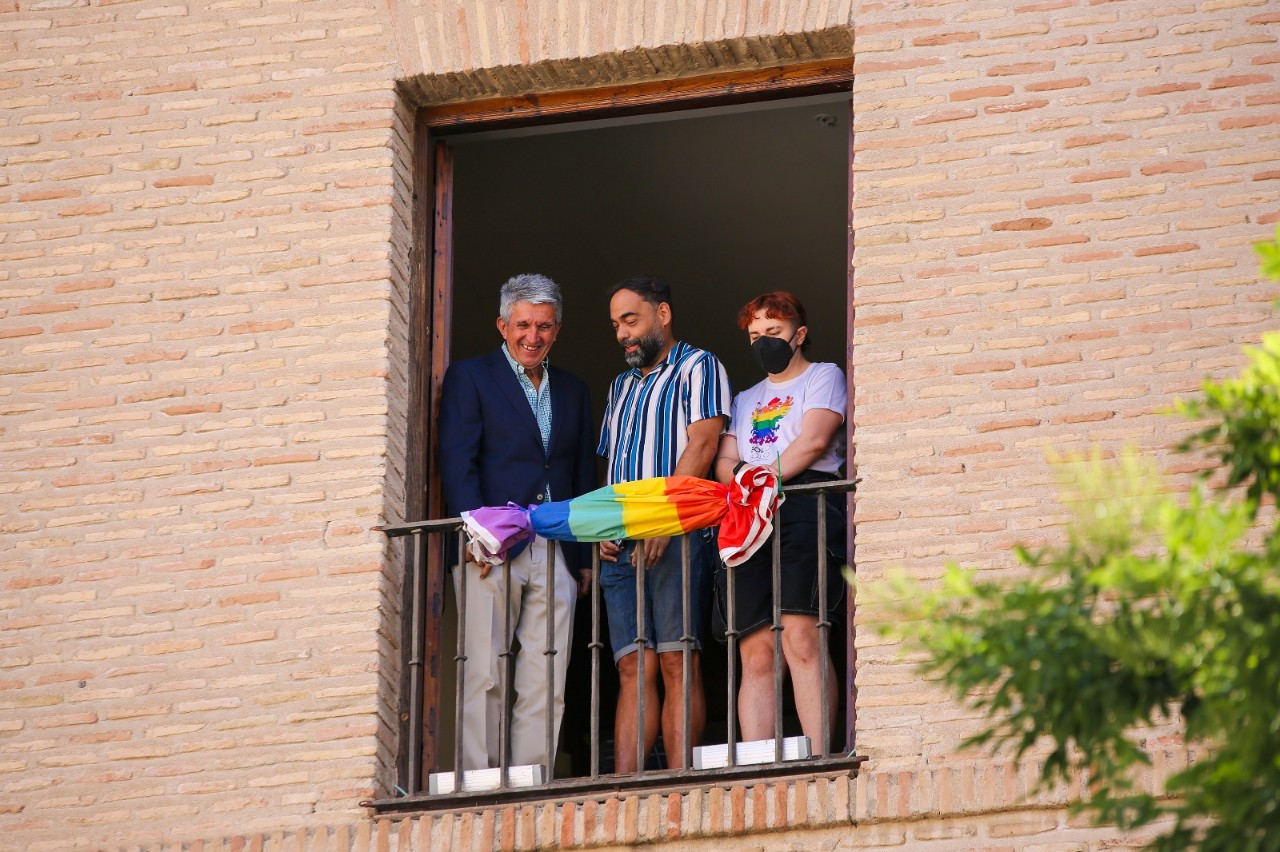
The Delegation of the Government of Spain in Castilla-La Mancha has displayed the LGTBI flag on the façade on the occasion of the celebration of International Pride Day.
Toledo.- The Delegation of the Government of Spain in Castilla-La Mancha has displayed the LGTBI flag on the facade on the occasion of the celebration of the International Day of Pride. The government delegate, José Pablo Sabrido, has warned about hate speech by assuring that “today we are seeing how certain sectors, including politicians, want to question the equality and dignity of people for different reasons than we all think. And this is unbearable and we must not tolerate it.”
The government delegate said he was “proud to belong to a country that has fought hard for equality and that is a benchmark in people’s freedom. And I am proud to represent a government that is a reference in the defense of equality and freedom for all, regardless of their racial feelings, their thoughts, their religion and, of course, their sex,” he said.
Sabrido has concluded his speech before the media encouraging “not to tolerate a step backwards in the defense of the rights of all citizens, regardless of what they think and are”, as well as showing his confidence that Spanish society “will not allow” there to be setbacks in rights as intended from some sectors, he warns.
The event was accompanied by the subdelegate in the province of Ciudad Real, David Broceño; the subdelegate in the province of Cuenca, Mari Luz Fernández; the subdelegate in the province of Guadalajara, Susana Cabellos; and the subdelegate in the province of Toledo, Carlos Ángel Devia.
In addition to the representatives of the Government of Spain in the region, Adrián Carbajo, spokesperson of the LGTBI department of UGT Castilla-La Mancha, Valle Cervantes, secretary of trade union formation of CCOO Castilla-La Mancha, as well as members of the municipal corporation or different LGTBI associations of the region have also been present at the event.
Reading of the manifesto
“Pride, memory and democracy.” Thus began the reading of the manifesto on the occasion of the International LGBTI Day David Rey, coordinator of the trans group of the Toledo association ‘Bolo Bolo’.
In it, he explained that “equality is not an abstract promise or a kind formula of institutional discourses; it is the concrete possibility of living without fear and without moral tutelage”, expanding to the fact that “freedom cannot depend on the postal code, the size of the municipality, the local political climate or the gaze of a community that sometimes protects and sometimes monitors”.
“LGBTI Pride reminds us that human rights cannot depend on changing majorities, uncomfortable covenants, or timely silences. It reminds us that a democracy degrades when it begins to treat the dignity of others as a negotiable issue,” he said, focusing on the evolution of the country: “Spain has advanced because it understood that rights are not inherited intact. They are conquered, legislated, protected and defended when they are questioned again.”
During the reading of the manifesto, he regretted that there are localities that do not hang the flag that represents the LGTBI collective from the balconies of their municipalities, “such as Toledo, Guadalajara or Ciudad Real,” warning that “it is not a protocol anecdote or a decision without consequences; it is a political position that sends a message to neighbors and neighbors who are part of the daily life of the city, who work, study, care, pay taxes, create culture and sustain community,” concluding that “a city is not honored only by preserving its past, but by knowing how to represent with courage the society that inhabits it today.”
In this regard, he has celebrated the display of the LGTBI flag on the balcony of the Delegation of the Government of Spain in Castilla-La Mancha, “which has a sense that goes beyond the public image. That flag says the state recognizes those who for too long were forced to live on the margins of public representation.”
In addition, he reminded those who fought at the time for the attainment of rights for the LGBTI community, “and for a democracy that understands, at once, that recognizing all people does not divide society: it makes it more decent, habitable and true.”