
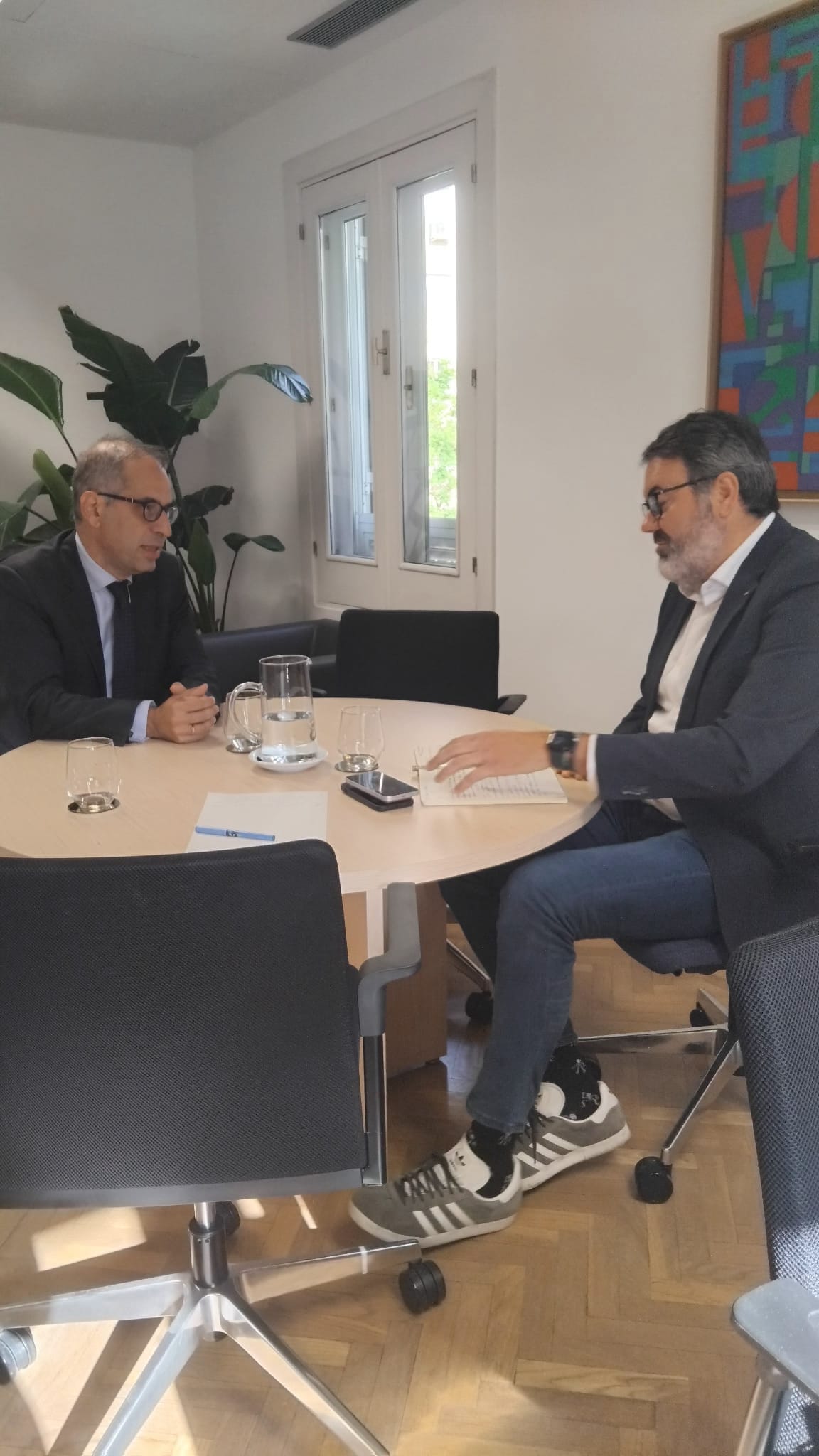
In this regard, Izquierdo stressed that the reconstruction of the island cannot be limited to material recovery, but must incorporate a social and demographic dimension that guarantees the future of the territory. “Establishing a young population is key to ensuring the economic, social and territorial sustainability of La Palma,” he said. For his part, Pérez Correa conveyed the willingness of the state institution that he represents to collaborate in the design of specific policies aimed at youth in island territories, with special attention to the singularities of the so-called Green Islands.
The meeting addressed possible lines of action focused on the promotion of population rejuvenation plans that the Secretary of State for Youth and Children is developing in the less populated areas of Spain, with special attention to the opportunities offered by teleworking as a tool to establish population and revitalize island territories. These initiatives include attracting and returning young people through access to digital employment, improving connectivity and supporting new life models in rural settings. In addition, the coordination with third sector entities such as the Red Cross or Caritas, whose involvement during the volcanic emergency was key, and which continue to play a fundamental role in social accompaniment, community cohesion and the development of youth-oriented programs, was valued.
Izquierdo stressed that this type of meeting “allows to coordinate efforts between administrations to face one of the most important challenges of La Palma: ensuring that new generations can build their future on the island.” The meeting is part of the Commissioner’s road map to promote comprehensive reconstruction in response to the need for economic diversification and medium- and long-term structural actions on the island following the Tajogaite volcanic eruption.
The challenge of alleviating aging and the lack of generational change
Demographic data show the urgency of action. According to recent studies, in La Palma 21.9% of the population exceeds 65 years, which reflects a trend towards aging. This phenomenon is aggravated by the departure of young people in search of training and employment opportunities outside the island, especially in rural areas, where the average age is already well over 45 years. In addition, the whole of the Canary archipelago experiences accelerated aging, with about 150 people over 64 years old for every 100 children under 16, which confirms a structural change in the population pyramid.
This reality is part of a broader trend at European level. A map prepared and published by the newspaper El Mundo places the western islands of the Canary Islands —among them La Palma— among the regions of the European Union with the lowest proportion of young population, within the group of territories where children under 20 years of age do not reach 16% of the total. This analysis identifies, next to the peninsular northwest or southern Italy, these islands as areas especially affected by aging and the lack of generational relief.