
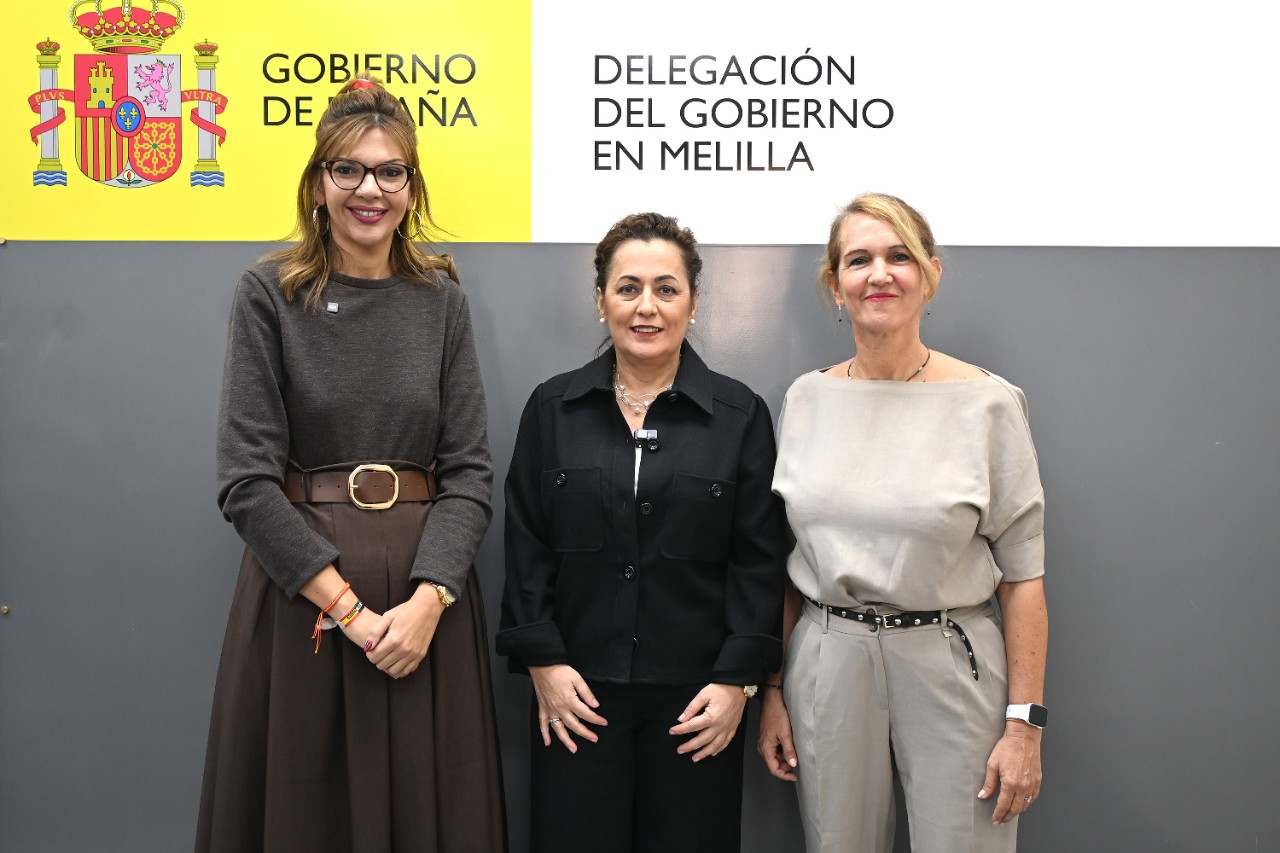
Melilla is a pioneer throughout the country in the implementation of Vocational Training (VET) access courses, aimed at those people who do not meet the requirements of access to the Middle Degree or Higher Degree cycles.
The General Secretary of VET of the Ministry of Education, Vocational Training and Sports, Esther Monterrubio, announced this morning and explained that “they are the basic competency access courses with a very important training in mathematics, language and digitalization”.
Thus, he has reported that two courses have been launched, one of Medium Degree, with 20 people enrolled, and another of Higher Degree, both taught at the Carmen Conde Avellán Adult Education Center. These courses are developed with schedules compatible with conciliation, being three hours a day in the Middle Grade and four hours in the Higher Grade.
Monterrubio stressed that this initiative “will give a strength, first for the citizens and of course for our vocational training system, so that nobody is left without being able to access training at this time”.
More training offer
In his speech to the media, Monterrubio pointed out that the Ministry has increased the offer of training in basic degrees, with the incorporation of two new cycles, with the aim of reducing the ratio in Vocational Training centers.
The Secretary General explained that “we have increased the training in basic degrees, in two cycles, to be able to lower the ratio in VET centers, in those teachings we are below 20”. “We committed ourselves and said that we had to lower the number of boys and girls per group below 20, we are at 18.6 and that is the line of work,” he said. A line of work, he said, “more attentive, more diversified, that can be adapted more to the needs of each boy and each girl”.
He has indicated that this measure is part of the process of analysis and continuous improvement in the field of initial vocational training, and has highlighted the progress achieved “in lifelong training, for the employed and unemployed workers of Melilla”.
In this regard, Monterrubio has recalled that the commitment to meet the training needs transferred by companies is maintained, channeling them through the public Vocational Training centers. “We already offer nine cycles, nine certificates of professionalism aimed at employed or unemployed workers, so that they can be trained in the different needs of the territory of talent, of qualified personnel, which have transferred us from the business sector,” he said.
As he has detailed, this offer involves between 4,500 and 5,000 hours of training that will be launched during the first semester. In addition, he has specified that this line of work will be maintained over time, with semiannual surveys that will allow the training offer to be adjusted to the real demands of the productive sector and the citizens.
Monterrubio added that “we have to have real needs from the first moment and we are going to adapt with the current system of professional training that allows from small formations to longer-term formations”.
Needs of the territory
The Delegate of the Government, Sabrina Moh, for her part, recalled that since the arrival in the Government, one of the main demands transferred by the business sector was the lack of qualified personnel and the need to orient the training to the real needs of Melilla. “We took that as one of the main tasks and right now we have been implementing vocational training to the point of creating more than 30 new training cycles in the city,” he said.
Moh has also pointed out the importance of continuing to generate synergies with companies and to continue promoting Dual Vocational Training, also highlighting the role of the Government Delegation in offering tools that allow students to acquire first professional and work experiences through employment plans linked to training, with the aim of retaining talent in the city.
The Delegate has valued the analysis and planning work carried out to adapt the training offer to the needs of the territory, which, she said, “has resulted in it becoming more and more successful and more of our young people opting for this option.”
Finally, Moh has highlighted the relevance of the visit of the Secretary General, “so that we can tell her, so that she can see it, because she keeps a daily and continuous monitoring of the reality of Melilla and that she is here again shows, in addition, that commitment that the Ministry and she personally have from their area with our city”.