
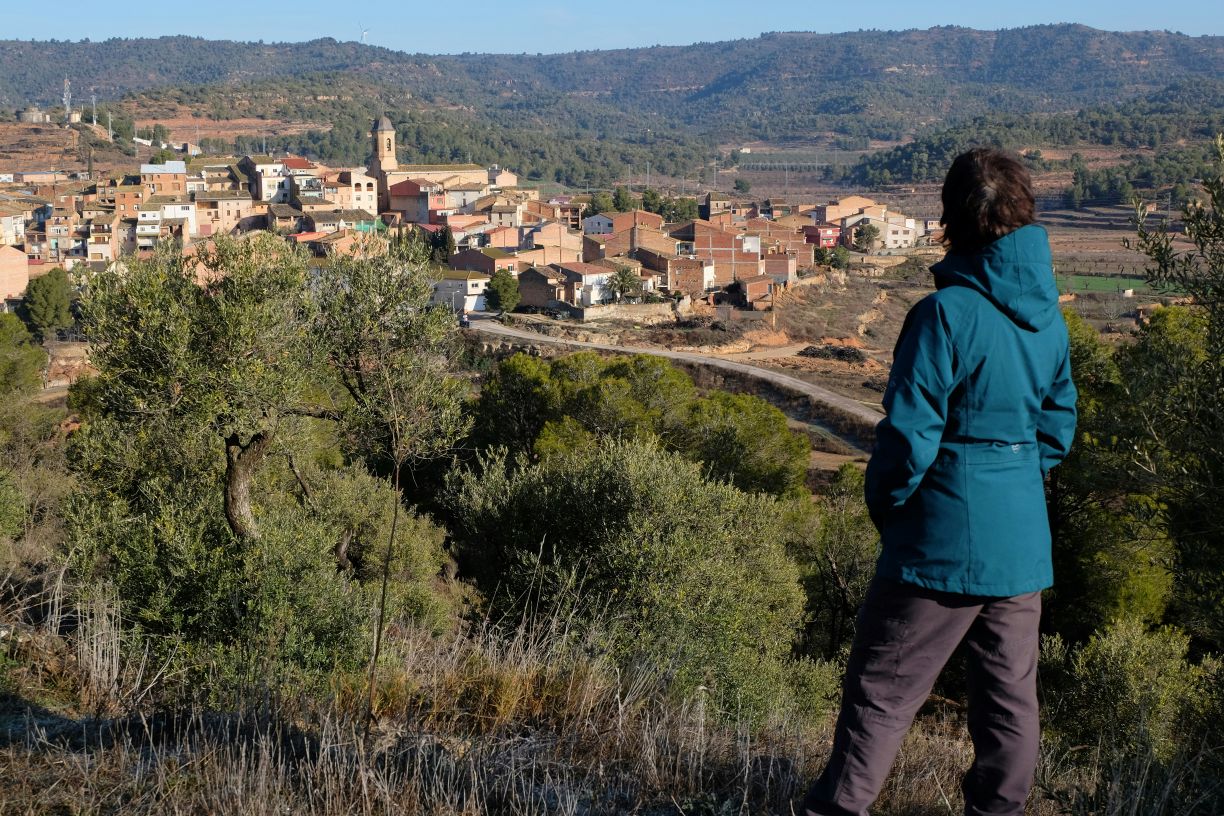
In 2024, municipalities with fewer than 5,000 inhabitants increased their population by 22,020 people, according to the review of the Municipal Population Register published today by the National Institute of Statistics (INE), which means the growth of the rural population for the seventh consecutive year.
Since 2018, the small municipalities have increased their population by 163,027 people. This increase is mainly due to the arrival of new residents in these municipalities.
In 2024, the rural environment attracted 68,814 inhabitants, 10,405 more than the previous year, as indicated by the results of the Statistics of Migrations and Changes of Residence also published on this day.
During the last seven years, the municipalities with the lowest population have attracted 447,667 inhabitants, of which about 40% come from other municipalities in the country. 2018 marked a turning point in the loss of population and emigration recorded in rural municipalities. In that year, 6,832 municipalities in Spain had fewer than 5,000 inhabitants and concentrated a population of 5,700,024 people. Most of them had a negative vegetative balance, to which was added the outflow of population, especially women and young people.
Between 2011 and 2017, all the autonomous communities, except the Basque Country and Madrid, lost population in the small municipalities, with a reduction of 6.1%, 405,371 inhabitants less in 7 years.
However, current figures show that, since 2018, although its vegetative balance is negative, the towns have attracted national and foreign populations, the number of employed people has grown, especially women, and only Galicia, Asturias, Extremadura and Castilla y León continue to lose population in the whole of the small municipalities.
POPULATION GROWTH IN RURAL AREAS
The positive migratory balance between 2018 and 2024 is not concentrated in a few municipalities, but is generally recorded. Of the 6,832 terms with fewer than 5,000 registered inhabitants in 2018, 5,398 (79%) currently have a positive migratory balance, even in the smallest municipalities, below 100 inhabitants, or more remote.
The arrival of population in the rural environment is linked to the demographic growth of the country and the positive migratory balances are, in large part, a consequence of the arrival of foreign population. However, its weight in the population of municipalities with less than 5,000 inhabitants is small: 10.2% of the population compared to 14.1% of the national population.
83% of small municipalities have a foreign population percentage below the national average, and in 43% it represents less than 5% of their population.
POLICIES TO MEET THE DEMOGRAPHIC CHALLENGE
Since the creation of the General Secretariat for the Demographic Challenge, in 2020, multiple measures have been implemented, in coordination with the other ministries and with other levels of administration, embodied in the Plan 130 Measures against the Demographic Challenge, which has mobilized more than 13 billion euros between 2021 and 2024.
As part of the initiatives, calls have been implemented for aid for the social and economic reactivation of areas with depopulation problems, which since 2022 have made possible the financing of more than 700 projects, for a total amount of 69.8 million euros. Currently, MITECO is holding a new call for grants to finance innovative projects and combat depopulation.
In addition, the Network of Territorial Innovation Centers (RedCIT) has been created, which, in coordination with various levels of administration and based on public-private collaboration, are promoting innovative rural initiatives in the 23 centers that are currently part of the Network.
Attracting and retaining talent in the municipalities of demographic challenge is the purpose of the Rural Campus Program that, in its four editions, has already led more than 2,000 university students to carry out their curricular practices in municipalities in rural areas of less than 5,000 inhabitants.
In addition, MITECO has implemented other measures to support the rural environment, such as the DUS 5000 and PREE 5000 programmes, the promotion of local energy communities, the promotion of the local bioeconomy, or the projects of sanitation, purification and water supply in small municipalities, with a joint allocation of more than 1.2 billion euros.