
The project represents a key opportunity to strengthen the reconstruction process based on innovation and knowledge. It includes the design, manufacture and validation of a SPAD sensor, a state-of-the-art technology that will allow individual photons to be detected with very high temporal precision. Its future validation at the Gran Telescope Canarias and its integration into the La Palma Quantum Interferometer (LPQI) initiative consolidate the island as a privileged enclave for the development of advanced scientific instrumentation. In addition, its applications transcend astronomy, with potential in fields such as medicine, quantum communications and space navigation.
From an institutional perspective, this type of initiative reinforces the positioning of La Palma as a true laboratory of technological innovation. The planned investment of 14.5 million euros and with an implementation period of just over three years, not only boosts research excellence, but also contributes to generating economic opportunities, attracting highly qualified talent and fostering collaboration between science and industry.
The Commissioner stresses that projects such as this are essential for sound and sustainable reconstruction, based on knowledge and economic diversification. The commitment to first-class scientific infrastructures and the development of disruptive technologies will allow La Palma to establish itself as an international reference in research and advanced technology, opening new paths of growth and resilience for the island.
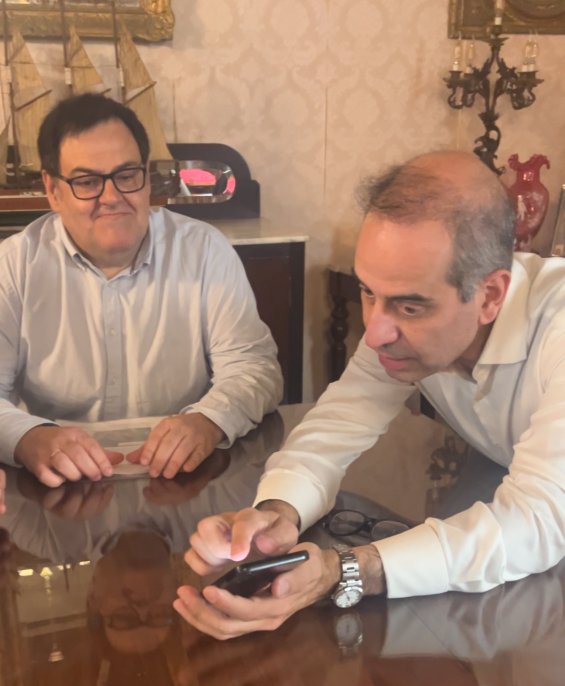
*Archival image of the meeting between the Commissioner for the Reconstruction of La Palma and the scientist responsible for the LPQI project, Francisco Prada.