
- The social milestones of this legislature include measures such as the increase in the SMI, with some 41,600 beneficiaries in an archipelago that has seen indefinite hiring grow by 219%, thanks to the policies of the Government
- On the other hand, the increase in pensions over the last seven years has meant an average of 360 euros more per month for more than 200,000 pensioners in the Balearic Islands, compared to the 80 euros per month that represented the increase of 0.25% per year in the previous system.
- The delegate points out that “housing should be the central action of the Balearic Government and is not” and calls on him to “join the State Housing Plan and apply the limit to rental prices”
- The Recovery Plan has already implemented a total of €1,358 million in European funds, which have benefited more than 42,700 companies, institutions and citizens of the islands
- In 2026, Balears will receive from the financing system the record figure of 4,206 M€, with an increase of more than 4%
Rodríguez Badal: “The Government of Spain is firmly committed to defending the interests of the citizens of the Balearic Islands”
30/12/2025
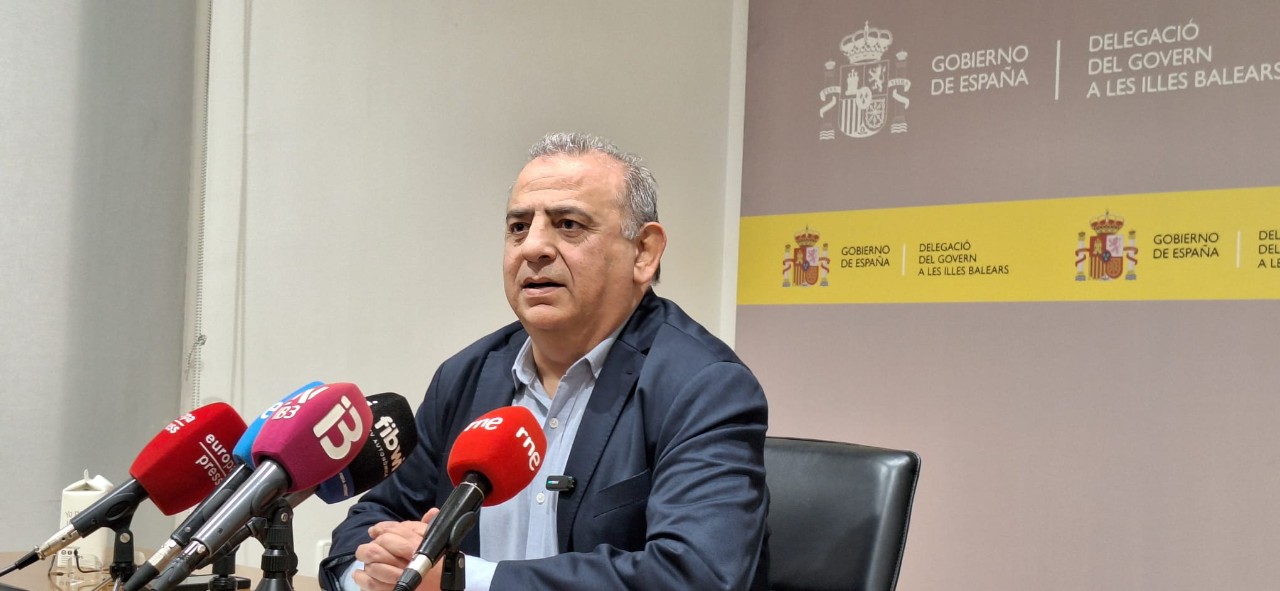
The government delegate in the Balearic Islands, Alfonso Rodríguez Badal, presented on Tuesday the report of accountability of the Government of Spain in the territory, of which he highlighted the extraordinary allocation of resources and the positive impact of the progressive agenda in the Autonomous Community, with milestones such as the increase of the Minimum Interprofessional Wage (SMI), which has benefited some 41,600 workers in the archipelago or the strong impulse to indefinite hiring, which has grown by 219% in the last two legislatures. In addition, the revaluation of pensions has meant an average of 360 euros more per month for more than 200,000 pensioners of the Balearic Islands, compared to the 80 euros per month that represented the increase of 0.25% per year of the previous system. Currently, the average pension in the islands is 1,395 euros, with a 23.7% increase accumulated since 2019.
Record funding
The delegate stressed that the financing of the Autonomous Community has reached “historic peaks between 2019 and 2025, which has increased by 60.6%”: “this means that, since 2019, Balears has received from the Government of Pedro Sánchez 9.122 million euros more than in the previous seven years, to finance public services”, he added.
In 2026, the islands will receive from the financing system the record figure of 4.206 M€, with an increase of more than 4%, and the deficit path proposed by the Government for 2026-2028 will allow the CAIB a fiscal margin of 153.4 M€. In addition, the cancellation of the State debt reaches 1,741 M€, which will mean “a 20% reduction in indebtedness compared to 2023, which the Community will be able to allocate to financing investments in the territory,” he says. At the same time, the incorporation in 2023 of the Insularity Factor in the budgets has reported another important source of funding: from the initial €110 million, in this 2025 this item has risen to €160 million.
“The Government of Spain allocates to Balears 1,300 M€ in autonomous financing more than what the last PP Government contemplated, a money the Balearic Government should invest in aspects that depend on its management, such as building housing for official protection and reducing health waiting lists and access to the care system to the dependency,” said the delegate. Rodríguez Badal has assured that “the Government of Spain is firmly committed to defending the interests of the citizens of the Balearic Islands”, and has underlined “the determined commitment of the Government of Pedro Sánchez to consolidate the public in essential areas, such as education or health”. In this regard, it has highlighted that during the last seven years, the Ministry of Education, Vocational Training and Sports has allocated more than 430 M€ to the islands, which have served to increase the scholarships, from which this course benefits 13,647 students, and boost the FP, with an injection of 179 M€ in the last quinquennium and a record figure of 20,883 students.
On the other hand, the more than 9.4 M€ allocated by the Ministry of Health to different programs in the Balears have made it possible to strengthen Primary Care, with a state investment of 4.5 M€. As for the social shield, in the archipelago there are 27,221 recipients of the Minimum Vital Income and the electric social bond has reached almost 19,000 people.
Rodríguez Badal has also highlighted other key advances in terms of mobility and connectivity; on the one hand, since 2019 the Ministry of Transport has allocated an annual average of 298 M€ to Balears, which serves, among other things, to finance the free bus and train, implemented for the first time in 2023. On the other hand, through the Digital Kit program, the digitization of SMEs and self-employed people has been promoted, with more than 76,700 beneficiaries in the islands.
Recovery Plan (*)
The Recovery, Transformation and Resilience Plan (PRTR) is a decisive tool in the modernization of the economy, which has allowed productivity to increase and, at the same time, progress in areas such as sustainability, inclusion and social cohesion. Through this instrument, Balears has already executed a total of 1,358 M€ in European funds, of which 495 M€ have been managed directly by the State and the rest, by the Autonomous Community, and which have benefited more than 42,700 companies, institutions and citizens of the archipelago.
Other projects developed with these funds include the 153 M€ to implement 30 Destination Tourism Sustainability Plans (PSTD), the 100 M€ of the Tourism Program for Extra-Peninsular Territories or the 3 M€ for the city of Ibiza, within the World Heritage Cities Program.
Also of particular importance is the Autonomous Resilience Fund, which the Government has made available to the CCAA, and which in the case of Balears has made it possible to finance with 125 M€ the rehabilitation of Palma Airport, a project that, in addition, provides for the creation of about 1,000 jobs.
The government delegate stressed that European funds have also served “to strengthen the Welfare State, in an essential aspect such as access to housing, as evidenced by the 752 social rental flats, in 23 municipalities, which are currently being developed in Balears thanks to the Recovery Plan”. To the 97.7 M€ of the PRTR that the Ministry of Housing has allocated to the islands, add another 71.4 M€ budgeted through the State Housing Plans; about 197 M€ from the state agency Casa 47 (formerly Sepes) and another 18 M€ in nominative subsidies, for more than 2,900 newly built homes projected. Rodríguez Badal has pointed out the opportunity of programs such as the Bono Joven, of which €19.2 million has been invested in the islands, “to facilitate emancipation among this group, one of those who have the most difficulty in finding a flat”. In this regard, he has insisted that “housing should be the central action of the Balearic Government and is not being so” and has urged the regional executive to “join the State Housing Plan and apply the limit to rental prices”.
The Recovery Plan has also enabled the Autonomous Community to promote ground-breaking projects in areas such as sustainable mobility, with almost €25 million for twelve projects, including the expansion of the Palma Metro, the new Inca Hospital Walkway or the new stops of the intercity bus network in Mallorca, Menorca or Ibiza. Likewise, actions of modernization and digital transformation have been developed in basic sectors such as health or the social and care economy. In the first of these, the Inveat Plan stands out, for which the CAIB has received €22 million for the purchase and upgrade of high-tech equipment in 5 hospitals.
Migration management
Alfonso Rodríguez Badal has made a specific reference to the management of irregular migration, at the end of a year in which the number of people arriving in patera to the islands has increased by 24.5% compared to 2024, with a notable increase in the presence of vulnerable profiles among migrants, which motivated the declaration of emergency by the Ministry of Inclusion, Social Security and Migration, and the endowment of 6.7 M€ for the new reception facilities in transit of the ports of Palma and Ibiza, and the module for police custody of La Savina (Formentera maritime), along with other measures to strengthen police and rescue. Among them, he referred to the recent incorporation of the oceanic patrol vessel “Duque de Ahumada”, of the Civil Guard, the largest and most advanced in its history, designed for surveillance, the fight against drug trafficking and rescue on the high seas, and the improvement of surveillance and detection resources, thanks to an investment, as a matter of urgency, of the Ministry of the Interior of 3.3 M€.
Rodríguez Badal has valued the intense and professional work of the State Security Forces, Maritime Rescue, Red Cross and all the institutions and entities that collaborate in the operations and that “have made it possible that, while complying with the law, a dignified treatment is guaranteed to these people who flee from dramatic personal situations, which lead them to risk their lives.” The migratory crisis in the Balearic Islands has led the Interior to prolong until the end of October the usual campaign of reinforcement of the troops of the Civil Guard and the National Police in the islands.
Civil Service
Another of the advances highlighted by the government delegate over the year that is about to end is the Framework Agreement for the Improvement of the Working and Salary Conditions of Public Employees, approved by the Council of Ministers and ratified by the Congress of Deputies this month of December, and which provides for the increase of salaries by 11% until 2028.
The result of this agreement is the Executive’s commitment to revise the residency and insularity supplements upwards, with the aim of guaranteeing equality among all public workers in the administrations. Rodríguez Badal has pointed out that this milestone, whose specific terms must be specified soon at the corresponding negotiating table, is “especially relevant in the case of Balears, since it deals with a historical claim of the archipelago”.
Finally, the delegate referred to the infrastructure projects for the State Security Forces and Corps that have been implemented in the coming months, such as the new Maó National Police Station, which will begin work in the second quarter of 2026, or the works of the new Santanyí Civil Guard headquarters, with an investment of 7.7 M€, which the Ministry of the Interior recently declared of public interest.
(*) In this link You can consult the updated data of execution of the PRTR in Balears