
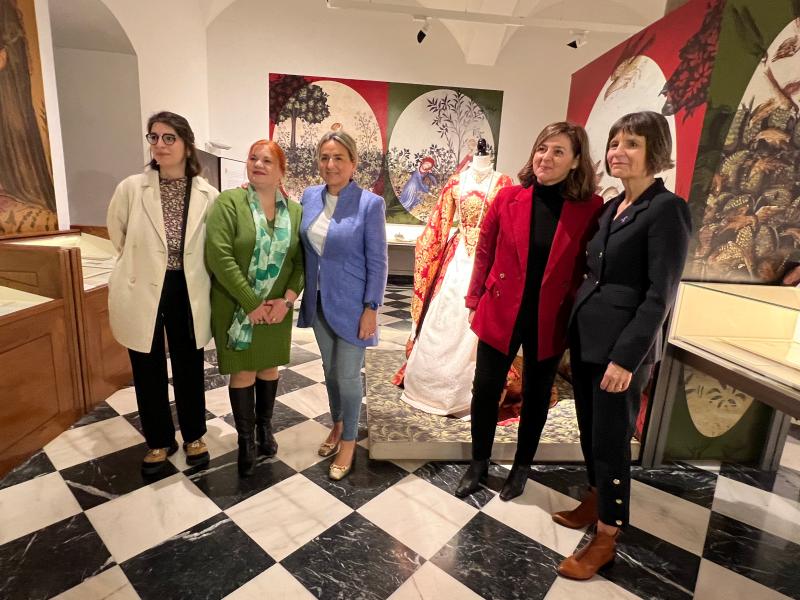
Toledo.- The delegate of the Government of Spain in Castilla-La Mancha, Milagros Tolón, visited this Wednesday the exhibition “Woman, Nobility and Power”, which can be seen in the Archive of Nobility (Hospital de Tavera, in Toledo) until April 7 and which highlights the role of women “who played a fundamental role in the life of their time and who were silenced by history”.
Milagros Tolón has explained that this visit is part of the events organized by the Government Delegation in Box La Mancha on the occasion of the 8M and aims to publicize this exhibition, which reviews the figure of great women in the history of Spain who stood out in the political and cultural life of their time.
“The objective is to highlight the role of women in history, a role that has been traditionally silenced and hidden,” said the delegate, adding that, with this view, “we also want to highlight the weight of women in cultural management.”
For this reason, in addition to the director of the Archive of the Nobility, Arantxa Lafuente, was present the director Museo del Greco, Rebeca Becerril, who, like the Sefardi Museum, directed by Carmen Álvarez, has organized activities to make women visible in history and in the art world.
Milagros Tollón has affirmed that there has been progress today in equality between men and women, but there are still many “glass ceilings that should encourage us to work for equality in all areas”.
As explained by the director of the Archive of Nobility, the exhibition “Women, Nobility and Power” is a look at great women in the history of Spain who, surpassing the traditional roles assigned to the female gender, exercised power, excelled in politics or had influence in the cultural life of their time.
The exhibition has traveled from various locations and closes its itinerary in Toledo with novelties: a new exhibition design and the presentation of several unpublished documents found in the last year among the funds of the Historical Archive of the Nobility.
On display are 50 original documents of female figures as relevant as Leonor de Guzmán, Beatriz Galindo la Latina, Teresa Enríquez, Juana Pimentel (widow of the condestable Álvaro de Luna), the Princess of Éboli or Josefa Pimentel, Countess of Benavente.
This edition also presents documents unknown to date related to the lives of the medieval Queen María de Molina, the community leader María Pacheco or the Empress Eugenia de Montijo.
The entrance is free and can be seen until April 7 from 10 to 18 hours from Monday to Saturday and from 10 to 14 on Sundays.
The Historical Archive of the Nobility of Toledo is an organism dependent on the Ministry of Culture, unique in Spain, which has a history of 30 years.