
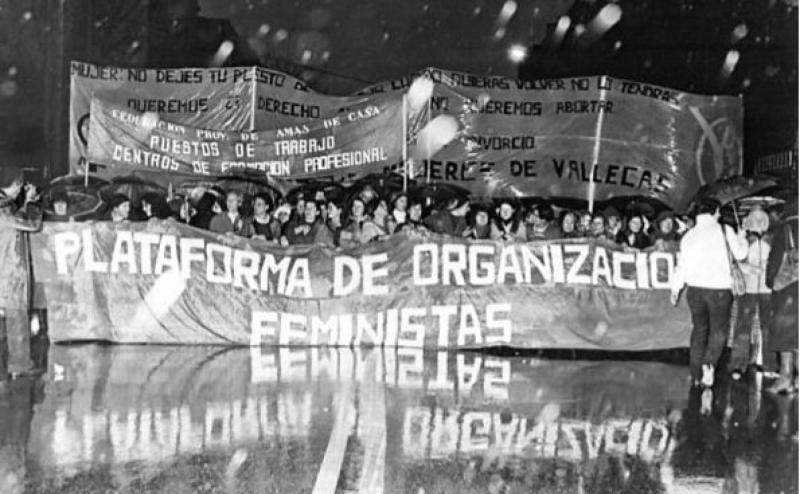
The United Nations designated 8 March as International Women’s Day in 1975. This date commemorates the events of March 8, 1857, when the first great demonstration of workers in the textile industry took place in New York. The brutally suppressed protest killed 120 women. On March 8, 1908, the first feminist demonstration was held in New York, which had an impact similar to that of 1857.
In Spain, the first great feminist demands began in the first decades of the 20th century, especially after the First World War, when associations and groups of women emerged fighting for the abolition of legalized prostitution, the right of women to exercise liberal professions, access to public offices, the right to vote, equal pay and access to different educational levels.
Feminist demands advanced significantly during the Second Republic, when the movement won the right to vote, granting women the status of citizens and, therefore, access to public office on equal terms with men. It also achieved the establishment of civil marriage, the recognition of equality between legitimate and illegitimate children, the right to divorce, universal access to education and the legalization of abortion. However, during the Franco dictatorship, the role of women in society was restricted to the domestic sphere.
With the restoration of democracy, the feminist movement regained momentum, reclaiming lost rights and fighting for the expansion of others that had already been consolidated in European democracies. Thus, on March 8, 1978, the first feminist demonstration was allowed in Spain under the motto “For a job without discrimination”. This protest demanded equal pay, access to all professional and educational categories, and the elimination of job discrimination.
Since March 8, 1978, the feminist movement has made important advances, such as the decriminalization of abortion, sexual freedom and education, the legalization of divorce and contraception, as well as laws that seek to eradicate gender violence and promote equality between men and women.
With the inauguration, by the Ministry of Territorial Policy and Democratic Memory, of the declaration of Place of Intangible Democratic Memory, the manifestations of 8M are recognized to the women who have led the fight for equality between women and men and constitute an example for future generations.
The announcement coincides with Granada’s “Tribute to women’s movements and celebration of the achievements of equality”.