
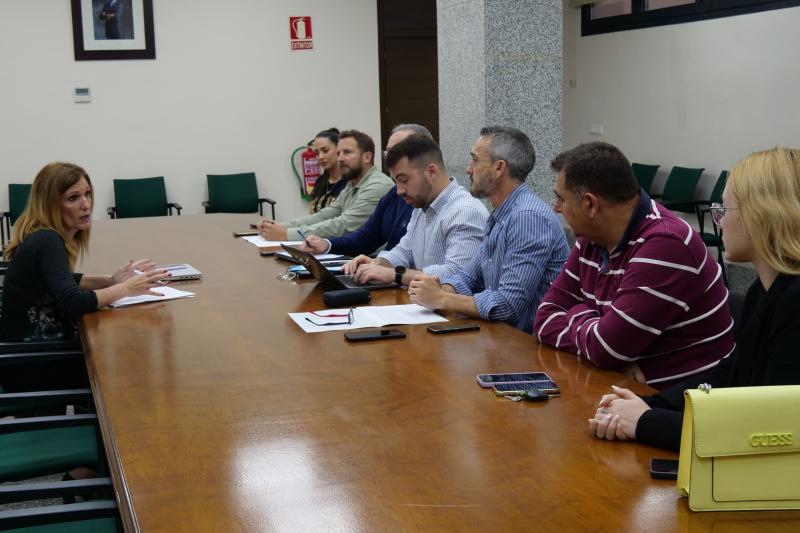
The Government Delegation has hosted a new meeting of the Police Coordination Table that is convened from the Coordination Unit against Violence against Women to complete and improve the monitoring of gender violence situations in our city as well as coordination between the State Security Forces and Bodies, the Local Police and the Unit headed by Laura Segura.
As Segura explained, during the meeting, which took place last Friday, the importance of continuing to join forces for the prevention of violence and, especially, to ensure a diligent, adequate and effective response to all victims was raised.
In addition to the Head of the Unit, representatives of the Family and Women’s Care Unit (UFAM) of the National Police; the Woman-Minor Team (EMUME) of the Civil Guard; and the Follow-up Service of Removal Orders (SOA) of the Local Police have attended the meeting, which is held quarterly.
Thus, aspects that are considered to be relevant in the follow-up of care and protection of women victims have been evaluated and the effective compliance with the collaboration protocol, which is being developed normally, has been reviewed.
The implementation of VioGén 2.0 has been highlighted and the entry into force, on June 30, 2025, of Instruction 1/2025 of the Secretariat of State for Security and as it implies new models of agreements between the Secretariat of State for Security and the municipalities for the incorporation of their local police into the VioGén System and in the renovation agreements.
In the case of Melilla, as indicated by the Head of the Unit, it would not affect the renewal agreements already signed between the Secretary of State for Security of the Ministry of Interior and the Autonomous City of Melilla for the continuity of access to Local Police to the system of comprehensive monitoring of cases of gender violence, which is the result of our current protocol.
It has also been proposed, before the entry into force of the new instruction, to take into account those aspects that must be adapted in the actions arising from the Collaboration Protocols.
237 active cases
Segura explained that in this meeting, a balance of the complaints filed so far in 2025 has been made based on the data obtained from the direct emptying of the information received from the sources of the State Security Forces and Bodies, as well as a follow-up and review of the cases active in VioGén at present.
The Unit has provided the data that reflect the statistical reports on violence against women and has provided information on the use of state services during this 2025.
The use of state services has been analyzed, highlighting the consultations at 016, Telephone Service of Information and Legal Advice on Gender Violence, the number of users active in the Telephone Service of Attention and Protection for Victims of Gender Violence (ATENPRO), the number of women with police protection (active cases with a high level of risk), number of protection orders and measures for gender violence, total of orders initiated, adopted and denied, active cases in VioGén and distribution by levels of risk, inmates in prison serving sentences for crimes of gender violence and temporary residence and work permits for foreign women victims of gender violence.
Segura has pointed out that the active cases in the VioGén System in Melilla as of February 28, -last month published in the Statistical Bulletin of the Government Delegation against Gender Violence -, amount to 237.
Specifically, regarding the distribution by risk levels in February, there are 112 active cases of unappreciated risk; 107, those of low irrigation; 16, those of medium risk; and 2 cases of high risk.
According to the data published on the website of the Ministry of the Interior in its monthly statistics, to the active cases in the last month that is the month of February, we must add the 2,349 cases inactivated from 2007 to this date, which makes a total of 2,587 total cases and 2,388 total victims in our city from 2007 to the present.
Other topics covered have been the response to specific cases, risk assessments and the latest instructions. There has also been an emphasis on the follow-up of cases of special relevance and vulnerability, as well as cases where aggressors are persistent and resistant, and cases with comet devices.
The Unit has reported on the importance of coordination with the 24-hour Comprehensive Care Centre for Victims of Sexual Violence, assessing the importance of the joint work carried out by the Coordination Bureaux to make contributions from the different agents involved in the protocol of the Centre, and thus to ensure coordination with the resource.
Finally, the Bureau has agreed to hold a training session on the Comprehensive Monitoring System for Cases of Gender Violence (VioGén 2.0).