
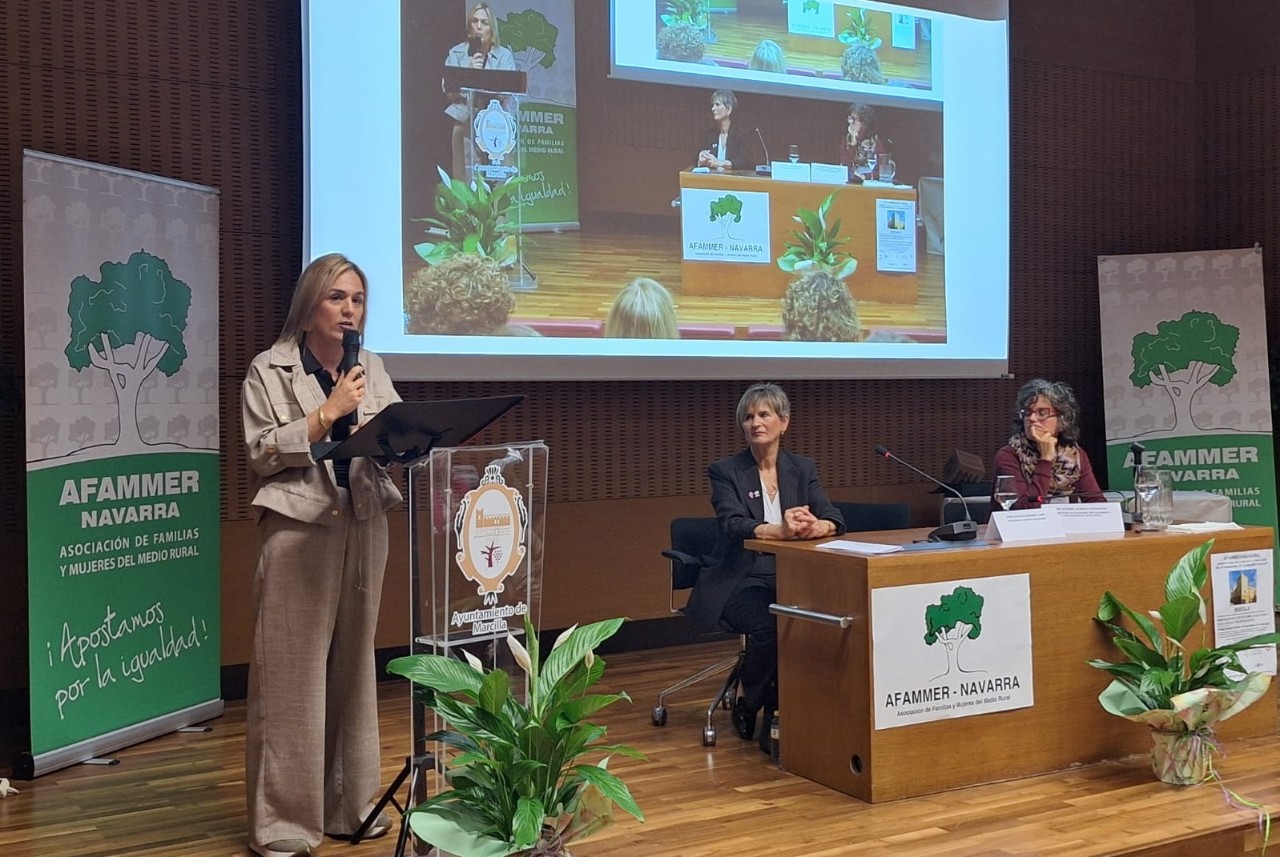
The government delegate in Navarre today stressed that equality and the elimination of gender gaps have been key in the policies of the central executive aimed at combating depopulation. In particular, Alicia Echeverría referred to the work carried out against the masculinization of the territory, the lack of opportunities for women in rural areas, the female burden in terms of the economy of care, and gender violence. She pointed this out at the closing of the XVIII Rural Meeting for Equality and Conciliation organized by AFAMMER Navarra within the framework of the International Day of Rural Women.
Echeverría pointed out that “although things have changed a lot over the years, it is still necessary to make rural women visible and give them a voice”. She has stressed that women occupy more and more positions of responsibility, are freer to make their decisions and live with greater autonomy and independence. “We have won rights and freedoms that we must defend, more than ever, against those who defend a return to the past in such sensitive issues as abortion, deny gender violence and, of course, reject everything that has to do with equality,” said the government delegate.
He also referred to the measures implemented by the central executive to combat depopulation and ensure social and territorial cohesion. And, specifically, the Plan of 130 Measures in Response to the Demographic Challenge, which is part of the Recovery, Transformation and Resilience Plan, and which “has allowed us to improve the structuring of the country, reduce the urban-rural gap, and reactivate some of the areas most affected by depopulation.”
Echeverría has reviewed some of the measures included in the Plan, including actions aimed at promoting the ecological transition; improving connectivity, with the deployment of 5G technology throughout the territory; or promoting innovation with territorial centers, in Sangüesa and in Tierra Estella, which promote research and entrepreneurship.
A boost has also been given to more sustainable tourism; public services and their decentralization have been strengthened to bring them closer to the territory; and a new care policy has been worked on, with resources that pay special attention to the needs arising from the ageing of the rural population.
“There will be those who think it doesn’t matter who governs, but I assure you that it doesn’t”, said the delegate of the Government, who added that “gender sensitivity and in everything related to social and territorial cohesion translates into policies that improve our life: the life of women in rural areas”.