
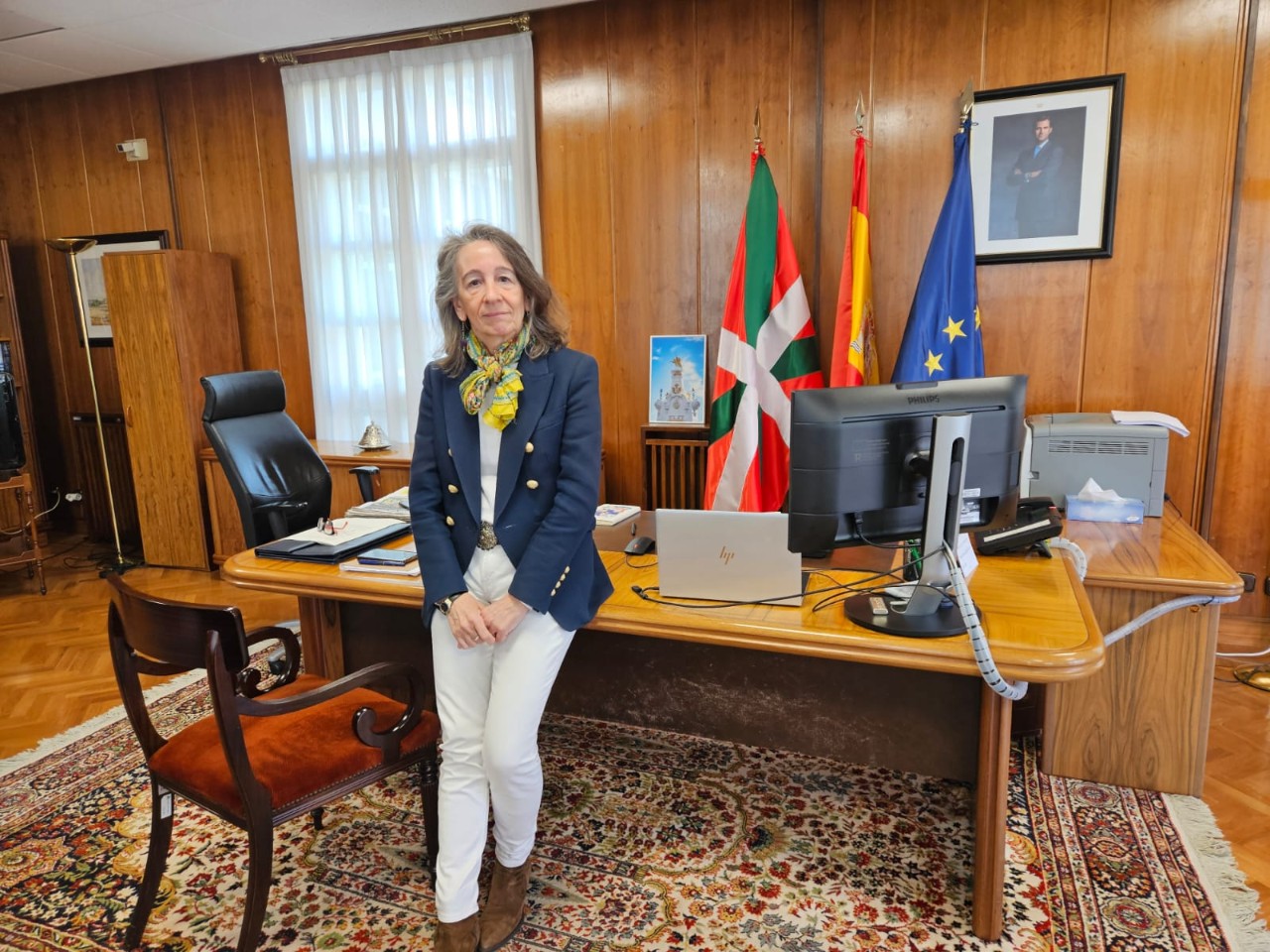
- The Government delegate highlights that the average number of pensions in the Basque Country rose 475 euros per month (34.8%) in the seven years of progressive government
- Up to June, the Basque Country received 4,131 million euros from the European Funds, which reached 43,226 beneficiaries
The Basque Country is taking advantage of the economic momentum and the social measures put in place by the government headed by Pedro Sánchez to present high indices of quality of life. Marisol Garmendia, delegate of the Government of Spain in the Basque Country, highlights that the data are significant: “The Basque Country is doing very well with the action of this government. The average retirement pension in the Basque Country has risen 475 euros since November 2018, from 1,365 euros to 1,840 euros per month, 34.8% more. With the PP the pension today, seven years later, would be 1,392 euros”, reveals Garmendia.
Another very relevant figure refers to the good performance of the economy. In fact, the latest updated figures show that in the last quarter unemployment stood at 6.9% with a reduction of 2.5 points compared to the previous quarter. “The progressive measures and social protection of this government are not effectively at odds, on the contrary. Spain and especially the Basque Country are at the forefront of Europe in economic growth”.
The other indicators are equally positive for the Basque Country. The Recovery, Transformation and Resilience Plan designed by the Government of Spain has already allocated 4,131 million euros, of which 2,211 million euros are managed directly by the General State Administration with 43,226 beneficiaries. The rest of the money includes the funds managed by the Basque Government (1.299 M€) as well as those that reach Basque companies that participate in projects attached to other Autonomous Communities.
Among the grants received, the 361 M€ for the PERTE VEC (electric and connected vehicle) stand out: Of these, €129.6 million has been invested in the integral transformation of the Mercedes-Benz plant in Vitoria-Gasteiz (Álava); and €67.1 million for the MOVES III Plan, with more than 14,798 beneficiaries.
It should also be noted that Transportes has invested 1,661 M€ since 2018. Since 2019, the executed investment has increased by 32.5% annually, 68M€ more per year. Among the projects highlighted in this sector are the arrival of the high rail speed in the Basque Country, which connects the three Basque capitals; and the Implementation of Local Services in Álava (operated by Renfe, came into operation on May 30, after assuming the competence of the Basque Government since January).
The Government’s labour policy also has clear positive effects in the Basque Country. In addition to the reduction of the unemployment rate to 6.9%, there has been a clear increase in Social Security members (in November there are 1,036,074 members of the SS, 76,337 more people than in 2018). And after the labor reform, indefinite contracts have been increased by 106% to reach 173,518 (89,587 more than in 2019).
In Education, the Basque Country has received a total of €229.1 million from the Ministry in these 7 years of government (2019-2025). Its budget has gone from 6,08 M€ in 2018 to 21,44 M€ in 2025, which means an increase of 15,36 M€ (+252%). The investment in Vocational Training is more than 84.8 M€ (2020-2025), with a record of 49,608 students.
As for the social shield, in the Basque Country there are 72,348 recipients of the Minimum Vital Income (November) and 65,348 of the social electric bond (October).